
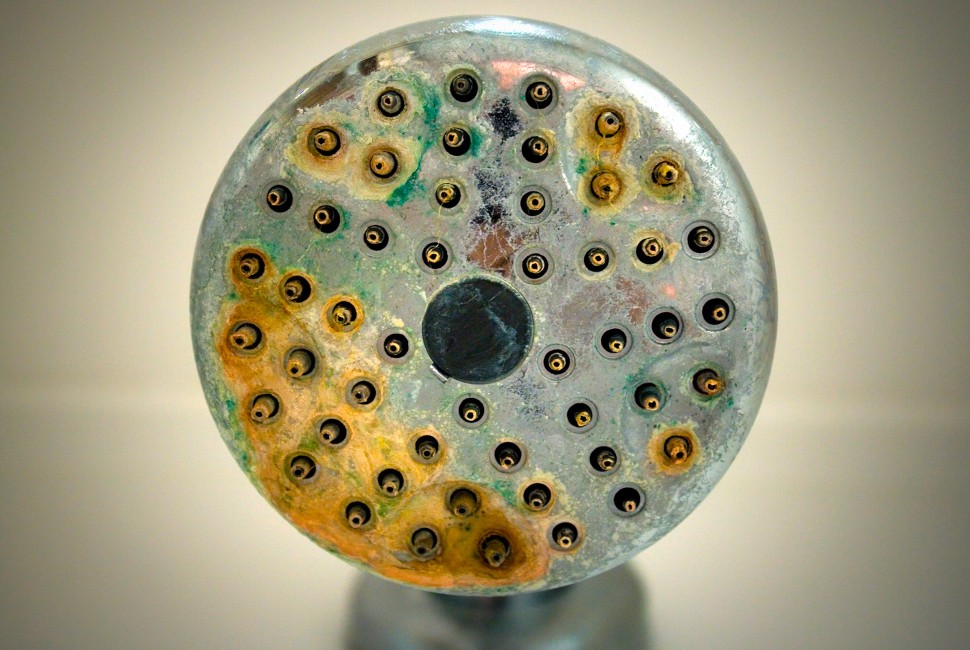
Some bacteria are surprisingly good at staying put. They attach to a damp surface and produce a sticky coating that helps hold their community together. This creates a biofilm, a rather grand name for something that can live quite happily above the bath.
Peptide researchers are investigating how these communities form and how individual molecules can interfere with the process.
Peptides are short chains of amino acids, and scientists have studied several for their effects on bacterial attachment and movement.
Laboratory catalogues, including Bioniq Lab, supply peptide compounds for research use.
The biofilm studies discussed here concern selected molecules examined by independent research teams. Their findings give a familiar subject, household hygiene, a much smaller scale to consider.
LL-37 is an example. In a 2008 study published in Infection and Immunity, researchers examined this peptide against the bacterium Pseudomonas aeruginosa. They found that it reduced biofilm formation and affected communities that had already developed.
The interesting detail is that changing how bacteria attach can influence a biofilm even when the bacteria are still present. The researchers examined how these communities formed while individual cells remained alive.
The work included the early attachment of cells to a surface, a useful place to investigate how the whole sticky arrangement gets going.
The researchers also reported changes in bacterial movement and in the activity of genes associated with biofilm development.
Other peptides tested in the same paper produced different results. Some inhibited biofilm formation under the conditions examined, while others showed no inhibitory effect. That variation gives the subject some welcome precision. Each result concerns the molecule tested and the bacteria involved.
The bathroom connection comes from research on ordinary household objects.
Montana State University’s biofilm researchers have documented communities on shower heads and shower curtains.
Moisture gives microorganisms opportunities to settle, and the surfaces inside a showerhead can be surprisingly varied. Shower curtains offer a broad, flexible surface, while shower fittings have small spaces that are harder to see. The differences help explain why researchers examine household objects individually. Chalky mineral deposits are different from microbial growth, although they can change the surfaces available for microbes to attach to.
Their microscope images show attached microbial growth on surfaces most of us would recognise immediately. A shower fitting turns out to be a perfectly respectable subject for a microbiology department.
For anyone used to seeing antimicrobial claims on bathroom accessories, this research adds some useful detail to the wording.
Preventing cells from attaching and affecting an established biofilm requires different approaches.
A product claim needs evidence for the outcome it describes. The peptide papers report findings from laboratory experiments, with the conditions of those experiments forming part of the result.
There is further work between those findings and an assessment of a finished household surface.
Biofilms can contain mixtures of microorganisms, and the surface they settle on can vary.
Evidence from selected bacterial cultures helps researchers decide what to examine next.
Evaluating a finished tile or coating would require testing relevant to that product and its intended conditions.
Montana’s researchers documented how mineral deposits on shower heads can provide surfaces for biofilms to develop, with further deposits collecting around the microbial growth.
A possible next experiment could examine whether a peptide’s effect on attachment changes when the surface carries mineral build-up.
