
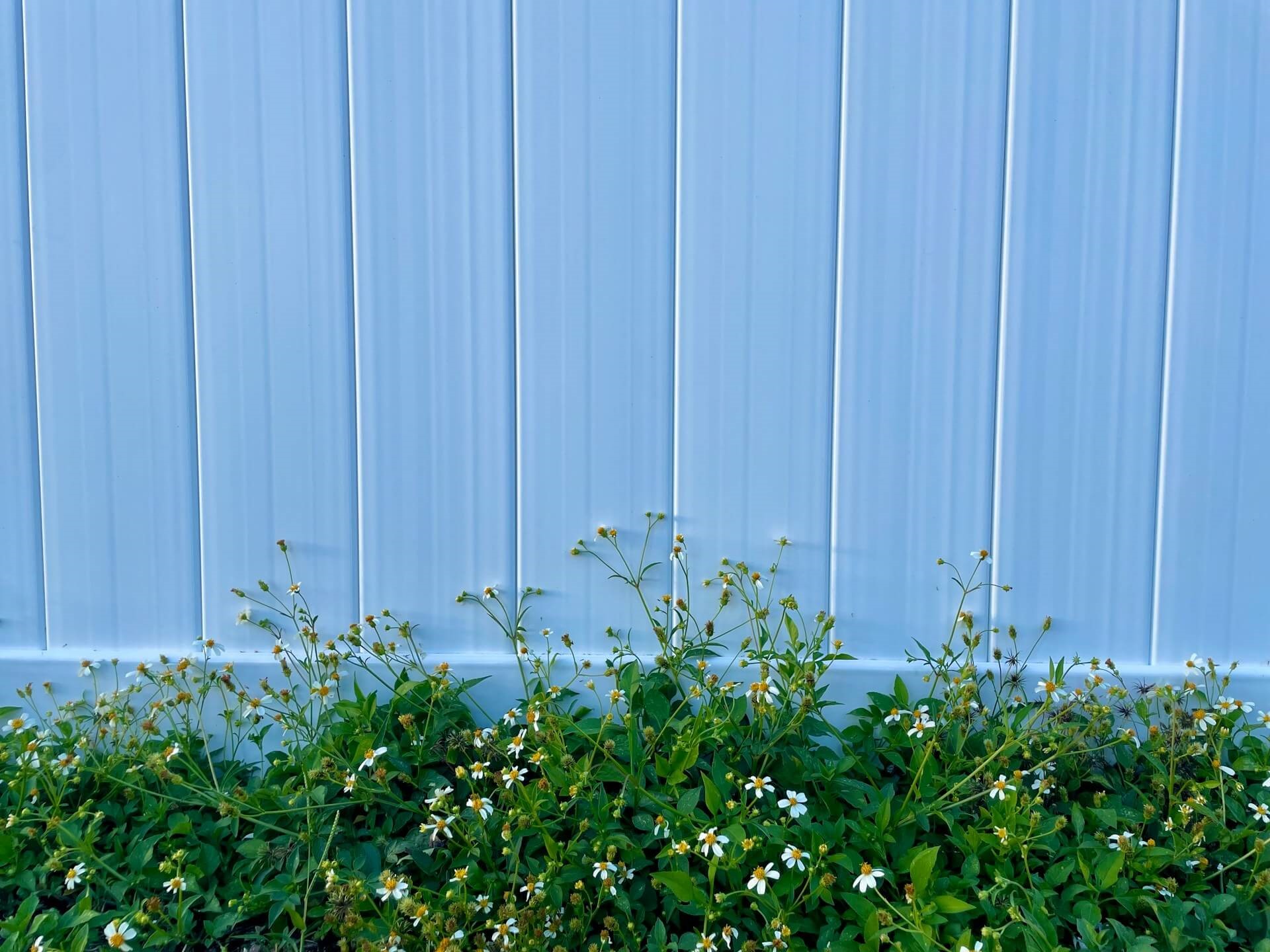
The right low-maintenance garden boundary eliminates annual painting, staining, and structural repairs: reducing whole-life costs significantly compared with traditional timber fencing. Modern materials such as composite panels, powder-coated aluminium, Corten steel, and gabion walls deliver contemporary aesthetics with service lives of 30 to 60 years and near-zero routine maintenance. This guide compares the leading options across durability, cost, planning context. And visual character to help homeowners make an informed choice for their specific site and home style.
What “Low Maintenance” Actually Means for a Garden Boundary
A truly low-maintenance garden boundary requires no annual treatments, no repainting, and no structural repairs for at least 15 years. A standard that immediately eliminates most untreated softwood timber from consideration.
“Low maintenance” is one of the most overused phrases in garden retail. Applied to boundary products, it ranges from a genuine engineering claim to little more than marketing copy. Before comparing materials, it helps to define the term precisely.
Three levels of maintenance intervention apply to garden boundaries:
- Zero routine- no annual actions required: no painting, staining, sealing, or preservative treatment.
- Periodic inspection- minor actions every 5-15 years: re-tightening fixings, pressure washing, re-pointing, touch-up of coatings.
- End-of-life replacement- full replacement after 30-60+ years.
A standard pressure-treated softwood close-board fence requires re-treatment every one to three years, replacement of individual boards after five to eight years in wet conditions, and full replacement every 15-20 years. Over 25 years, a 10-metre softwood fence costs £3,500-£6,000 in combined installation and maintenance. A powder-coated aluminium fence of the same length costs more to install- typically £2,500-£4,500- but requires no routine maintenance and carries a service life of 40+ years. The whole-life cost advantage of the aluminium option is substantial.
The sections below use this whole-life cost lens consistently, because upfront price is a misleading guide to value in boundary products.
Composite Fence Panels- The Popular Choice Examined
Composite fencing – made from a blend of recycled wood fibre and plastic – is the most widely sold low-maintenance boundary solution in the UK, offering a timber-like appearance without annual staining, but its long-term performance varies significantly between manufacturers and grades.
Composite fencing (technically WPC- wood-plastic composite) has grown rapidly in popularity since the mid-2010s. Its appeal is straightforward: it looks broadly like timber, requires no treatment, and is available in a range of colours and profiles from hundreds of suppliers.
The manufacturing process matters more than most buyers realise. Premium composite uses a high proportion of recycled HDPE (high-density polyethylene) combined with dried wood fibre, compressed at high temperature and extruded into solid or hollow-core profiles. Budget composite uses lower-grade recycled plastics, thinner walls, and sometimes PVC instead of HDPE- materials that perform adequately for five years and then begin to fade, warp, or crack.
The practical distinctions between entry-level and premium composite:
- Colour stability: Premium products use pigment throughout the entire cross-section, so surface abrasion does not reveal a different colour beneath. Budget products rely on a surface coating that fades unevenly within five to eight years.
- Thermal expansion: All WPC expands in heat. A 1.8-metre panel can expand by 8-12mm on a hot day. Correctly installed composite panels require expansion gaps of 5-8mm per panel; panels installed tight against posts will buckle.
- Warranty: Reputable manufacturers offer 15-25 year product warranties. Warranties shorter than 10 years signal a manufacturer without confidence in long-term performance.
Composite fencing is not without limitations. It is unsuitable as a structural retaining wall, cannot be easily repaired (a damaged section requires full panel replacement), and in cheaper grades can read as visibly plastic rather than timber-like. In conservation areas, many LPAs will not approve composite fencing on grounds of material character.
Powder-Coated Aluminium- The Premium Low-Maintenance Option
Powder-coated aluminium fencing requires no painting, no treatment, and no structural maintenance for 40 or more years- making it the closest available product to a genuinely zero-maintenance boundary solution for modern homes.
Powder coating is applied electrostatically as a dry powder and then cured at approximately 200°C, creating a finish that bonds at a molecular level with the aluminium substrate. Unlike liquid paint, it does not peel, crack, or require periodic reapplication. The finish is available in any RAL colour- enabling precise matching to window frames, cladding, or architectural metalwork- and in matt, satin, or gloss sheens.
Aluminium does not rust. In coastal environments where timber decays rapidly and steel requires intensive maintenance, aluminium performs without intervention. The one genuine maintenance risk is galvanic corrosion: where aluminium is in direct metal-to-metal contact with dissimilar metals (steel fixings, copper pipe), an electrochemical reaction can accelerate surface deterioration. This is easily prevented by using aluminium or stainless steel fixings throughout.
Design flexibility is a significant advantage. Horizontal or vertical slat profiles are available in widths of 50mm to 120mm, with spacings adjusted to balance privacy against visual openness and wind permeability. On exposed sites, open-slat configurations reduce wind loading dramatically compared with solid panel alternatives- an important structural consideration for posts set in shallow ground.
Standard heights range from 900mm to 2,400mm; bespoke heights are available from most manufacturers at modest additional cost. For homeowners seeking a boundary that coordinates with the architecture of a contemporary home, powder-coated aluminium is the most versatile and durable solution available.
Corten (Weathering Steel) Screens and Panels
Corten weathering steel develops a stable, protective rust patina within two to five years and requires no painting or treatment for 40 to 60 years- but its dramatic visual character and initial rust run-off make it a deliberate design choice, not a universal solution.
Corten (sometimes written COR-TEN®) is a low-alloy steel containing small additions of copper, chromium, and nickel. When exposed to cycles of wet and dry weather, these alloying elements cause the rust layer to stabilise rather than continue penetrating- the patina becomes self-protecting. A correctly installed Corten boundary panel will weather to a deep, stable chocolate-brown or near-black surface within five to ten years and remain structurally sound for decades thereafter.
The weathering timeline is predictable:
- Year 1-2: Vivid orange rust streaks. Highly visible run-off stains adjacent paving, concrete, and masonry.
- Year 3-5: Darkening to amber-brown. Run-off reduces significantly as the patina stabilises.
- Year 10+: Deep chocolate or graphite-brown surface, fully stable, no further run-off.
The run-off period is the most common reason homeowners are disappointed with Corten. It is not a flaw- it is the process by which the material achieves its durability- but it requires planning. Adjacent surfaces should be of a material that accommodates staining (gravel, dark stone, planted beds), or temporary protective sheeting should be used during the weathering period.
Corten performs poorly in two specific conditions: permanently waterlogged environments (where standing water prevents the wet-dry cycles that stabilise the patina) and marine environments with significant chloride content (salt air disrupts the protective layer). For all other settings- urban, suburban, rural, or upland- it is among the most durable and visually distinctive boundary materials available.
Minimum recommended panel thickness for garden boundaries is 3mm; structural posts should be 5-6mm.
Gabion Walls- Structural, Naturalistic, and Virtually Maintenance-Free
A correctly specified gabion wall requires no maintenance beyond periodic visual inspection for 30 to 50 years, drains freely, suits modern and naturalistic garden styles equally, and costs significantly less than a masonry wall of equivalent height.
A gabion is a steel mesh basket filled with stone, slate, or recycled aggregate. Originally an engineering solution for retaining slopes and riverbanks, gabions have become a legitimate garden design material over the past two decades- valued for their visual mass, textural interest, free-draining structure, and exceptional durability.
The maintenance case for gabions rests on their drainage behaviour. Unlike masonry walls, which must manage hydrostatic pressure from saturated ground and require weep holes to prevent cracking, gabion walls drain freely through the fill material. Frost cannot split them. Ground movement that would crack a mortar joint simply shifts the fill slightly without structural consequence. The only maintenance required is periodic inspection of the wire mesh for corrosion, and replacement of any fill that has settled visibly.
Mesh specification is critical to longevity. The minimum wire diameter for garden gabions is 3mm; for exposed or structural applications, 4mm is preferable. Galvanised wire alone is adequate in most settings; PVC-coated galvanised wire adds a further corrosion-resistant layer and is recommended in wet climates or near the coast.
Fill material choices determine the visual character of the wall:
| Fill Material | Visual Character | Approx. Cost per Tonne |
| Limestone | Light, formal, clean | £45-£80 |
| Welsh slate | Graphite, contemporary | £60-£100 |
| Recycled concrete | Industrial, low-cost | £20-£35 |
| Flint | Rustic, regional (SE England) | £70-£120 |
| River cobble | Rounded, naturalistic | £50-£90 |
For walls exceeding 1 metre in height, a concrete foundation is required. Below 1 metre, a well-compacted granular sub-base (150mm minimum) is sufficient. Walls above 1.5 metres should be designed by a structural engineer.
Low-Maintenance Evergreen Hedging- When Living Boundaries Win
For homeowners prepared to invest two to three years in establishment, a correctly chosen evergreen hedge delivers privacy, wind filtration, wildlife habitat, and acoustic insulation at a whole-life cost lower than any hard boundary- with annual maintenance reducible to a single cut per year.
The case for hedging as a low-maintenance boundary rests on two conditions: correct species selection and adequate establishment care. Where both conditions are met, a mature hedge requires less annual intervention than any hard boundary material except aluminium or Corten.
The species most reliably achieving this standard in the UK:
| Species | Growth Rate | Cuts per Year | Max Height | Notable Quality |
| Taxus baccata (Yew) | Slow (20-30cm/yr) | 1 | Unlimited | Exceptional longevity, very dense |
| Griselinia littoralis | Fast (40-60cm/yr) | 1-2 | 4m+ | Coastal tolerance, bright green |
| Osmanthus × burkwoodii | Slow-medium | 1 | 3m | Fragrant flowers, very tough |
| Viburnum tinus | Medium | 1 | 3m | Flowers in winter, shade-tolerant |
| Carpinus betulus (Hornbeam) | Medium | 1 | Unlimited | Retains dead leaves for winter privacy |
| Prunus laurocerasus (Cherry laurel) | Fast (60cm+/yr) | 1-2 | 5m+ | Rapid screening, large bold leaves |
The most common mistake in hedge establishment is underestimating the first two growing seasons. During this period, regular watering and a mulch layer of 75-100mm over the root zone are essential. A hedge that struggles to establish in years one and two will be slow, uneven, and susceptible to disease for the rest of its life.
Note that hedges exceeding 2 metres in height composed of two or more predominantly evergreen or semi-evergreen species may be subject to the High Hedges Act 2003, under which a neighbour can make a formal complaint to the local authority. This applies even where the hedge is entirely within your own boundary. Keep hedges at a reasonable height and maintain them regularly to avoid this risk.
Mixing Materials – Three Combinations That Work
The most effective low-maintenance boundaries for modern homes frequently combine a structural element with a secondary infill or screen- producing results more durable, more visually interesting, and more adaptable than any single-material solution.
The design logic of mixed-material boundaries follows a consistent principle: one dominant material defines the character and carries the structural load; one secondary material provides the infill, screen, or softening element. Restricting the palette to two primary materials avoids the fragmented quality that results from trying to combine three or more.
Three combinations that reliably produce successful results:
#1 The Contemporary Classic – A brick or rendered block plinth at 450-600mm height provides a robust, rot-proof base that lifts the boundary clear of ground moisture. Above it, horizontal powder-coated aluminium slats at 80mm width with 20mm gaps deliver privacy whilst allowing air movement. The plinth resolves the most vulnerable zone of any fence- the ground line- whilst the aluminium above requires no maintenance for the life of the structure. Suitable for modern suburban homes; works well with brick or rendered elevations.
#2 The Natural Modern – A gabion base at 800-900mm height filled with Welsh slate or river cobble provides visual mass and textural interest at low level, whilst Corten steel panels above (from 1m to 1.8m total height) add a warm, evolving patina. Trachelospermum jasminoides or Hydrangea petiolaris planted at the base of the Corten softens the hard edge over time without requiring intervention beyond an occasional tidy. This combination suits gardens with contemporary architecture and a naturalistic planting ethos.
#3 The Privacy Screen – Where maximum privacy is the primary requirement, a concrete H-post system (posts set 600mm into the ground in concrete) combined with premium solid-core composite panels delivers structural stability and complete screening with zero annual maintenance. A hardwood or aluminium capping rail at the top improves the finish and protects the panel edges from water ingress- the most common point of failure in composite installations. Suitable for urban gardens, rear boundaries, and anywhere that visual separation from neighbours is the dominant design driver.
Planning, Permitted Development, and Material Suitability by Location
Material choice for a low-maintenance boundary is not purely an aesthetic and practical decision- permitted development height limits, conservation area restrictions, and material appropriateness policies impose constraints that must be understood before any design is finalised.
The permitted development rules for boundary enclosures in England are clear: a maximum of 1 metre adjacent to a highway used by vehicles, and 2 metres elsewhere, without planning permission. These limits apply regardless of material- aluminium, composite, gabion, and Corten are all subject to the same height restrictions as timber.
Beyond height, material appropriateness becomes the key variable:
| Location Type | Max Height (PD) | Typical Material Restrictions | Recommended LM Options |
| Standard residential | 2m | Minimal | All options viable |
| Adjacent to highway | 1m | Minimal | Aluminium, gabion, hedging |
| Conservation area | 2m (consent if adj. highway >1m) | Strong- character-appropriate materials | Reconstituted stone, brick, hornbeam hedge |
| Listed building curtilage | Full consent required | Very strong- natural materials preferred | Natural stone, brick, yew hedge |
| New-build estate | Check covenants | Developer restrictions vary | Composite (if approved), aluminium |
In conservation areas, contemporary materials are not automatically refused- but they require a stronger justification. LPAs will consider the quality of the proposed material, whether precedent exists locally, and whether the design responds to the character of the area. A well-detailed powder-coated aluminium screen in a conservation area is more likely to gain approval than a cheap composite panel that reads as plastic from the street. Engaging the LPA’s design officer informally before submitting a householder application saves time and reduces the risk of refusal.
On new-build estates, developer covenants sometimes restrict permitted development rights further- prohibiting close-board fencing or specifying that only certain boundary types may be used. These restrictions are enforceable by the developer or management company and should be checked in the title documents before any boundary works are commissioned.
The boundary materials that serve modern homes best share a common quality: they were designed for durability from the outset, not adapted from materials originally intended for other purposes. Powder-coated aluminium, Corten steel, gabion walls, and premium composite each offer a different aesthetic character, but all eliminate the cycle of annual maintenance that makes traditional timber fencing such a persistent drain on time and budget. Choose the material that fits your site, your architecture, and your planning context- and the boundary will largely look after itself.
Visit More : widemagazine.co.uk
