
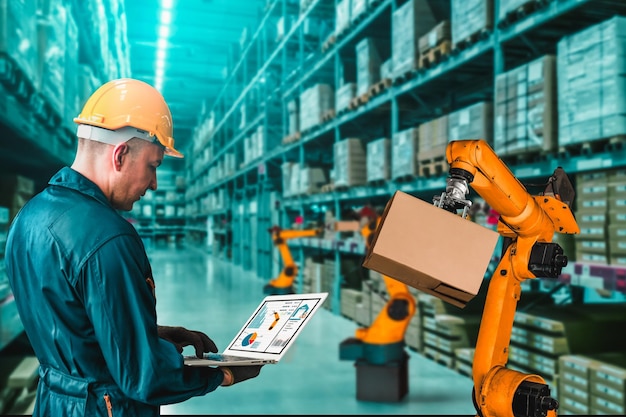
Warehouse operations have become a strategic driver of business performance. As customer expectations continue to rise and supply chains grow more complex, organizations need faster, more accurate, and more efficient ways to manage inventory and fulfill orders. Manual processes that once supported daily operations are no longer enough to keep pace with increasing demand.
By adopting warehouse automation software, businesses can streamline workflows, improve inventory visibility, and build warehouse operations that are ready to scale. Warehouse automation is no longer reserved for large distribution centers. It has become an essential investment for businesses focused on long-term operational excellence.
Warehouse automation is not about doing the same work faster. It is about creating smarter processes that improve every stage of warehouse operations.
Why Warehouses Are Under More Pressure Than Ever
Warehouses are responsible for far more than storing inventory. They coordinate receiving, stock management, order picking, packing, and shipping, all while maintaining inventory accuracy and meeting tight delivery deadlines.
As businesses expand, warehouse teams often face challenges such as:
- Growing inventory volumes
- Higher order demand
- Manual data entry
- Inventory inaccuracies
- Delayed order fulfillment
- Limited operational visibility
Without modern systems to support these activities, even small inefficiencies can affect productivity, customer satisfaction, and overall business performance.
Warehouse automation helps organizations address these challenges by replacing manual processes with digital workflows that improve speed and accuracy.
Automation Creates More Efficient Workflows
One of the biggest advantages of warehouse automation is its ability to streamline routine tasks.
Warehouse management software automates many everyday activities, including inventory updates, stock movements, task assignments, and reporting. This reduces the need for manual data entry while helping warehouse teams complete work more efficiently.
Instead of spending time updating spreadsheets or searching for inventory, employees can focus on receiving shipments, fulfilling orders, and maintaining smooth warehouse operations.
Automation also helps standardize workflows, ensuring tasks are completed consistently regardless of warehouse size or staffing levels.
Real-Time Inventory Visibility Improves Decision-Making
Accurate inventory information is essential for efficient warehouse management.
Warehouse automation provides real-time visibility into stock levels, product locations, and inventory movements, allowing managers to make informed decisions based on current data rather than outdated reports.
With greater visibility, businesses can:
- Monitor inventory availability
- Reduce stock discrepancies
- Improve replenishment planning
- Respond quickly to changing demand
- Identify operational bottlenecks
Having access to reliable information enables warehouse teams to resolve issues before they affect customers or disrupt the supply chain.
| Traditional Warehouse Operations | Automated Warehouse Operations |
| Paper inventory records | Real-time digital inventory |
| Manual stock updates | Automated inventory tracking |
| Spreadsheet reporting | Centralized operational dashboards |
| Time-consuming inventory searches | Instant inventory visibility |
| Reactive management | Data-driven decision-making |
Improving Inventory Accuracy
Inventory accuracy affects nearly every aspect of warehouse performance.
When stock records are inaccurate, businesses may experience fulfillment delays, unnecessary replenishment, excess inventory, or lost sales.
Warehouse automation helps improve accuracy by recording inventory movements as they occur. Barcode scanning, digital inventory tracking, and automated updates reduce the risk of manual errors while keeping stock information current.
Accurate inventory records also reduce the time spent investigating discrepancies, allowing warehouse teams to focus on productive activities.
Accurate inventory is the foundation of an efficient warehouse. Automation helps ensure every decision is based on reliable information.
Supporting a More Productive Workforce
Automation is designed to support warehouse employees, not replace them.
By reducing repetitive administrative tasks, warehouse management software allows staff to spend more time on activities that add value to the business.
Employees can work more efficiently because they have access to real-time information, clear task priorities, and standardized workflows.
This improves productivity while reducing unnecessary travel, duplicated effort, and avoidable errors throughout the warehouse.
For businesses experiencing labor shortages or seasonal demand increases, these efficiency gains can have a significant impact on daily operations.
Data Drives Continuous Improvement
Warehouse automation does more than improve day-to-day efficiency. It also provides valuable insights that help businesses optimize operations over time.
Warehouse management software can track important performance indicators such as:
- Inventory accuracy
- Order fulfillment times
- Receiving efficiency
- Picking productivity
- Warehouse capacity utilization
- Inventory turnover
These insights allow managers to identify trends, measure operational performance, and make informed decisions about process improvements.
Instead of relying on assumptions, businesses gain measurable data that supports continuous operational improvement.
Preparing for Sustainable Growth
As organizations continue to grow, warehouse operations must be able to handle increasing inventory volumes and more complex fulfillment requirements without sacrificing efficiency.
Warehouse automation provides the scalability needed to support this growth by improving operational visibility, reducing manual work, and creating consistent workflows that adapt to changing business demands.
Businesses that invest in warehouse management software are better positioned to increase productivity, improve inventory control, and maintain high service levels as operations expand.
Warehouse automation is no longer simply a technology upgrade. It is a strategic investment that helps organizations build more agile, efficient, and resilient warehouse operations capable of supporting future business growth.
