
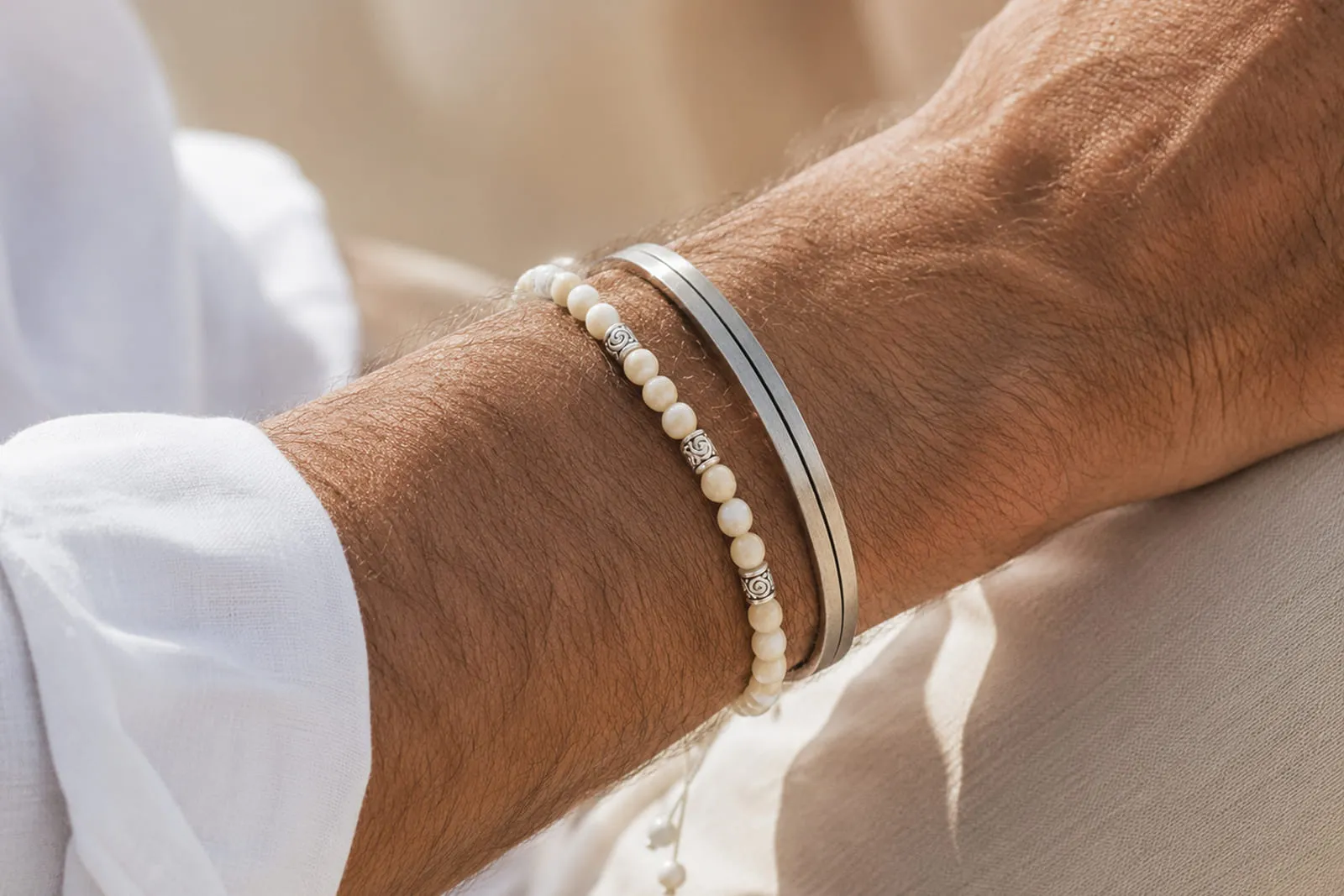
Men’s jewelry has moved firmly into everyday wardrobe territory, and silver bracelets are leading that shift. They’re versatile, affordable compared to gold, and easy to wear with almost anything, from gym clothes to a blazer. Walk through any menswear store or scroll through any men’s style page right now and you’ll see the same pattern repeating: a plain outfit, finished off with one quiet piece of silver on the wrist.
But not all silver bracelets are created equal, and buying one without knowing what to look for can mean ending up with something that tarnishes within weeks, irritates your skin, or simply doesn’t fit right. A bracelet that looks identical to a well made one in a product photo can be a completely different piece of jewelry once it arrives. Here is what actually matters when choosing one, step by step.
Know Your Silver: 925 Sterling Silver Is the Standard
The first thing to check on any listing is the silver purity. Pure silver, sometimes labeled 999, is too soft for daily wear. It scratches easily and loses its shape under normal pressure, which is why almost no jewelry is made from it directly. Instead, most quality silver jewelry is made from an alloy, usually mixed with a small percentage of copper for strength and durability.
The industry standard for quality jewelry is 925 sterling silver, meaning 92.5 percent pure silver combined with 7.5 percent other metals, typically copper. This ratio has been the benchmark for centuries because it strikes the right balance: strong enough to hold its shape through daily wear, while still retaining the brightness and shine people associate with real silver.
If a product description doesn’t mention 925 or sterling silver anywhere, treat that as a red flag. It may be silver plated, meaning a thin layer of silver sits over a base metal, often brass or copper, and will eventually wear off, exposing the metal underneath. Plated pieces can look identical to solid silver when new, but within a few months of daily wear they often develop uneven discoloration, a dull patch where the plating has rubbed thin, or a slightly different color at the edges. A genuine 925 silver mens bracelet should hold its finish and color for years with basic care, not months.
A reliable way to confirm purity is to look for a hallmark, a small stamp reading 925 stamped directly into the metal, usually near the clasp. Reputable jewelers stamp every piece this way. If a listing shows no hallmark and no mention of silver grade anywhere in the description, it’s worth asking the seller directly before buying.
Think About Fit Before Style
It’s tempting to pick a bracelet purely on looks, but fit determines whether you’ll actually wear it. A bracelet that’s too loose will spin around the wrist constantly, catch on sleeves, and generally feel more like a nuisance than an accessory. One that’s too tight, on the other hand, becomes uncomfortable within an hour and leaves a mark on the skin by the end of the day.
Most brands list wrist size measurements alongside their bracelets, usually in centimeters or inches. Measure your wrist with a soft tape measure or a strip of paper wrapped snugly around the widest part, just past the wrist bone, then add half an inch to a full inch of ease depending on whether you prefer a snug or looser fit. A snug fit sits closer to the bone and moves less during the day, while a looser fit allows more drape and movement but can shift around more.
If you’re buying as a gift and unsure of the recipient’s size, an adjustable clasp or extender chain is a far safer bet than guessing. Many bracelets now include a few centimeters of adjustability built into the clasp specifically for this reason, so check the product details before assuming a fixed length will work.
Match the Chain Style to How You’ll Wear It
Silver bracelets come in several common chain styles, and each suits a different look and level of formality.
- Curb chain, flat, interlocking links that lie close to the wrist. A classic, understated option that works well daily and under a shirt cuff.
- Figaro chain, a pattern mixing small and elongated links, slightly more detailed without being flashy. A good middle ground between plain and decorative.
- Rope chain, twisted links that catch light, giving a bit more shine and texture. Reads slightly more dressed up than a flat chain.
- Chain link or box chain, simple, uniform links for a cleaner, more minimal look. Pairs easily with other jewelry without competing for attention.
- Cuff or bangle style, solid, open ended bracelets that slide on rather than clasp, often slightly more casual or rugged in feel.
If you’re new to wearing jewelry, a curb or box chain is the easiest starting point. It pairs with nearly everything, doesn’t draw unnecessary attention, and works equally well with a t shirt or a suit.
Check the Clasp Quality
The clasp is where most cheaply made bracelets fail first, and it’s also the part buyers tend to overlook because it’s small and easy to miss in product photos. Look for a lobster clasp or a secure toggle clasp over a simple spring ring, especially if the bracelet will see daily wear. Lobster clasps use a spring loaded lever that locks firmly shut, while basic spring rings rely on tension alone and tend to weaken with repeated opening and closing.
A worn out or flimsy clasp is the single most common reason bracelets get lost, often without the wearer even noticing it’s gone until later in the day. If a listing includes close up photos of the clasp, take the extra few seconds to check it before buying. If it doesn’t, that’s a reasonable thing to ask about directly.
Consider Weight and Thickness
Heavier, thicker chains generally signal better construction and tend to last longer under daily friction, but they’re also more noticeable and carry more presence on the wrist. Thinner chains sit more discreetly and layer more easily with watches or other bracelets, but can wear down faster when rubbed repeatedly against cuffs, desks, or gym equipment.
If you plan to wear the bracelet every single day, lean toward a medium weight that balances durability with comfort. Reserve very thin, delicate chains for occasional wear, and save the heaviest, chunkiest designs for when you specifically want the bracelet to be a focal point rather than a subtle addition.
Buy From a Source That’s Transparent About Materials
Because silver purity isn’t something you can verify by looking at a photo, where you buy matters as much as what you buy. Reputable jewelers clearly state the silver grade, often include a hallmark stamp directly in product photography, and provide sizing details upfront rather than leaving it vague or buried in a FAQ page. NineTwoFive, for example, lists its 925 silver mens bracelet collection with clear material specifications and sizing guidance, which makes it easier to know exactly what you’re getting before you buy.
The same principle applies if you’re building out a wider collection rather than buying a single piece. Brands that are transparent about their bracelets tend to apply the same standard across their other jewelry too, including their mens sterling silver rings, which makes it easier to shop with confidence once you already trust how a brand describes its materials.
A Quick Pre-Purchase Checklist
- Confirm it’s stamped or listed as 925 sterling silver, not just “silver tone” or “silver plated”
- Measure your wrist and compare against the listed sizing before ordering
- Choose a chain style that matches how often and how formally you’ll wear it
- Check the clasp type, lobster or toggle clasps hold up better than basic spring rings
- Buy from a seller that’s upfront about materials and offers sizing support
Caring for Your Bracelet After Purchase
Even a well made 925 sterling silver bracelet needs a little upkeep to stay looking its best. Silver naturally oxidizes over time when exposed to air and moisture, which can cause a light tarnish, usually a dull gray or yellowish tint. This is normal and does not mean the piece is poor quality. A quick wipe with a soft polishing cloth after wearing it removes the oils and residue that speed up tarnishing, and storing it in a sealed pouch or box when not in use keeps it looking brighter for longer.
It also helps to remove the bracelet before swimming, showering with heavily chlorinated water, or applying lotions and perfumes directly over it, since chemicals can dull the finish faster than normal wear would. None of this requires much effort, but a few small habits make a noticeable difference in how long a bracelet keeps its shine.
Getting It Right the First Time
A well chosen silver bracelet should be something you forget you’re wearing, not because it’s cheap or ill fitting, but because it fits so naturally into your daily routine that it simply becomes part of you. Taking a few extra minutes to check purity, fit, chain style, and clasp quality before buying is a small amount of effort compared to the frustration of a bracelet that tarnishes, breaks, or sits unused in a drawer after a few weeks.
Once you’ve found a brand that gets the fundamentals right on a bracelet, that same standard usually carries over to the rest of their jewelry, which makes it far easier to build out a small, considered collection over time rather than starting from scratch with every new purchase.
