
In the world of industrial processing, capital expenditure decisions carry enormous weight. Whether you operate in pharmaceuticals, chemicals, food processing, or specialty materials, the drying stage of your production line is rarely a place to cut corners — but that does not mean you need to spend a fortune to get it right. For many plant managers and procurement engineers, sourcing pre-owned drying equipment has become a strategically sound alternative to purchasing new machinery. The key lies in knowing what to look for, understanding the technology, and working with reputable suppliers who can verify equipment condition and performance history.
Understanding Rotary Vacuum Dryer Technology
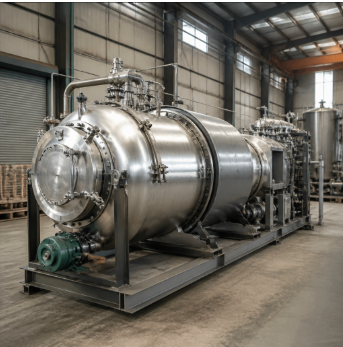
A rotary vacuum dryer is a batch-type drying system designed to handle heat-sensitive, solvent-laden, or hygroscopic materials under reduced pressure. The operating principle is elegantly simple: by lowering the pressure inside the drying chamber, the boiling point of moisture or solvents is significantly reduced, allowing materials to be dried at lower temperatures without degradation. The rotating shell ensures continuous tumbling of the product, promoting uniform heat transfer and consistent drying across the entire batch.
This type of equipment is particularly valued in pharmaceutical manufacturing, where active ingredients must be dried without thermal damage, and in chemical processing, where solvent recovery is both an economic and environmental priority. The sealed, vacuum-tight design also makes it ideal for handling toxic or flammable substances, as the closed system minimises exposure risks to operators and the surrounding environment.
Key Components and Their Role in Performance
The performance of a rotary vacuum dryer depends on several interconnected components: the rotating shell or drum, the heating jacket, the vacuum system, the condenser, and the discharge mechanism. Each of these plays a critical role in determining drying efficiency, product quality, and overall throughput. When evaluating a used unit, each of these components must be assessed individually. A drum in excellent condition paired with an ageing vacuum pump, for instance, may still require significant investment before the unit is production-ready.
The Case for Buying Used Process Equipment
The secondary market for industrial process equipment has matured considerably over the past two decades. What was once a fragmented, opaque marketplace has evolved into a structured industry with professional dealers, detailed inspection protocols, and in many cases, full refurbishment services. For buyers, this means access to high-quality machinery at a fraction of the original cost — often 40 to 70 percent below new equipment pricing, depending on age, condition, and manufacturer.
Beyond cost savings, lead times are another compelling factor. New rotary vacuum dryers from established manufacturers can take six to eighteen months to deliver, particularly for custom-specified units. A used machine that has been inspected, refurbished, and certified can often be delivered and commissioned within weeks. For plants facing production bottlenecks or rapid capacity expansion, this speed-to-operation advantage can be decisive.
What to Inspect Before Purchase
Due diligence is non-negotiable when purchasing used process equipment. Buyers should request full documentation including the original manufacturer’s specifications, maintenance records, and any previous inspection reports. Physical inspection should cover the integrity of the shell and jacket welds, the condition of seals and gaskets, the functionality of the vacuum system, and the state of the drive mechanism. If possible, a witnessed test run under vacuum conditions provides the most reliable indication of operational readiness. Engaging an independent process engineer for the inspection adds an additional layer of assurance.
Vacuum System Efficiency: A Critical Consideration
The vacuum system is arguably the most performance-critical subsystem in any rotary vacuum dryer. An underperforming vacuum pump will extend drying cycles, increase energy consumption, and potentially compromise product quality. Modern dry vacuum pump technology has advanced significantly, and state-of-the-art dry vacuum pump systems have been shown to cut both operating costs and contamination risks compared to older wet-ring or oil-sealed alternatives. When refurbishing a used rotary vacuum dryer, upgrading the vacuum pump to a current-generation dry pump is often one of the most cost-effective improvements available.
Solvent Recovery and Environmental Compliance
Environmental regulations governing solvent emissions have tightened considerably across Europe and North America. A well-maintained rotary vacuum dryer with an efficient condenser system can recover a high percentage of evaporated solvents, reducing both waste disposal costs and regulatory exposure. When evaluating a used unit, the condenser capacity and its compatibility with your specific solvents should be carefully matched to your process requirements. Retrofitting a more efficient condenser to an otherwise sound used dryer is a common and cost-effective upgrade path.
Facility Readiness and Infrastructure Considerations
Installing any large piece of process equipment requires careful planning around facility infrastructure. Utility connections for steam or hot water heating, cooling water for the condenser, electrical supply for the drive and controls, and vacuum line routing all need to be assessed before equipment arrives on site. Drainage is another frequently overlooked consideration — condensate and cleaning effluent must be properly managed. If your facility requires upgrades to its drainage infrastructure, consulting specialists in drain repairs and industrial drainage solutions early in the project timeline can prevent costly delays during commissioning.
International Process Plants: A Trusted Source for Used Rotary Vacuum Dryers
For organisations seeking reliable, professionally evaluated pre-owned drying equipment, International Process Plants has established a strong reputation in the global process equipment market. Their inventory spans a wide range of manufacturers, capacities, and configurations, giving buyers genuine choice rather than a take-it-or-leave-it proposition. The team brings deep technical knowledge to every transaction, supporting buyers through inspection, logistics, and post-purchase technical queries.
If you are currently evaluating your drying capacity options, sourcing a used rotary vacuum dryer from a specialist dealer like International Process Plants offers a compelling combination of cost efficiency, technical assurance, and speed of availability that new equipment procurement simply cannot match in most scenarios.
Making the Right Decision for Your Operation
The decision to invest in a used rotary vacuum dryer should be approached with the same rigour as any significant capital expenditure. Define your process requirements precisely — batch size, material characteristics, target moisture content, solvent type, and required cycle time. Use these parameters to evaluate candidate machines against your actual needs rather than simply comparing price tags. A slightly more expensive unit that closely matches your specifications will almost always outperform a cheaper machine that requires extensive modification.
Long-Term Value and Operational Reliability
When properly selected, inspected, and commissioned, a used rotary vacuum dryer can deliver years of reliable service at a fraction of the cost of new equipment. The key is treating the purchase as a technical exercise rather than a purely financial one. Invest in proper inspection, budget for necessary refurbishment, and work with suppliers who stand behind the equipment they sell. Done correctly, the acquisition of pre-owned drying equipment is not a compromise — it is a sophisticated procurement strategy that delivers genuine competitive advantage.
Conclusion
Rotary vacuum dryers represent a mature, proven technology that continues to serve critical roles across multiple industries. The secondary market for this equipment offers real opportunities for cost savings and operational agility, provided buyers approach the process with appropriate diligence and technical expertise. From vacuum system performance to facility drainage readiness, every detail matters. With the right preparation and the right supplier partnership, a used rotary vacuum dryer can be one of the most value-generating investments your process plant makes this year.
Visit More : widemagazine.co.uk
