
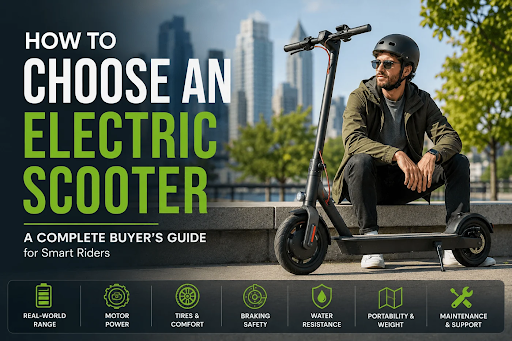
When choosing an electric scooter, consider more than just its motor power and top speed. The model you choose needs to be suitable for your lifestyle, your journey, the road, storage options, and your wallet. A scooter that performs well on paved roads may struggle on rough terrain, while a more powerful model can be difficult to carry in and out of your home.
This electric scooter comparison guide could be useful if you want to know more about the key features before purchasing an electric scooter. As you learn more about how each scooter performs under different conditions, you can select the one that is going to provide comfort and reliability, while being portrayed in the price movement you desire.
Choose a route that suits your scooter and your travel needs. Map a path to ride on the Scooter.
Start by considering the places and times you plan to use the scooter. A light-duty commuter scooter might suffice if you do mostly short trips on a level, dry road in an urban area. But people who ride frequently on rough ground, potholes, or extremely dangerous hills will need to use a vehicle with a more durable body structure, higher suspension, and tyres that provide better handling over rough roads.
CyberCart’s electric scooter buying guide outlines the key factors, including riding conditions, rider weight, portability, and range required for the choice of scooter.
Do consider your typical workout path before purchasing. It’s more helpful to select features that suit your real requirements as opposed to paying over the odds for performance you will probably never use.
Can explain Battery Capacity and Real-World Range
What counts as a battery? Is it performance? If so, how? While the manufacturer gives maximum ranges, these may be under ideal conditions. In daily use, the distance covered may be shortened by the following: rider weight, hills, temperature, tyre pressure, riding speed, frequent acceleration.
For instance, when a scooter says “135 km”, you might be tempted to ride it the entire distance to charge it for the next day’s trip—but unless you’re the rider who can easily find suitable charging spots, you may still be caught off guard if you end up needing to pause the ride for a trip to the gas station. A good guideline is to maintain a sunk reserve.
Consider battery capacity, charging time when comparing models, and whether the battery is removable. This information is essential if you don’t have many charging stations available or if you need the scooter for daily commuting.
Select Tyres for Comfort and Grip.
Tyres contribute to stability, handling, and comfort. They feature a solid compound tyre that won’t get punctured in normal conditions, and they can pass on more vibrations when running on uneven roads.
Pneumatic tyres have air built within them and will absorb smaller bumps, allowing them to provide often better grip. They need to be properly inflated, and they can get punctured, however. The route and do-it-yourself skills will decide which is best.
Consider the quality of the tyres if your streets have cracks, holes, or loose surfaces. The right tyres can help improve ride comfort and keep you in better control when faced with road changes.
Click Brakes and Suspension
You can’t ride safely without reliable brakes. Seek a braking system designed to provide reliable braking stops; preferably use a suitable disc/drum brake as well as electronic braking if available. Don’t forget tyre condition, speed, weather, and rider technique also play a role on braking.
Another factor to be taken into account is suspension. For models with front or dual suspension to minimize the effects of bumpiness, especially when the pavement is in poor condition. For smooth roads, a basic suspension system could be enough, and the extra expense might not be required.
Control and comfort should be the focus for a well-balanced electric scooter buying guide, before focusing primarily on headline speed numbers. Test braking and manipulation as much as possible when not doing these sample tests; always wear the proper protective gear.
Take into account Weight, Folding, and Storage.
The right specifications on a scooter do not always make it convenient to operate. When weight is a key factor, carry it up and down stairs, or store it under a desk.
Determine the actual weight of the scooter, the folding method, folded size, as well as the handlebar design. Think about how you will store it in your home, and how easily you can pick it up.
The heavier it is, the more advanced these components are to make it faster. As a result, choose a model to suit your preference between portability and performance.
Convert the power needed by your bike to the distance you might cover on your route.
The higher the wattage, the faster the motor accelerates and the better the scooter will climb hills, but more doesn’t necessarily mean better. Smaller motors can be used for flatter terrain and shorter trips, and larger motors for steeper inclines and heavier loads.
Follow the manufacturer’s guidelines for the maximum weight and ability to climb. Consider the speed modes, child/pedal rules for electric scooter use, and speed-up control. Don’t assume that the most touted speed is lawful and safe where you are riding.
The right-to-the-point purchase is about enough power, not too much, useful range, good stopping power, and lightness.
The sample supplemental book cover in the Collection calls attention to Weather Protection and Total Cost.
When it comes to dealing with splashes of rain, have a look at the water resistance score provided by the manufacturer. An IP rating is a representation of the protection offered from dust or water, but it is not 100% waterproof. Follow manufacturers’ recommendations for wet weather riding and cleaning.
Be sure to plan for the possibility of a helmet, lock, lights, replacement tyres, and maintenance costs. Even though some parts to be replaced require higher costs, a relatively inexpensive scooter is not necessarily a more expensive option in the long term.
Don’t just compare the price of an electric scooter when using this buying guide; compare the many ways the scooter can come to you.
Conclusion
The right electric scooter for you should be suited to your trip, Reliable, manage your neighborhood roads, and simple to carry in addition to shop. Look at the tyres, suspension, mileage, safety precautions, and batteries before making your final purchase.
With a careful electric scooter shopping guide, you can save yourself from paying for extra features; otherwise, you only end up making a purchase of a model that you don’t even need most of the time. Keep in mind comfort, reliability, and suitability, not impressive numbers, and your purchase will reap long-term rewards.
Visit More : widemagazine.co.uk
