
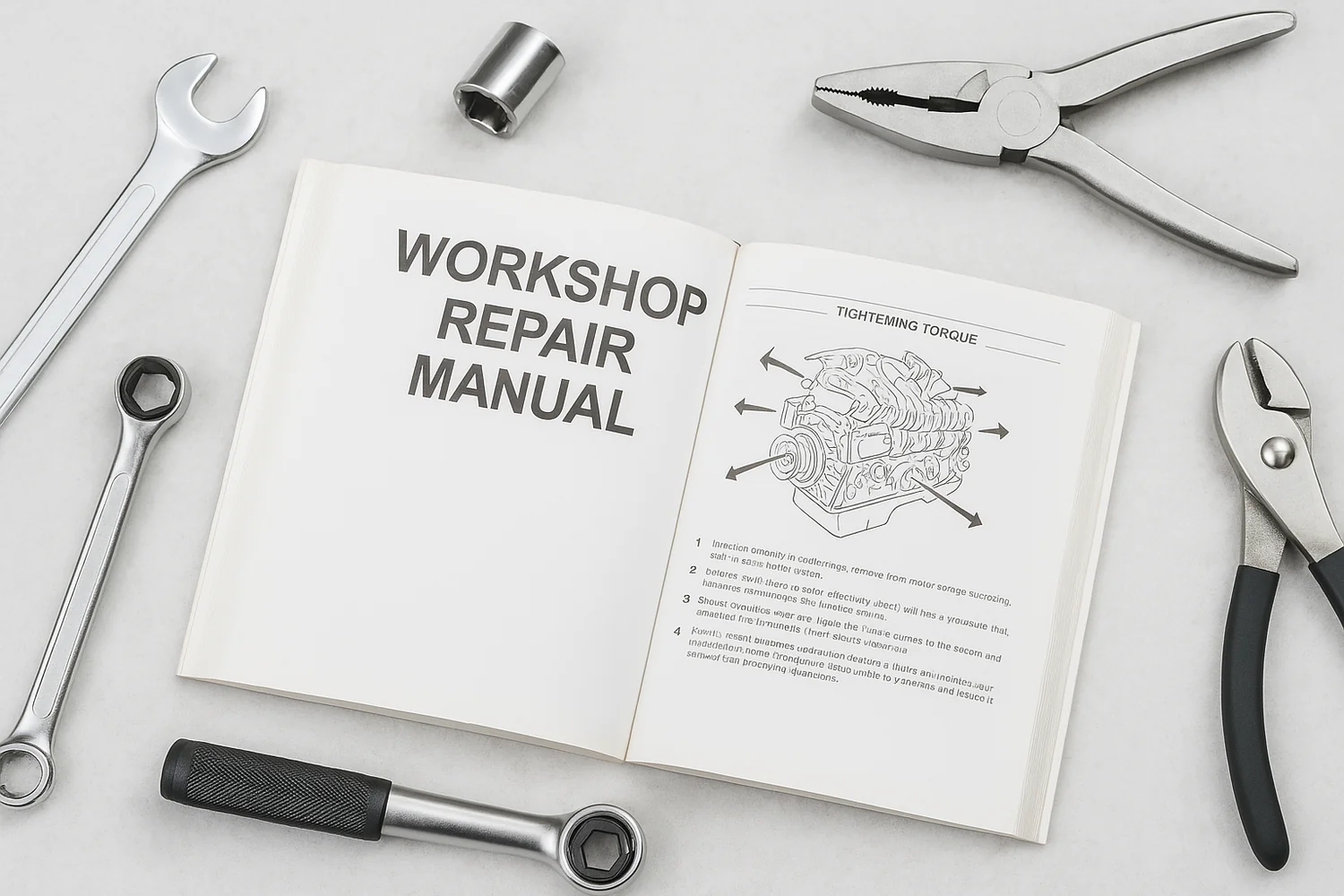
A workshop manual is easy to overlook until something goes wrong.
When a machine refuses to start, a warning light appears, or a repair becomes more complicated than expected, many owners turn first to online forums and video tutorials. These sources can be useful, but they are rarely consistent. One contributor may be describing a different model, a different engine, or a repair carried out under completely different conditions.
The right workshop manual offers something more dependable: a structured, model-specific reference that explains not only what to do, but why it should be done that way.
More Than a Collection of Instructions
At first glance, a technical manual can seem like a dense catalogue of diagrams, specifications, and procedures. In practice, it is a record of how a machine is designed to operate and how its systems relate to one another.
That distinction matters. A repair is rarely just a matter of removing one part and replacing another. Components interact. A fault in the charging system may look like a battery problem. An overheating engine may have a cooling issue, a thermostat fault, a damaged seal, or an electrical problem affecting the fan. Without a reliable reference, it is easy to treat a symptom rather than identify the cause.
A good manual typically provides:
- Component locations and system diagrams
- Step-by-step removal and installation procedures
- Torque settings and adjustment specifications
- Wiring diagrams and diagnostic guidance
- Maintenance schedules and fluid requirements
- Safety warnings and information about specialist tools
These details turn a vague repair task into a process that can be checked, measured, and repeated.
Accuracy Saves More Than Time
The most obvious benefit of a workshop manual is efficiency. Knowing where to begin can save hours of trial and error. However, the financial value of accurate information is often even greater.
Consider a vehicle with a persistent starting problem. Replacing the battery may appear to be the logical first step, but if the actual cause is a poor earth connection or a failing starter relay, the replacement will not solve the problem. A manual’s wiring diagrams and test procedures can help narrow the fault before money is spent on unnecessary parts.
The same principle applies to mechanical work. Many fasteners have specific torque requirements. Too little torque can allow movement, vibration, or leakage. Too much can damage threads, distort housings, or compromise a gasket. Those errors may not become apparent until the machine is back in service, when correcting them is more disruptive and expensive.
For owners who maintain their own equipment, using a reliable technical manual resource can be a practical way to find documentation suited to a particular make and model. The important point is not simply having a manual, but using information that matches the exact machine being worked on.
Model Specificity Is Crucial
Manufacturers often update equipment during a production run. A model may have different engines, transmissions, electrical systems, or emissions equipment depending on its year, market, and trim level. Even apparently minor changes can affect a repair procedure.
This is why a generic manual may be inadequate. It might show a component in a different location or provide specifications for an earlier version. The result can be confusion at best and damage at worst.
Before consulting a manual, verify as much of the following as possible:
Identification Details
Check the model name, production year, engine or equipment code, transmission type, and market designation. For vehicles, the VIN can help confirm specifications. For agricultural, industrial, or workshop equipment, a serial number may be more useful.
Revision and Edition
Technical documentation is sometimes updated to correct errors or reflect revised components. If a manual includes an edition date or revision number, record it. When an official service bulletin exists, it may take precedence over an older procedure.
System Compatibility
Make sure the manual covers the exact engine, electrical arrangement, or attachment being serviced. A machine can have several configurations that appear almost identical externally while using different internal parts.
This small amount of preparation prevents one of the most common repair mistakes: following accurate instructions for the wrong version.
Manuals Improve Diagnosis, Not Just Repairs
A workshop manual is often treated as a set of instructions to follow after a fault has already been identified. Its greater value may be in helping diagnose the fault in the first place.
Diagnostic sections often provide a logical sequence of checks. Rather than replacing parts randomly, the user can test voltage, resistance, pressure, continuity, or operating clearances in a sensible order. This approach is especially useful for intermittent faults, which can be difficult to reproduce and easy to misinterpret.
For example, an electrical diagram can show whether several apparently unrelated symptoms share a common power supply or earth point. A hydraulic schematic can reveal how a restriction in one part of the circuit might affect several functions. A parts illustration can expose missing clips, incorrectly routed hoses, or a fastener installed in the wrong position.
The manual therefore becomes a form of reasoning support. It helps translate observations into possible causes, then provides ways to confirm or eliminate them.
A Safety Tool in the Workshop
The value of technical documentation also extends to personal safety and equipment protection.
Heavy components may require lifting equipment. Pressurised systems may need to be released in a particular sequence. Some fluids are hazardous, while rotating assemblies can remain dangerous even after a machine has been switched off. A proper manual identifies these risks more reliably than an informal online post.
Safety information is not limited to dramatic hazards. It may also explain the correct way to support a vehicle, isolate a battery, handle refrigerant, or dispose of contaminated fluids. Following these details reduces the chance of injury and helps prevent damage caused by shortcuts.
Making the Manual Work for You
A manual is most useful when treated as part of the repair process rather than an emergency reference opened halfway through a difficult job.
Read the relevant section before dismantling anything. Note special tools, replacement seals, one-time-use fasteners, and fluid requirements. Photograph cable routes and hose connections, but use the manual to verify their correct positions during reassembly. Mark completed steps and record measurements as you go.
It is also worth keeping a maintenance log. Recording dates, mileage or operating hours, parts replaced, and adjustments made creates a useful history for future diagnosis. Over time, the manual and the log become complementary: one explains the correct standard, while the other shows how the machine has changed.
The Long-Term Payoff
The hidden value of a workshop manual is not limited to a single successful repair. It encourages better decisions, reduces avoidable expenditure, protects components, and builds confidence through repeatable methods.
For professionals, that can mean fewer comebacks and more consistent work. For private owners, it can make routine maintenance less intimidating and help determine when a job is suitable for home repair and when specialist assistance is sensible.
In an age of quick searches and short-form advice, authoritative documentation remains remarkably relevant. The right manual does not replace experience or sound judgement. It strengthens both by giving them a dependable technical foundation.
