
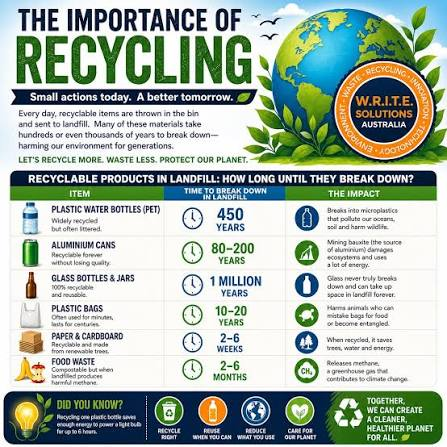
Every product we use begins with natural resources. Metals are extracted from the ground, trees provide fibres for paper, and plastics are commonly manufactured from fossil-based raw materials. When products reach the end of their useful lives, many of these resources are discarded, even though they could potentially be recovered.
As demand for packaging, electronics and manufactured goods grows, so does the need to recover materials that would otherwise go to waste. Recycling helps conserve natural resources, reduces dependence on newly extracted materials and supports manufacturing.
However, recycling involves much more than separating household rubbish. It requires collection networks, processing facilities and manufacturers working together to turn discarded materials into usable resources.
Growing Pressure on Natural Resources
Modern manufacturing depends on a reliable supply of raw materials. Industries require metals for machinery, plastics for packaging and paper for everyday products. Meeting this demand through newly extracted resources places pressure on the environment.
Mining, forestry and raw material processing consume energy, water and land. Depending on their location and methods, these activities can also affect surrounding ecosystems.
Recyclable materials provide an alternative source of industrial inputs. Aluminium recovered from used drinks cans, for example, can be processed into new metal products, reducing demand for primary aluminium.
Paper and cardboard can also be recovered and manufactured into new packaging. Although recycling cannot eliminate the need for virgin resources, it helps industries make better use of materials already in circulation.
How Recycling Supports Modern Manufacturing
Recycling is often associated with household waste collection, but it also plays an important role in industrial production.
Manufacturers use recovered materials in various applications. Recycled plastics can be processed into granules for new products, while recovered metals can be melted and reused in manufacturing.
However, material quality determines what can be produced. Plastic suitable for outdoor furniture may not meet the requirements for food-contact packaging. Similarly, recovered paper is classified into different grades depending on its composition and quality.
It is also important to distinguish between recyclable and recycled materials. Recyclable materials are those that can potentially undergo recycling, while recycled materials have already been processed from recovered waste.
Reliable sorting, processing and supply arrangements help manufacturers obtain materials that meet their production requirements.
Why Recyclable Materials Have Economic Value
Materials that end up in waste containers are not always worthless. When properly collected and separated, certain waste streams can become valuable commodities traded between businesses.
Their market value depends on demand, material quality, contamination levels, transport costs and processing requirements.
Clean, well-sorted cardboard is generally easier to process than mixed paper containing unsuitable materials. Likewise, separated plastic polymers offer more predictable processing characteristics than unsorted plastic waste.
For businesses looking to source recyclable materials, understanding the process ofBuying recycling can be a useful starting point when exploring available supply opportunities.
For collectors, recycling facilities and manufacturers, understanding material specifications is essential. Reliable suppliers help businesses maintain consistent production, while suitable buyers create opportunities for recovered materials to re-enter the market.
Recycling prices can fluctuate, however. Changes in manufacturing demand, energy costs and transport availability can affect the profitability of material recovery.
The Importance of Proper Collection and Sorting
A recyclable product does not automatically become a recycled product. Its successful recovery depends on what happens after collection.
Consider a plastic bottle placed in a recycling container. Before becoming manufacturing material, it may need to be transported, sorted, cleaned and processed.
If unsuitable materials become mixed with the bottle, recovery becomes more complicated.
The same applies to commercial waste. A warehouse that keeps cardboard separate from plastic wrapping makes both materials easier to handle. When everything is mixed together, additional sorting may be necessary, and some materials may become unsuitable for recycling.
Clearly labelled containers, staff training and suitable collection arrangements help maintain better-quality recyclable materials.
Households also play a part by following local recycling guidelines rather than assuming every type of packaging can enter the same collection system.
Recycling and the Circular Economy
Traditional production often follows a linear pattern: extract resources, manufacture products, use them and dispose of them.
The circular economy aims to keep products and materials useful for longer through reuse, repair, refurbishment and recycling.
Recycling becomes particularly important when products can no longer fulfil their original purpose.
An old cardboard box, for example, may no longer be suitable for reuse, but its fibres can still become part of new paper products. Metal offcuts from manufacturing can also be collected and returned to production.
However, recycling has limitations. Paper fibres gradually become shorter through repeated processing, while certain plastics lose properties or are difficult to recover when different materials are combined.
For this reason, recycling works best alongside waste prevention and product reuse.
Challenges Facing the Recycling Industry
Despite its advantages, recycling presents practical challenges.
Contamination is a common problem. Food residue, incorrectly sorted waste and mixed materials can increase processing costs or make recovery impossible.
Transport is another consideration. Recyclable materials may travel between collection sites, sorting facilities and manufacturers, requiring suitable logistics and compliance with waste transport regulations.
Demand also matters. Even technically recyclable materials may be difficult to process economically when manufacturers have limited interest in purchasing them.
Packaging design creates further difficulties. Products made from several tightly bonded materials are often harder to recycle than those manufactured from a single, easily identifiable material.
Better recycling therefore depends on decisions made throughout the supply chain, from product design to collection and processing.
How Businesses Can Use Recyclable Materials More Effectively
Businesses can improve recycling practices by identifying the materials they regularly discard.
An office may generate mostly paper and cardboard, while a manufacturing facility might produce metal offcuts, plastic film or other production residues.
Keeping these materials separate can improve recovery opportunities and reduce contamination.
Companies can also review their packaging choices, remove unnecessary layers and consider reusable transport materials where practical.
Working with suitable recycling partners provides greater clarity about collection procedures, material specifications and available processing options.
Even smaller businesses can make improvements through straightforward waste assessments and clearly organised collection areas.
A More Resource-Efficient Future
Recyclable materials are becoming increasingly important because they offer practical alternatives to using newly extracted resources.
Recovering existing materials can support manufacturing, reduce certain environmental pressures and create economic opportunities across recycling supply chains.
Nevertheless, recycling alone cannot solve every waste-related problem. Reducing unnecessary consumption, extending product lifespans and designing products for easier recovery remain equally important.
When recovered materials meet manufacturers’ requirements, they have a better chance of replacing virgin resources. By improving collection, sorting and material recovery, businesses and communities can make more effective use of the resources already available.
