
Ask any freelance developer who has been doing client work for more than three years whether they would rather be building something of their own and the answer is almost always yes, accompanied by a fairly detailed explanation of why it has not happened yet. The client work pays well enough that stopping feels risky. The projects are varied enough to stay interesting. Relationships are often genuinely good. And yet somewhere underneath all of that is the awareness that income stops the moment the work stops, that every client relationship eventually ends, and that years of building things for other people have not produced anything that belongs to the developer themselves.
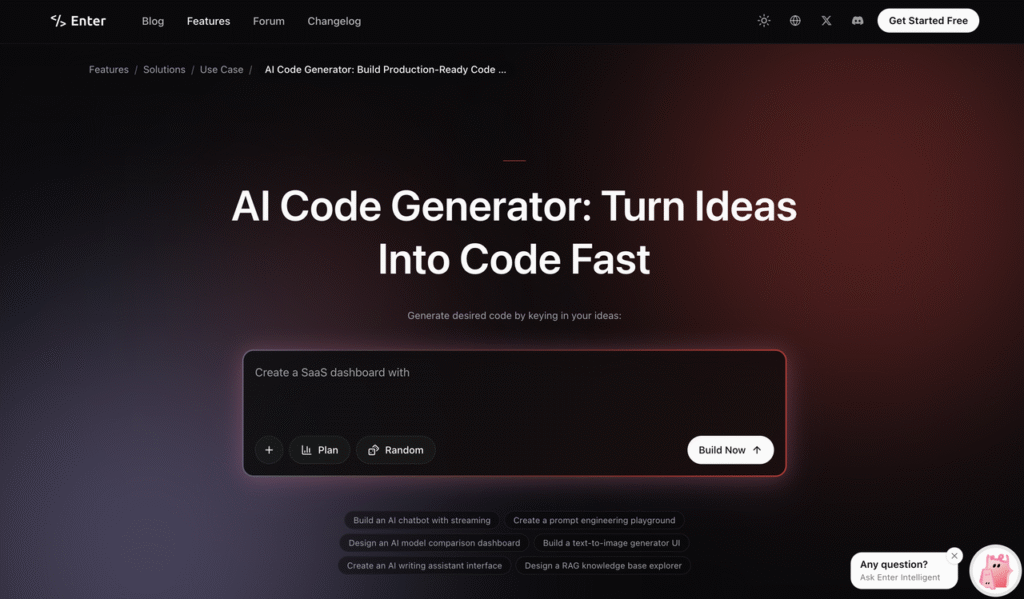
The freelance trap is real and it is particularly acute for developers because the skills required to escape it, the ability to build software, are skills they already have. What most freelance developers are missing is not technical capability but the marketing website, the positioning, and the product thinking that turns technical capability into a product someone will pay for month after month without requiring the developer’s ongoing time in direct proportion to the revenue. A code maker accelerates the build side of this equation considerably, compressing the time between having a product idea and having something testable in front of potential users. Enter Pro has been genuinely useful for developers making this transition and understanding what the transition actually requires is the starting point for making it successful.
The Productization Mindset Shift That Changes Everything
Freelance development and product development require fundamentally different thinking about the same underlying technical skills and most developers who try to make the transition without explicitly making this mindset shift find themselves building a product the way they would build a client project, starting with technical architecture, building features based on what seems useful, and launching when the build feels complete enough to show people.
This approach produces technically solid products that nobody uses because it skips commercial thinking that determines whether a product has a market, what that market will pay for, and how a potential user who has never heard of the product would be convinced to try it.
Product thinking starts with the customer rather than the code. What specific type of person has this specific problem badly enough to pay for a solution? How do they currently solve it? What would make a software solution significantly better than their current approach? What would they need to believe before they would pay for it and how much would they be willing to pay?
The developers who answer these questions carefully before writing a line of product code build things that have users from the start rather than things that require significant pivoting after launch to find a market that was never properly identified before the build began.
From Client Projects to Productized Services to SaaS
The transition from freelance client work to SaaS product is rarely a single leap and attempting it as one is one of the reasons many developers try it to return to client work within six months. The revenue gap between stopping client work and a SaaS product generating meaningful monthly recurring revenue is typically longer and more difficult than optimistic projections suggest and navigating it requires either significant savings or a staged transition that maintains some income throughout.
The productized service is often the most useful intermediate stage. A specific, well-defined service delivered to a specific type of client at a fixed price, with a repeatable process that does not require scoping from scratch each time, generates better economics than custom client work while building the domain expertise and client relationships that eventually inform a useful SaaS product.
Many successful SaaS products started as the automation of a productized service that the developer was delivering manually. The tool built to make the service faster became, with some additional development, a product that other service providers in the same space were willing to pay for. That path from service to tool to product is well-trodden and the developers who follow it have significant advantages over those who try to build a product without the domain knowledge that service delivery provides.
Building the Marketing Site Before the Full Product
This is the discipline that separates the developers who consistently ship successful products from those who spend months building in private and then discover at launch that the market does not respond the way they anticipated.
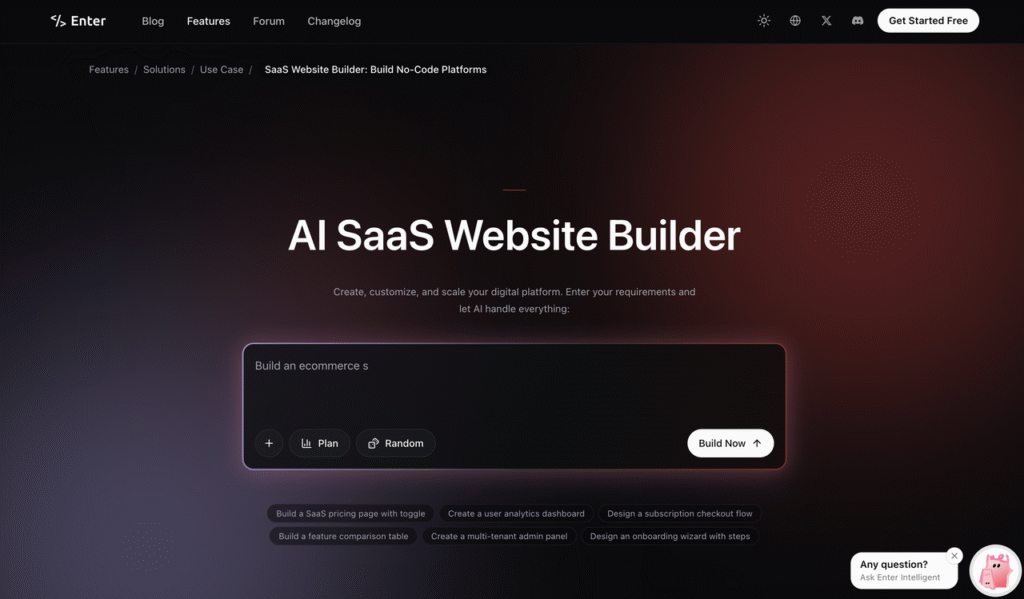
A SaaS website builder makes it genuinely fast to build a marketing site that describes the product, communicates the value proposition to a specific audience, and captures email addresses from interested potential users before the product is finished or sometimes before it is started. The information gathered from that early marketing site, which messages resonate, which audiences respond, which pain points the copy needs to address more directly, is more valuable to the eventual success of the product than almost any amount of additional feature development.
The developer instinct is to build first and market later. The product instinct is to validate the market before building more than the minimum required to test whether the problem and the proposed solution are as well matched as the founder believes. Enter Pro supports this approach by making the marketing site fast enough to build that it genuinely precedes rather than follows product development.
Developer Credibility as a Marketing Asset
The freelance developer making the transition to SaaS founder has a marketing asset that most non-technical SaaS founders do not, genuine technical credibility that can be demonstrated publicly in ways that build an audience of potential users before the product exists.
Writing honestly about technical decisions, about the tradeoffs made in product architecture, about the specific problems encountered and how they were solved, attracts an audience of developers who face similar challenges and who are therefore among the most likely early adopters of a developer tool or productivity product. This building in public approach has produced some of the most successful developer-focused SaaS products of the last several years and it is available specifically to developers because the content they can produce authentically is the content that their most likely early adopters find genuinely interesting.
The developer who has been building in public for six months before launching a product arrives at launch with an engaged audience rather than starting from scratch with no one listening. That audience difference is one of the most significant factors distinguishing successful SaaS launches from ones that generate initial excitement and then fade without finding their market.
The Support Burden That Most Developer-Founders Underestimate
There is a particular kind of rude awakening that developer-founders experience when their first SaaS product starts getting real users. The code works. The features do what they are supposed to do. And yet the support inbox fills with questions that reveal that real users interact with the product in ways that the developer who built it never anticipated and that the documentation written by someone who understands the code intimately does not address the confusion that someone approaching the product for the first time actually experiences.
Support burden is one of the most common reasons early SaaS products fail not through lack of users but through burnout. The developer who built the product alone now spends every morning answering support questions rather than building the features that would make the product better and more competitive.
Enter Pro helps address this by making it straightforward to build genuinely useful onboarding content, contextual help, and documentation into the marketing site and product pages rather than treating them as afterthoughts assembled reactively in response to support questions that have already been asked too many times.
Pricing for Value Rather Than Effort
Developer-founders almost universally underprice their first SaaS product and the reasons are psychologically consistent across almost everyone who makes this mistake. They know how the product was built. They know the shortcuts taken, the technical debt accumulated, the features that are not yet as polished as they should be. That inside knowledge makes the product feel less valuable to the person who built it than it actually is to someone who has never seen the codebase and cares only about whether it solves their problem.
Pricing a SaaS product based on the effort that went into building it is always wrong because the customer does not pay for effort. They pay for value, for the outcome the product enables, for the time it saves, for the problem it solves, for the capability it provides that they did not have before. A product that saves a small business owner ten hours a week is worth the same amount regardless of whether it took the developer three weeks or three months to build and price it based on development time rather than customer value leaving significant revenue on the table from the first day it is live.
Conclusion
The freelance trap is not a permanent condition and the path out of it does not require abandoning the technical skills that made freelance development viable in the first place. It requires applying those skills differently, in service of building something that generates value independently of the developer’s ongoing time rather than in exchange for it. The tools to make that transition faster and less technically demanding than it has historically been are now genuinely available. The thinking required to make it commercially successful has always been available to anyone willing to start with the customer rather than the code.
Visit More : widemagazine.co.uk
