
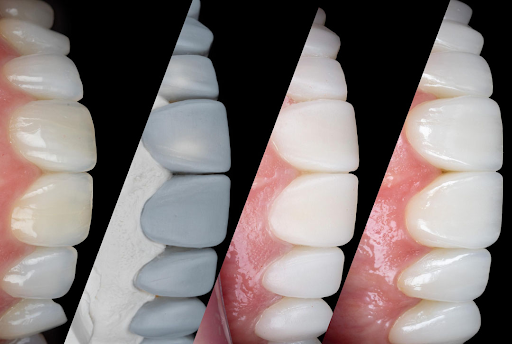
Porcelain veneers typically last 10 to 20 years, and many last longer with good care. Long-term studies have reported survival rates above 90 percent at ten years and around 80 percent or more at twenty years. How long yours last depends mainly on how well they were planned and bonded, whether you grind or clench your teeth, and how healthy your gums and the teeth underneath stay over time.
That range is wide because veneers don’t wear out on a fixed schedule. A well-bonded veneer on a healthy tooth in someone with a gentle bite can look almost the same after two decades. The same veneer on a patient who grinds heavily at night, bites their nails or skips hygiene appointments may chip or need replacing within a few years.
What Research Says About Veneer Lifespan
Porcelain is one of the most durable materials used in cosmetic dentistry. It resists staining far better than natural enamel or composite resin, it holds its polish for years, and it isn’t affected by decay. When veneers do fail, it’s rarely because the porcelain simply wears away. The most common reasons are chipping or fracture, the veneer debonding from the tooth, or problems developing at the edges where the veneer meets the natural tooth and gum.
Long-term follow-up studies consistently show that most failures cluster in two groups: patients with heavy bite forces or grinding habits, and veneers bonded mostly onto dentine rather than enamel. This is useful because both factors can be identified and managed before treatment begins, which is why two people with the same number of veneers can have very different experiences.
Composite veneers are a different story. They’re less expensive and more easily repaired, but they usually need polishing or replacing after around four to eight years because the resin gradually stains and wears. For patients focused on longevity, porcelain remains the stronger long-term choice.
How the Way Veneers Are Made and Fitted Affects Longevity
The single biggest factor in veneer longevity is how much healthy enamel remains to bond to. Enamel forms a much stronger, more predictable bond than the softer dentine underneath. Modern approaches aim to remove as little tooth structure as possible, often a fraction of a millimetre, so that the veneer is bonded mainly to enamel. Aggressive preparation that exposes large areas of dentine is linked to higher rates of debonding over time.
Material choice matters too. Traditional feldspathic porcelain is very thin and beautifully translucent, making it ideal for minimal-preparation cases. Stronger glass ceramics are often chosen where more strength is needed, such as for patients with a heavier bite. A good dentist and dental laboratory will match the material to the tooth and the patient rather than using the same approach for everyone.
The bonding appointment is just as important as the design. The tooth must be kept perfectly dry and clean during cementation, the bite must be checked carefully in every direction, and edges need to be finished smoothly so plaque can’t collect. This is where it’s worth seeing how a clinic approaches carefully planned veneer work, including digital smile design, trial smiles and bite analysis, since those steps prevent many of the problems that shorten a veneer’s life. Precision at this stage often decides whether veneers last eight years or twenty.
Grinding, Clenching and Everyday Habits
Bruxism, the habit of grinding or clenching the teeth, is the most common reason porcelain veneers chip or crack. Many people grind at night without knowing it, and signs include morning jaw stiffness, headaches, flattened tooth edges or a partner hearing grinding during sleep. If your dentist spots these signs before treatment, a custom night guard worn every night is one of the best investments you can make to protect your veneers.
Everyday habits cause damage too. Biting nails, chewing pens, opening packets with your teeth and crunching ice all put sharp, concentrated forces on the thin edges of veneers. Biting directly into very hard foods, such as whole apples or crusty baguettes, is usually fine for well-designed veneers, but many dentists suggest cutting harder foods into smaller pieces to reduce stress on the front teeth.
Contact sports are another risk. A blow to the mouth can fracture a veneer or the tooth beneath it, so a properly fitted sports mouthguard is essential for anyone who plays rugby, hockey, martial arts or similar sports.
Gum Health, Decay and What Happens at the Edges
A veneer itself can’t decay, but the tooth underneath can. The most vulnerable area is the margin, the fine edge where the porcelain meets the natural tooth near the gum. If plaque builds up there, decay can develop under the edge of the veneer, and gum inflammation can cause the gum to recede and expose that line.
Good daily hygiene is therefore just as important after veneers as before. Brushing twice a day, cleaning between the teeth with floss or interdental brushes, and seeing a hygienist regularly keep the margins clean and the gums healthy. Most dentists recommend check-ups every six months so any small issue at the edges can be caught early.
Staining at the margins is another sign of ageing veneers. While porcelain resists stains, the bonding cement at the edge can gradually darken, especially in smokers and heavy coffee or red wine drinkers. Professional polishing can often improve this, but marked dark lines may eventually mean replacement. It’s also worth remembering that porcelain doesn’t respond to whitening, so if you whiten your natural teeth after getting veneers, they may no longer match.
Signs a Veneer Needs Attention and What Replacement Involves
Warning signs include a rough or sharp edge, a small chip, a dark line at the gum, sensitivity to hot or cold, or a veneer that feels slightly loose. None of these should be ignored. Small chips can sometimes be repaired, and a loose veneer can occasionally be rebonded if it hasn’t cracked, but catching problems early usually keeps the fix simpler and less expensive.
When a veneer needs replacing, the old one is carefully removed and a new one is made and bonded. Because some tooth structure may be lost in the process, each replacement matters. That’s one more reason to protect veneers from avoidable damage and choose a conservative approach from the start.
If you’re considering veneers, ask your dentist how much enamel will be preserved, which material they recommend for your bite, and what maintenance they expect you to follow. The answers will tell you more about how long your veneers are likely to last than any headline number, because longevity depends as much on planning and aftercare as it does on the porcelain itself.
