
Content plays a major role in modern sales performance. Buyers often read product pages, guides, case studies, FAQs, comparison resources, emails, landing pages, and sales portal materials before they make a decision. Each of these interactions can influence whether a lead moves forward, books a demo, requests pricing, starts a trial, or becomes a customer. However, many businesses struggle to understand which content actually supports sales outcomes and which content simply adds volume to the buyer journey.
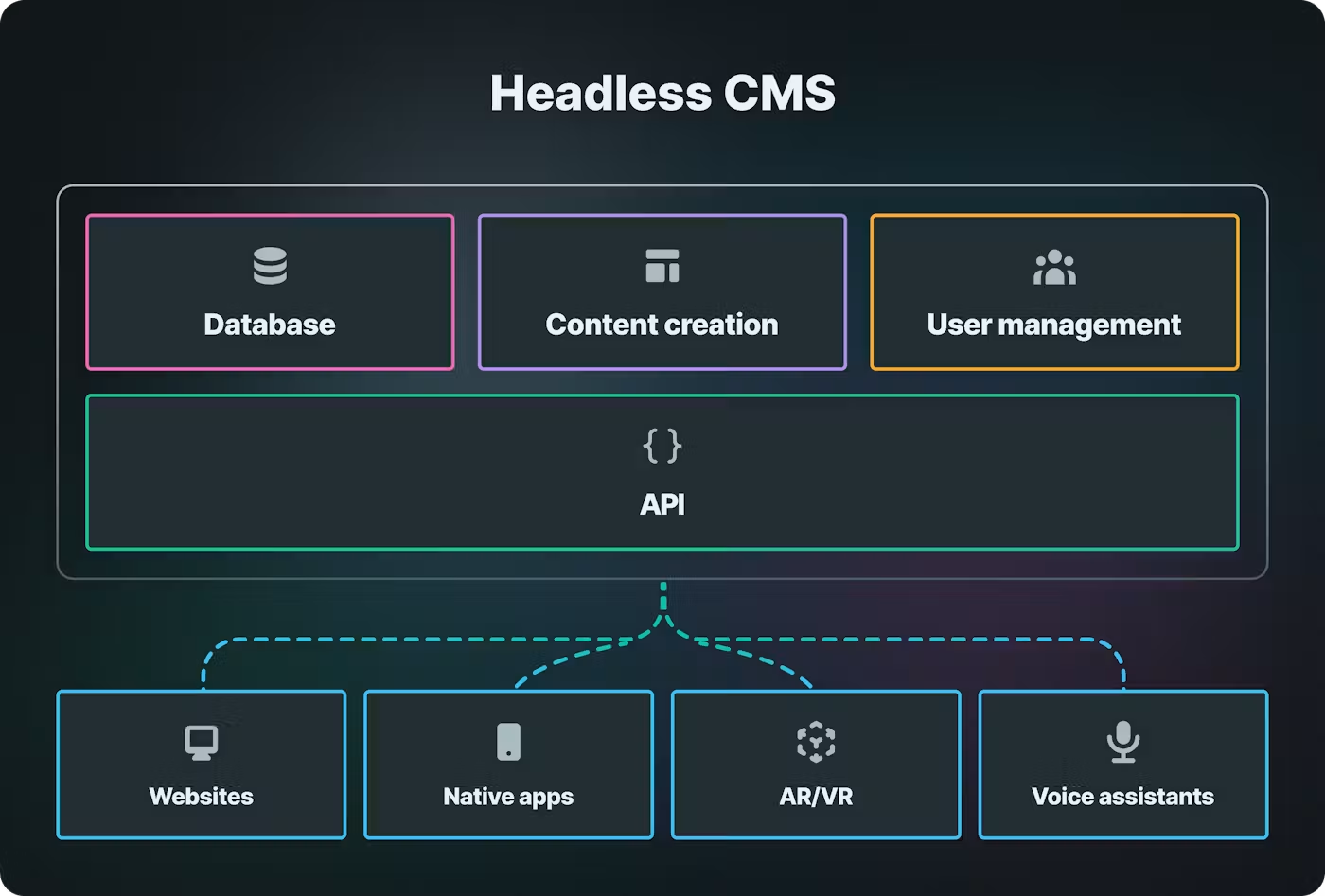
A headless CMS helps track content influence on sales outcomes by making content more structured, measurable, and connected across digital channels. Instead of managing sales content as disconnected pages or files, teams can organize content with metadata, funnel-stage labels, product tags, audience segments, and campaign relationships. When this structured content connects with analytics, CRM, and marketing automation tools, businesses can better understand how content contributes to engagement, lead progression, and revenue. This makes content strategy more evidence-based and helps sales and marketing teams invest in the resources that truly support conversion.
Creating a Structured Foundation for Content Measurement
Content influence is difficult to measure when content is unstructured. If every guide, product page, case study, FAQ, and landing page is treated as a separate item without clear labels, teams may only see basic page views or clicks. Continue reading to discover how structured content can provide deeper insights into its influence across the sales journey. This does not explain how content supports the sales journey or whether it helps buyers move from one stage to the next. Without structure, content performance data can become too broad to guide real decisions.
A headless CMS helps create a structured foundation for measurement. Content can be organized by product, funnel stage, buyer type, industry, region, campaign, format, and purpose. This makes it easier to analyze content in meaningful groups instead of only looking at individual pages. Teams can compare awareness content, decision-stage resources, case studies, and product explainers to understand which types of content influence sales outcomes. Structured measurement gives businesses a clearer view of content value.
Connecting Content to Buyer Journey Stages
Different types of content support different stages of the buyer journey. Early-stage content may attract and educate leads, while mid-stage content helps buyers compare options. Late-stage content, such as case studies, pricing FAQs, implementation guides, and product comparisons, can help buyers feel ready to take action. If content is not connected to funnel stages, it becomes harder to understand where it contributes to sales performance.
A headless CMS allows teams to tag content by awareness, consideration, decision, onboarding, or retention stages. This makes journey-stage reporting much more useful. Teams can see whether awareness articles are driving deeper engagement, whether comparison pages are helping leads become sales-qualified, or whether decision-stage FAQs are supporting demo requests. By connecting content to funnel stages, businesses can identify where content strengthens the journey and where gaps may be slowing down conversion.
Tracking Product Content Influence
Product content often has a direct impact on sales outcomes. Buyers use product descriptions, feature explanations, use cases, visuals, FAQs, and comparison points to decide whether an offer fits their needs. If product content is unclear or incomplete, buyers may hesitate. If it is strong and relevant, it can help move prospects closer to conversion. The challenge is knowing which product content is actually helping.
A headless CMS makes product content easier to track by organizing it into structured fields and reusable modules. Teams can connect product content to engagement data, lead behavior, and sales outcomes. For example, they can see whether buyers who view certain feature sections are more likely to request a demo, or whether comparison modules support higher conversion rates. This helps product, marketing, and sales teams understand which messages and content elements influence buyer decisions most effectively.
Measuring the Impact of Case Studies and Proof Content
Case studies and customer proof are often important in sales conversations because they help buyers see real-world value. However, not all proof content performs equally. A case study may work well for one industry, buyer segment, or sales stage, but be less effective in another. If teams only know that a case study was viewed, they may not understand whether it actually influenced sales progress.
A headless CMS can structure case studies with metadata such as industry, company size, challenge, solution, product, outcome, region, and funnel stage. When connected with CRM or analytics tools, teams can see which case studies appear in journeys that lead to opportunities or closed deals. This helps identify which proof points are most persuasive and which gaps need new customer stories. Better tracking makes proof content more strategic and helps sales teams share stronger, more relevant examples.
Understanding Content’s Role in Lead Progression
Content influence is not always about the final conversion. Often, content helps leads move from one stage to another. A lead may first read an educational guide, then view a product page, then open a comparison resource, and later request a demo. Each content interaction may contribute to the outcome, even if no single page caused the conversion alone. Tracking this progression is essential for understanding content’s true value.
A headless CMS supports lead progression analysis by making content easier to connect across the journey. Content can be tagged by topic, stage, product, and audience so teams can see how leads interact with different resources over time. When connected to lead scoring or CRM systems, content engagement can help show which assets support movement from visitor to lead, lead to opportunity, and opportunity to customer. This gives teams a more realistic view of content influence.
Connecting Content Data With CRM Insights
CRM systems often contain valuable sales outcome data, such as lead status, deal stage, opportunity value, close date, and customer type. However, CRM data becomes more powerful when it is connected with content engagement. If sales teams know which resources a buyer viewed before becoming a customer, they can better understand what influenced the decision. Without this connection, content and revenue data may remain separate.
A headless CMS can support this connection by delivering structured content that is trackable across channels. When content metadata flows into analytics or CRM reporting, teams can see how specific content categories relate to pipeline activity and closed deals. A business may discover that certain comparison pages influence late-stage opportunities, or that specific industry guides generate stronger leads. This connection helps sales and marketing teams make content decisions based on revenue impact rather than assumptions.
Improving Lead Scoring With Content Engagement
Lead scoring often uses actions such as form submissions, page visits, email clicks, and content downloads to estimate buyer readiness. However, not every content interaction has the same value. Reading a beginner article may signal early interest, while viewing pricing content, product comparisons, or decision-stage FAQs may indicate stronger buying intent. Structured content makes these differences easier to measure.
A headless CMS helps improve lead scoring by tagging content according to funnel stage, intent level, product interest, and buyer need. Marketing automation tools can then assign different values to different content interactions. A lead who reads several awareness articles may receive one score, while a lead who engages with decision-stage product content may receive a stronger signal. This makes lead scoring more accurate and helps sales teams prioritize prospects who are more likely to convert.
Identifying High-Performing Content Types
Not all content formats contribute to sales outcomes in the same way. Some buyers may respond strongly to comparison guides, while others need case studies, FAQs, product videos, technical explainers, or industry pages. If teams do not compare content by type, they may continue producing resources that generate traffic but do not support conversion. This can waste time and reduce content effectiveness.
A headless CMS makes it easier to identify high-performing content types because each asset can be categorized consistently. Teams can analyze performance by guide, case study, product page, FAQ, landing page, video, or comparison resource. They can then compare engagement, lead generation, opportunity creation, and conversion influence across formats. This helps businesses invest in the content types that support sales outcomes most strongly. Content planning becomes more focused, strategic, and aligned with revenue goals.
Revealing Content Gaps in the Sales Funnel
Tracking content influence is not only about finding what works. It also helps reveal what is missing. A business may have strong awareness content but weak decision-stage resources. Another may have product pages but not enough industry-specific proof. If buyers repeatedly drop off at a certain stage, the issue may be a content gap rather than a traffic problem.
A headless CMS helps teams identify these gaps by organizing content by stage, product, audience, and buyer need. If there are many top-of-funnel articles but few late-stage FAQs or comparison guides, teams can see where the content library is unbalanced. When content engagement data is connected to funnel outcomes, teams can identify stages where buyers need stronger support. This helps prioritize content creation based on actual sales needs instead of simply producing more content.
Tracking Content Across Multiple Channels
Buyers interact with content across many channels, including websites, landing pages, email campaigns, mobile apps, sales portals, customer portals, and sales enablement tools. If content is tracked separately in each channel, teams may only see part of the buyer journey. A resource may perform well in email but also influence portal engagement or sales follow-up conversations. Multi-channel tracking is needed to understand full content influence.
A headless CMS supports multi-channel tracking by delivering content from one structured source through APIs. The same content entry can appear across several channels while keeping consistent metadata. This allows teams to track how content performs in different contexts without treating every placement as a completely separate asset. Businesses can see whether a case study performs better on a product page, in a sales portal, or in an email sequence. This helps optimize both content and channel strategy.
Supporting Attribution Without Oversimplifying the Journey
Content attribution can be challenging because buyers rarely convert after one interaction. A buyer may engage with several resources before becoming a customer. If businesses only credit the first touch or last touch, they may miss the value of content that influenced the middle of the journey. Oversimplified attribution can lead teams to undervalue important sales-supporting content.
A headless CMS helps improve attribution by making content interactions easier to categorize and connect. Teams can track content across the buyer journey and analyze how different assets contribute to progression. While no attribution model is perfect, structured content makes it easier to understand patterns. Businesses can see which content often appears before demo requests, opportunity creation, or closed deals. This provides a more balanced view of content influence and helps teams avoid relying only on simplistic metrics.
Measuring Sales Enablement Content Usage
Sales enablement content can strongly influence sales outcomes, but it is often harder to track than public website content. Sales representatives may share product sheets, case studies, comparison guides, or proposal resources directly with buyers. If these materials are not connected to a central content system, teams may not know which resources are being used or whether they support deal progress.
A headless CMS can organize and deliver sales enablement content through portals, CRM integrations, or digital resource centers. Each asset can be tagged by product, buyer stage, industry, and use case. Teams can then measure which resources sales teams use most, which are shared with buyers, and which appear in successful opportunities. This helps sales enablement teams improve content libraries and remove resources that are outdated or ineffective. Better visibility makes enablement content easier to optimize.
Conclusion
Headless CMS helps track content influence on sales outcomes by making content more structured, measurable, and connected across the buyer journey. Modern sales content appears across websites, emails, landing pages, sales portals, mobile apps, customer portals, and sales enablement tools. Without structure, teams may struggle to understand which resources actually support lead progression, opportunity creation, and customer conversion.
By organizing content with metadata, funnel-stage labels, product tags, audience segments, and channel relationships, a headless CMS creates a stronger foundation for performance tracking. When connected with analytics, CRM, and marketing automation systems, it helps teams understand content influence more clearly. Businesses can identify high-performing resources, reveal content gaps, improve personalization, support sales enablement, and prioritize future content investments. As digital sales journeys become more complex, tracking content influence will be essential for building smarter strategies and stronger revenue outcomes.
