
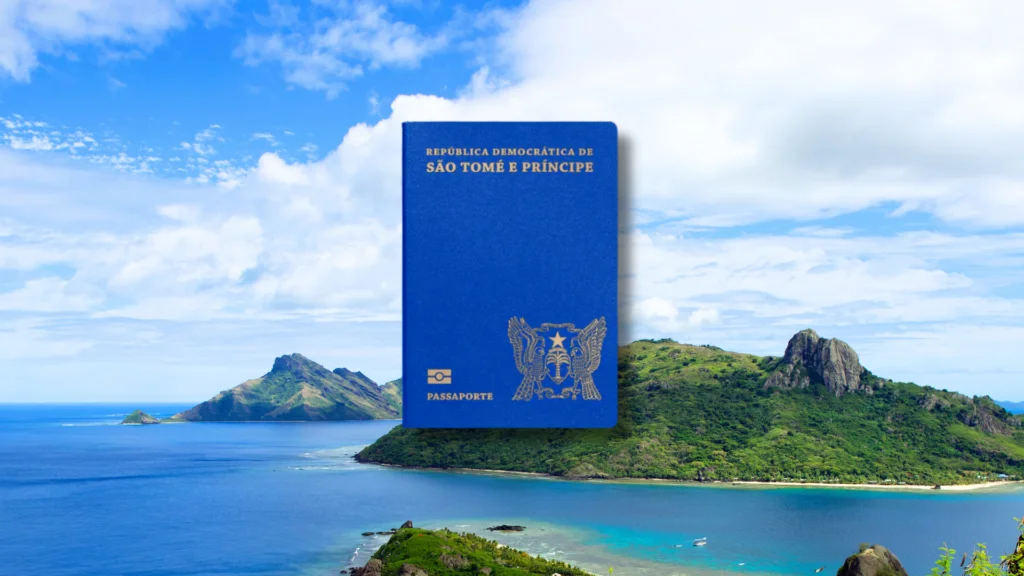
For most citizenship by investment applicants. The strength of the passport they will receive is a central decision factor. A second passport that provides meaningful travel freedom. Reducing visa applications, enabling last-minute travel, and opening doors to markets that your primary passport struggles to access, is a real, practical asset. The São Tomé and Príncipe passport has a specific mobility profile that makes it most valuable in particular geographic and business contexts.
Understanding Passport Strength
Passport strength is typically measured by the number of countries accessible without a prior visa. These global rankings provide useful snapshots, but they aren’t the only lens through which to evaluate a passport’s practical value. More useful questions are: where do I actually travel for business? Which visa queues are currently costing me time and money? Does this passport fill specific gaps in my existing portfolio? The answers matter more than any ranking number.
African Mobility: The Core Strength
The São Tomé and Príncipe passport’s primary mobility advantage is within Africa. Through bilateral agreements and the progressive implementation of the African Union’s Free Movement Protocol. STP passport holders have visa-free or visa-on-arrival access to a substantial portion of the continent. Including many of West and Central Africa’s most commercially significant markets.
For entrepreneurs and executives with operations or investments in countries such as Nigeria, Ghana, Côte d’Ivoire, Cameroon, Gabon, the DRC, or Angola, the STP passport provides meaningful practical benefits. Business travel within this region is frequent, and visa applications for each country individually can consume enormous time and resources. A passport that allows smooth entry across multiple African markets without pre-arranged visas is a real competitive advantage.
The CPLP Community and the Lusophone World
São Tomé and Príncipe is a member of the Community of Portuguese Language Countries (CPLP), which includes Portugal, Brazil, Angola, Mozambique, Cape Verde, Guinea-Bissau, Equatorial Guinea, and East Timor. Membership creates warm bilateral relationships and. In many cases, specific travel and residency arrangements between member states.
For investors with interests in Brazil or the Portuguese-speaking African nations. This community membership is practically useful. Brazil in particular represents one of the world’s largest economies, and its Portuguese linguistic and cultural connection to STP creates a natural business and personal travel corridor.
Latin America and the Caribbean
Beyond Brazil, São Tomé and Príncipe maintains visa-free or visa-on-arrival arrangements with several Latin American and Caribbean nations. This extends the passport’s effective travel range into South America and the Caribbean. Relevant for investors with cross-Atlantic business interests or personal connections in the region.
Schengen Europe and North America
Like the vast majority of African passports, the STP passport requires a visa for entry into Schengen zone countries and North America. For investors who already hold an EU, US, UK, Canadian, or Australian passport. This is typically not a concern, they continue using their existing passport for European and North American travel. The STP passport augments rather than replaces these primary documents.
Visa Facilitation Beyond Visa-Free Access
Access to a country isn’t always binary. For many destinations, holding a legitimate second passport from a recognized, treaty-compliant nation can facilitate easier visa approval, shorter processing times, or access to simplified visa categories. The reputational integrity of the issuing program matters in these situations: passports from well-regulated, internationally credible programs tend to receive more favorable treatment in consular assessments. São Tomé and Príncipe’s program credibility, backed by formal legislation, rigorous due diligence, and government oversight, supports the passport’s utility in visa facilitation contexts.
Comparing STP with Other African Passports
Within the African context, the STP passport generally performs comparably to or better than most other African CBI passports, and the program’s regulatory credibility is a meaningful differentiating factor affecting long-term passport value. The African Union’s Free Movement Protocol, when fully implemented, would significantly expand intra-African mobility for all African passports including STP, investors entering the program now are positioned to benefit from this expanding mobility architecture over the coming years.
Practical Travel Tips for STP Passport Holders
- Maintain awareness of which destinations require a visa and plan ahead, don’t assume visa-free access in unfamiliar destinations
- Keep the passport renewed and in good condition, some consulates are unfamiliar with STP documents
- Carry supporting business travel documentation as you would with any travel document
- Consider registering with the STP consular mission nearest your primary residence
Using Your STP Passport Alongside Your Primary Passport
A second passport is most powerful when used strategically alongside a primary passport rather than as a replacement. For most STP citizenship holders, the optimal approach is:
- Use your primary passport for Europe, North America, Japan, and Australia, where it provides seamless access
- Use your STP passport for African travel, particularly West and Central Africa, where it provides visa-free or simplified access
- Use your STP passport for banking and financial purposes in jurisdictions where it provides a more favorable identity profile
- Use your STP passport for situations requiring a neutral or low-profile nationality
Future Outlook: Africa’s Expanding Free Movement Architecture
One of the most attractive long-term arguments for an African second passport is the trajectory of the continent’s free movement architecture. The African Continental Free Trade Area (AfCFTA), which entered into force in 2019 and covers 55 AU member states, represents the world’s largest free trade area by number of participating countries. Alongside the trade liberalization agenda, the African Union has been advancing a Free Movement Protocol that would allow African citizens to move freely across the continent without visas.
This protocol is not yet fully implemented, but the direction of travel is clear. African passports, including São Tomé and Príncipe’s, stand to benefit materially as this architecture develops. Investors obtaining STP citizenship today are positioning themselves for a continent where the mobility value of an African passport will increase rather than decrease over the coming decade.
For current information on visa-free access destinations and a personalized mobility analysis, visit the Passport of Sao Tome with CitizenX page and speak with an authorized advisor.
Frequently Asked Questions on Passport Mobility
Does the STP passport provide visa-free access to the European Schengen area? No. Like the majority of African passports, the STP passport requires a Schengen visa. For investors who already hold a strong primary passport with Schengen access, this is typically not a concern, they use their primary passport for European travel and the STP passport for African and emerging market destinations.
How many countries are currently accessible visa-free with the STP passport? The exact number changes periodically as the government negotiates new bilateral agreements. For an accurate, current count, consult an authorized advisor or review the latest program documentation. Don’t rely on any fixed number in articles that may be outdated, this figure evolves as the program grows and the government’s diplomatic reach expands.
Is São Tomé and Príncipe part of any regional free movement zone? São Tomé and Príncipe is a member of the African Union and participates in regional diplomatic frameworks advancing free movement across the continent. It also benefits from CPLP community arrangements with other Portuguese-speaking nations. Full implementation of the African Union Free Movement Protocol remains in progress at member state level but represents a meaningful medium-term opportunity for STP passport holders.
Can the STP passport be used for banking and financial identification internationally? The STP passport is a fully recognized national travel document from a sovereign, internationally recognized state. It can be used for identity verification purposes, including banking account applications. The practical utility for specific banking relationships depends on the policies of the institution and the jurisdictions involved.
Visit More : widemagazine.co.uk
