
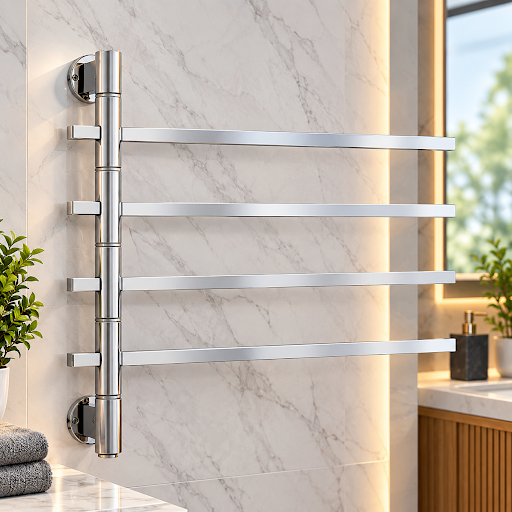
In contemporary bathroom design, functionality and style are equally essential. One of the key elements that can elevate both aspects is the heated towel rail. These fixtures not only add a touch of luxury to the bathroom but also provide practical benefits, enhancing comfort and hygiene.
What Is a Heated Towel Rail?
A heated towel rail is a specialised bathroom accessory designed to warm towels before or after use. Typically mounted on the wall, it comprises horizontal bars that heat up through electrical or hydronic mechanisms. This design allows towels to dry quickly and remain warm, contributing to an improved bathing or showering experience.
Benefits of Installing a Heated Towel Rail
Enhanced Comfort
A primary advantage of a heated towel rail is the warm towels it provides. Stepping out from the shower or bath to a warm towel offers unparalleled comfort, particularly during colder months.
Improved Hygiene
By drying towels more rapidly, heated towel rails reduce the growth of bacteria and mould that thrive in damp environments. This promotes a healthier bathroom environment and extends the life of bath linens.
Energy Efficiency
Modern heated towel rails consume minimal energy. Many are designed to maintain temperature efficiently and have timed operation settings, which optimises power use and reduces running costs.
Space-Saving Design
Heated towel rails serve dual purposes – towel warming and drying – eliminating the need for additional drying racks. Their vertical, wall-mounted design makes them ideal for bathrooms with limited space.
Design and Material Options
Heated towel rails come in various styles, sizes, and finishes, allowing seamless integration with different bathroom designs. Popular materials include stainless steel, chrome, and aluminium, each offering durability and sleek aesthetics.
For a modern, minimalist bathroom, slimline rails with polished chrome or brushed steel finishes provide a sophisticated look. For traditional settings, rails with classic designs in white or brass finishes complement the décor effectively.
Installation Considerations
When planning to install a heated towel rail, it is essential to consider the power source and location. Electric models require proximity to electrical points and may need professional installation to comply with safety standards. Hydronic models connect to the central heating system and are often integrated during bathroom renovations.
Placement is also critical, ensuring the rail is accessible but does not interfere with other bathroom fixtures or movement.
Maintenance and Care
Maintaining a heated towel rail involves regular cleaning to prevent dust and grime accumulation. Stainless steel and chrome finishes require mild detergents and soft cloths to preserve their appearance. Routine checks of electrical components are advisable to maintain safety and efficiency.
Cost and Value
While heated towel rails represent an initial investment, their benefits in comfort and hygiene justify the expense. Prices vary depending on size, material, and heating method. Energy-efficient models also help reduce ongoing costs, enhancing long-term value.
Choosing the Right Heated Towel Rail
Selecting a heated towel rail depends on several factors, including bathroom size, available power sources, style preferences, and budget. Consulting with bathroom design professionals or suppliers can help identify the ideal product for specific requirements.
Conclusion
Incorporating a heated towel rail into bathroom design offers a blend of practical benefits and aesthetic enhancement. From ensuring warm, dry towels to contributing to the overall ambiance, these fixtures represent a valuable addition. For those seeking to improve both style and function, investing in a quality heated towel rail is a prudent decision.
