
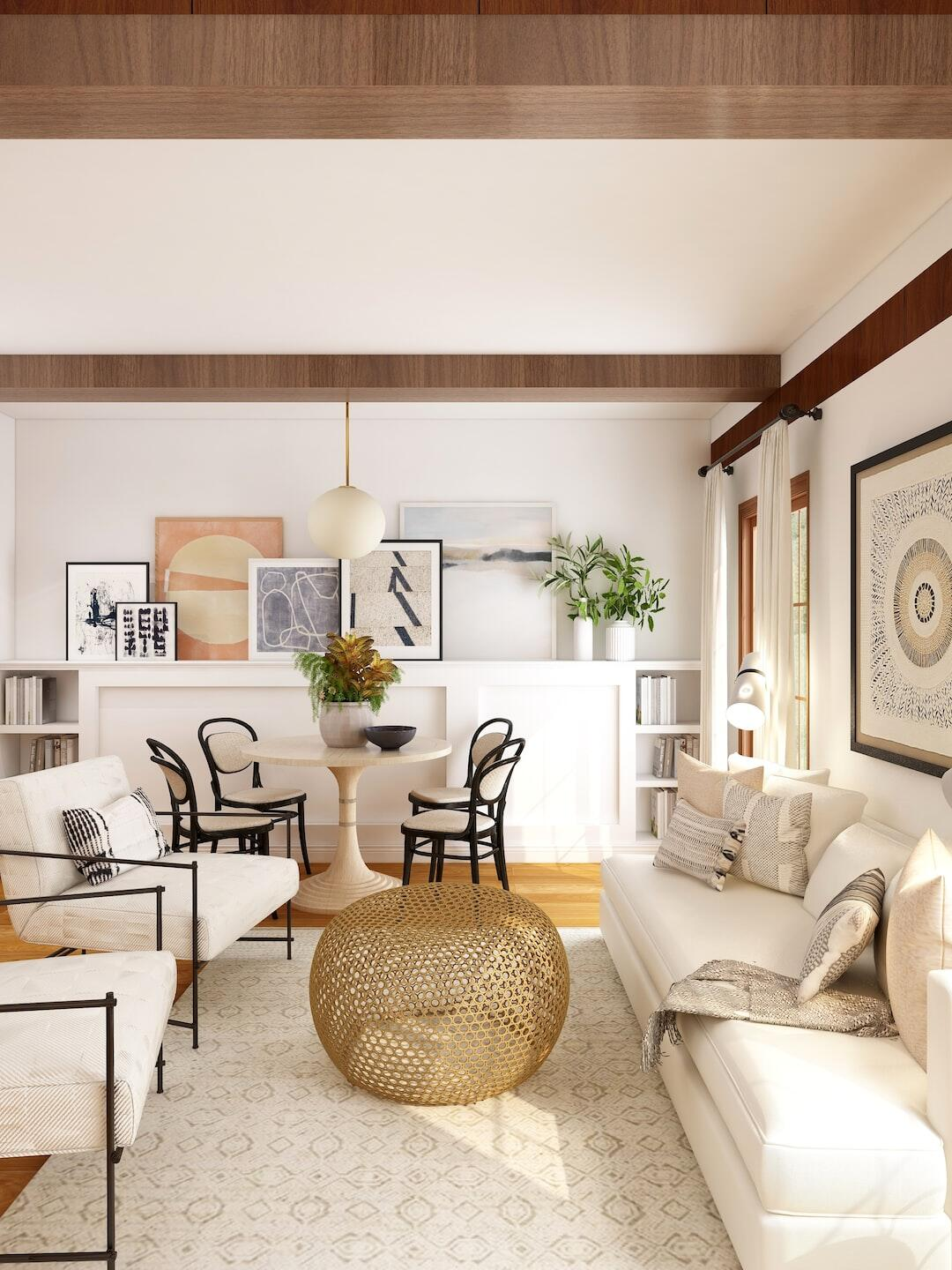
The modern home finds itself caught in a tug-of-war between the convenience of technology and a deep-seated need for connection with the natural world. Incorporating natural elements into your home design improves well-being and air quality. Integrating nature into your interior design can transform your environment into a restorative retreat.
The Appeal of Wood and Stone
When we think of bringing the outdoors in, wood and stone are the first materials that come to mind. They bring an immediate sense of substance and durability to a room. Wood introduces warmth and a living texture that synthetic laminates cannot replicate. It brings personality and a timeless feel to the space. The grain patterns tell a story of growth rings and seasons, bringing an organic rhythm to your space.
Stone offers a sense of permanence and cool, grounding energy. A granite countertop, a slate accent wall, or even a collection of river rock pebbles in a decorative bowl can anchor a room. The contrast between the smoothness of polished marble and the ruggedness of raw slate creates visual interest. The warm, soft nature of wood and the cool, hard nature of stone can feel sturdy and comfortable.
Sustainable Materials and Cork Flooring
Homeowners are looking beyond traditional wood to more sustainable and innovative materials. One material that has seen a surge in popularity is cork. Harvested from the bark of the cork oak tree, it is a renewable resource. Cork is comfortable underfoot and provides a slight cushioning effect that is gentle on joints. It also possesses excellent thermal and acoustic insulation properties.
Many are interested in exploring this versatile material. They look for reputable cork suppliers that can open up many designs. Its natural resistance to mold, mildew, and pests makes it an excellent choice for kitchens and bathrooms. Cork is as responsible as it is beautiful, proving that style and sustainability can go hand in hand.
The Power of Biophilic Design with Plants
Perhaps the most literal and vibrant way to incorporate nature is through the use of plants. Biophilic design is the practice of connecting buildings and occupants more closely to nature. Plants are living organisms that actively improve the environment. They filter toxins from the air, release oxygen, and increase humidity in areas with dry climates or during winter months.
Integrating greenery can range from a single statement fiddle-leaf fig in a sunny corner to a vertical garden wall in a kitchen. Hanging planters in macramé holders can add a touch of bohemian charm. A structured arrangement of succulents on a windowsill offers a minimalist, sculptural quality.
The act of caring for plants introduces a routine of nurturing into your daily life, grounding you in the cycle of growth and rest. For those worried about maintenance, snake plants and pothos can thrive on neglect and prove that anyone can benefit from a bit of greenery.
Maximizing Sunlight and Ventilation
Natural light is a powerful design tool that transforms the mood of a room. It changes throughout the day, casting shadows and highlighting textures in ways that artificial light cannot match. To maximize daylight, consider swapping heavy drapes for sheer linen curtains that diffuse light softly. Mirrors placed opposite windows can bounce light deeper into a room, making the space feel larger and more open.
Ventilation is the other half of this equation. Fresh air clears out stagnant energy and pollutants. Design your space to encourage cross-breezes by keeping windows unobstructed. Even in colder months, a brief daily airing can revitalize a room. The feeling of a gentle breeze moving through a space connects you to the weather outside, reminding you that you are part of a larger ecosystem.
Textiles and Fibers for Tactile Comfort
To balance the hard surfaces of wood and stone, textiles can soften a space. Natural fibers like cotton, linen, wool, and jute bring an unmatched level of tactile comfort and visual warmth. Linen bedding in earthy tones creates a relaxed, lived-in elegance. A chunky wool throw on a sofa invites you to curl up and relax. Jute or sisal rugs add a rustic texture underfoot that is both durable and grounding.
These materials are preferable to synthetic alternatives for their breathability and sustainability. They are hypoallergenic and biodegradable, and align with a more eco-conscious lifestyle. Layering these textiles adds depth and richness to your interior. Create a space that appeals to the sense of touch and encourages you to interact with your environment in a more intimate, physical way.
Water Features for Serenity
The element of water has a profound psychological effect, instantly promoting relaxation and reducing stress. Incorporating a water feature into your home design is a sophisticated way to introduce a dynamic, soothing element. This does not necessarily require a large, expensive installation. A small tabletop fountain can provide the gentle, continuous sound of trickling water, masking urban noise and creating a focal point for meditation.
For a more dramatic statement, a wall-mounted water feature or a small indoor pond can transform a foyer or living room. Even a simple bowl of water with floating flowers or candles can evoke a sense of calm and reflection. The presence of water symbolizes flow and abundance, adding a layer of sensory experience that goes beyond the visual. It helps to create an atmosphere of tranquility, turning your home into a true spa-like sanctuary.
Bringing the Outdoors In
Incorporating natural elements into your home engages all the senses. It is about the visual warmth of wood, the tactile comfort of wool, the refreshing feel of a cross-breeze, the soothing sound of water, and the life-giving presence of plants. This design philosophy creates an environment that supports your physical and emotional well-being. Choose materials that are sustainable and authentic, so that you are building a space that tells a story of respect for the natural world.
Create a home that feels like a living, breathing entity, a place that grounds you and offers respite. As you curate your space, the most beautiful homes are not those that mimic a showroom. Through these thoughtful inclusions, your home becomes the right place to live. Want to learn more? Check out our website for more.
Visit More : widemagazine.co.uk
