
Modern construction efforts have become more complex, fact-driven, and time-sensitive than ever before.
Today, contractors are expected to simultaneously deliver accurate schedules, managed budgets, and first-class results.
This is where better forecasting techniques are transforming how the industry plans and executes projects.
Instead of relying on guesswork, companies now rely on structured digital intelligence to guide choices.
The shift to predictive planning isn’t just a fad—it’s a long-term offensive advantage by miles.
In this case, successful companies are integrating technology at all stages of business development to reduce uncertainty.
- Improved the cost visibility of tasks before execution starts
- Reduced the possibility of sudden economic surpluses throughout production
- Better alignment between configuration requirements and actual website conditions
This change has changed how mission managers compare options and allocate resources. Instead of responding to problems on the spot, groups can now anticipate them and take preventative action.
Even construction estimating companies can adopt forecasting tools to be aggressive in a market where margins are tight. The ability to appropriately anticipate impacts is now considered a core business strength compared to the mandatory capability.
Early Detection of Material Price Fluctuations
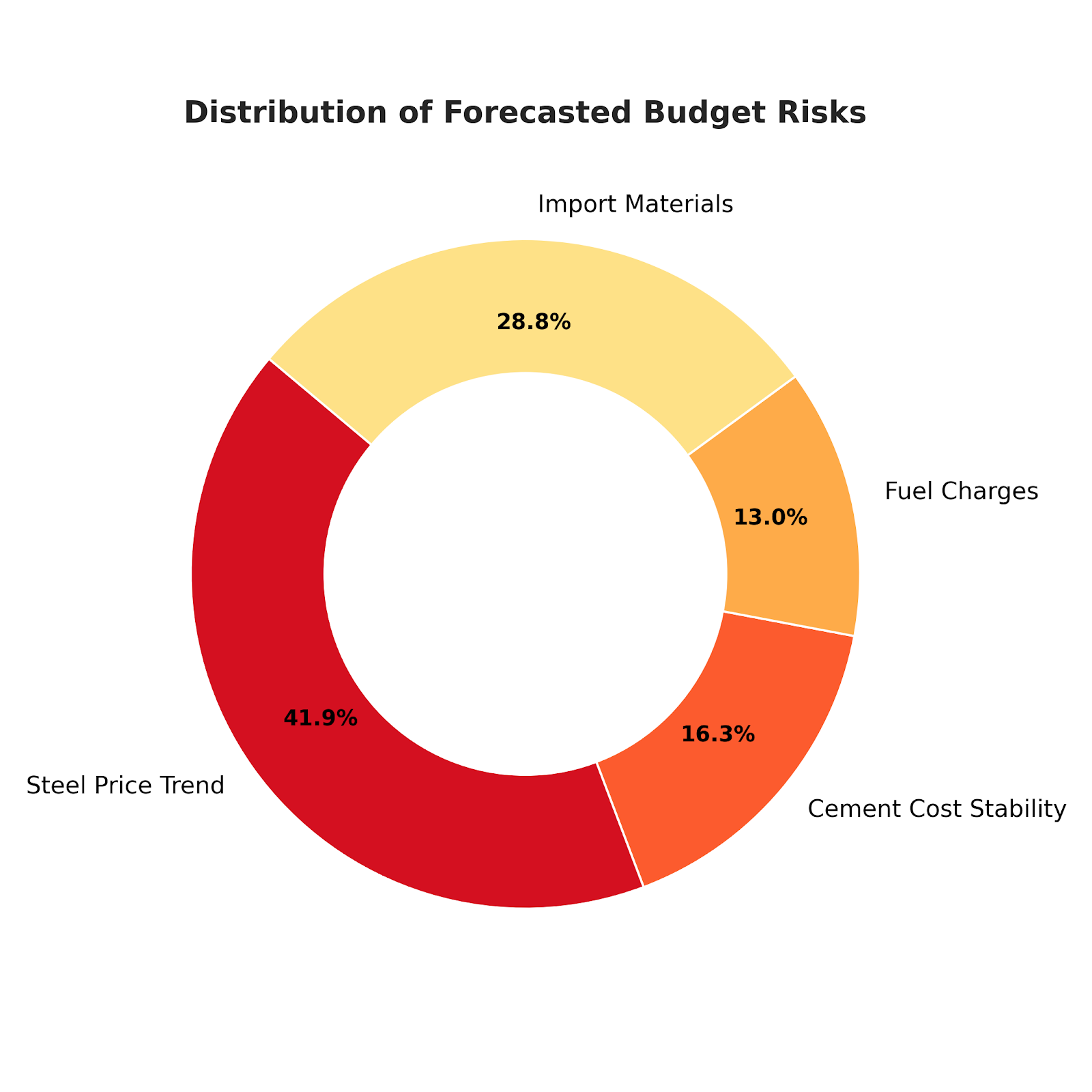
| Cost Factor | Data Source Used | Predicted Impact | Percentage of Total Risk | Risk Level |
| Steel Price Trend | Market analytics | $\$+9,000$ | $41.9\%$ | High |
| Import Materials | Trade data analysis | $\$+6,200$ | $28.8\%$ | High |
| Cement Cost Stability | Historical pricing | $\$+3,500$ | $16.3\%$ | Medium |
| Fuel Charges | Global oil index | $\$+2,800$ | $13.0\%$ | High |
| Total Cumulative Threat | Combined Forecasted Inflation | $\mathbf{\$+21,500}$ | $100.0\%$ | — |
Table1.0: This table shows how forecasting tools predict material cost changes before construction begins. It helps project teams prepare accurate budgets and reduce financial risks caused by market fluctuations.
- Increased manpower and productivity planning
- Strong investor and customer confidence in Project Transportation
Digital Design Integration for Precision Planning
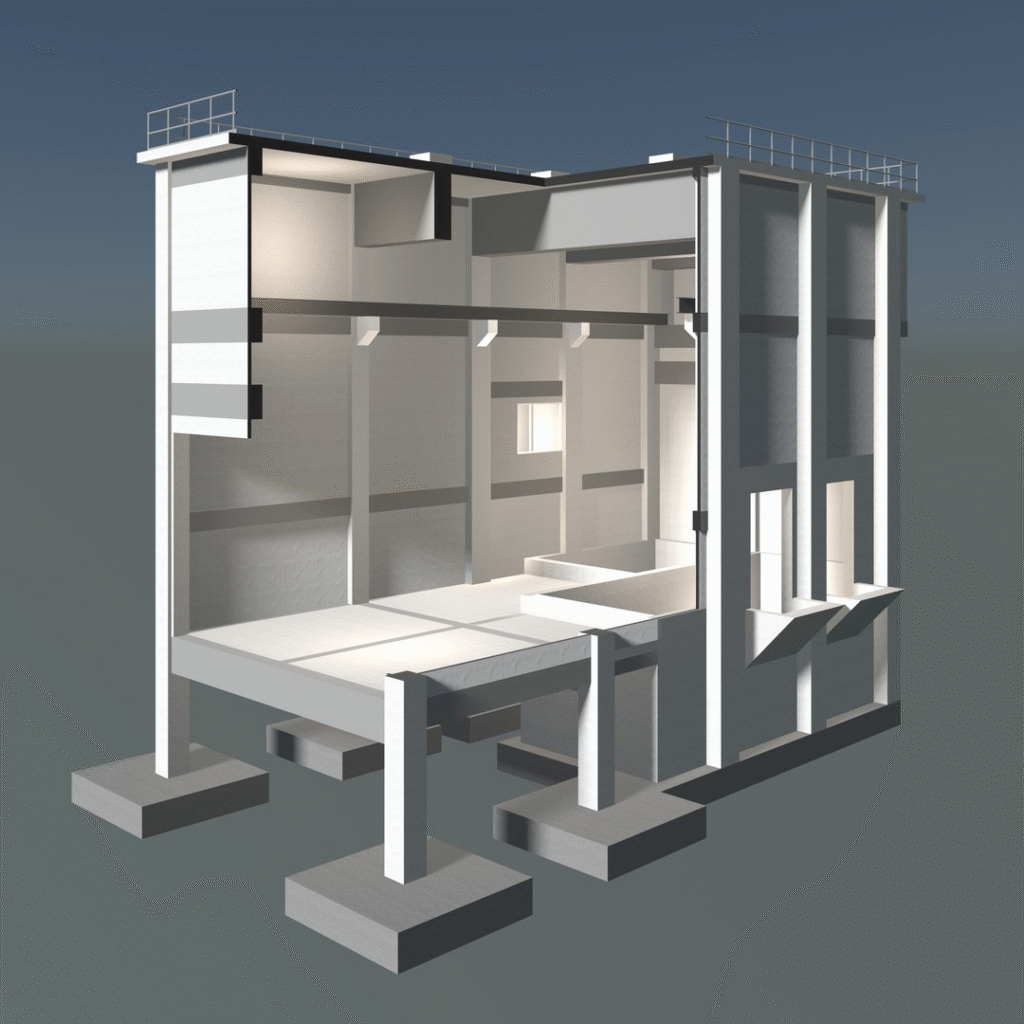
The integration of digital modeling has exponentially improved how construction teams visualize and plan projects before they begin. These gears allow engineers and architects to collaborate seamlessly and simultaneously to minimize design conflicts and rework. In many modern workflows, CAD Drafting Services play a vital role in transforming conceptual ideas into specific technical drawings that support predictive accuracy.

- High-accuracy graphics that reduce interpretation errors on the website
- Faster configuration processing through the tool’s virtual collaboration
Better coordination between the architect and engineering teams
The forecast is extra reliable when these structures are in the field because it is built on precise configuration foundations. Every structural goal should be analyzed in advance, helping project managers estimate fees and schedules more effectively.
- Improved Visualization of Structural Demand Conditions Before Execution
- Reduced fabric wastage due to accurate layout measurements
- Increased performance in approval and compliance processes
This virtual transformation ensures that production planning is not disconnected from design improvement. Instead, both strategies now additionally paint together to provide predictable results.
Intelligent Resource and Risk Optimization
A significant benefit of modern predictive systems is their ability to optimize resources and identify hazards early within the company lifecycle. Construction managers can now evaluate a couple of events before making the final choice, significantly reducing uncertainty.
Advanced analytics additionally allow teams to simulate work delays, fabric shortages, and labor constraints. These insights help companies create stronger contingency plans that keep projects on track, even under stress.
- Predictive Detection of Capacity Delays
- Efficient allocation of labor and equipment resources.
Improved decision-making under changing market conditions
In larger projects, this planning stage is critical to maintaining profitability. Without proper forecasting, even minor disruptions can result in significant price increases.
- Reduced downtime through active scheduling changes
- It provides stronger chain coordination to significant levels
- Improved conservation planning through hazard prediction models
The integration of intelligent forecasting tools allows organizations to maintain control over economic and operational crises at all stages of the mission lifecycle.
Financial accuracy and operational control
Financial management is one of the most important parts of mission fulfillment, and forecasting systems play a direct role in maintaining it. When assignment fees are anticipated with better accuracy, constituents can more accurately allocate budgets and steer clear of wasteful fees.
Precision also proves to be of extra importance in specialized processes with mechanical and electrical plumbing systems. Many companies rely on MEP estimating companies to ensure that the complex components are properly calculated and integrated into standard work forecasts.
- Detailed breakdown of processing charges at the equipment level
- Enhanced Coordination on Exclusive Engineering Disciplines
- Reduced the risk of budget discrepancies in execution
By combining financial forecasting with operational scheduling plans, businesses can maintain a balanced view of project delivery. This ensures that the payment process and the overall process are optimized at the same time.
Be more manipulative in shopping and buying clothes
Challenge: Increased transparency in financial planning and reporting
Stronger Financial Forecasts for Future Mission Leadership
Ultimately, this level of management allows companies to safely scale their business even with reduced monetary risk.
This change allows task managers to make faster and more accurate decisions at all levels of production. Every step from planning to execution is more predictable and actionable.
- Real-time tracking of challenge development and performance
- Data-Supported Insights for Strategic Decision Making
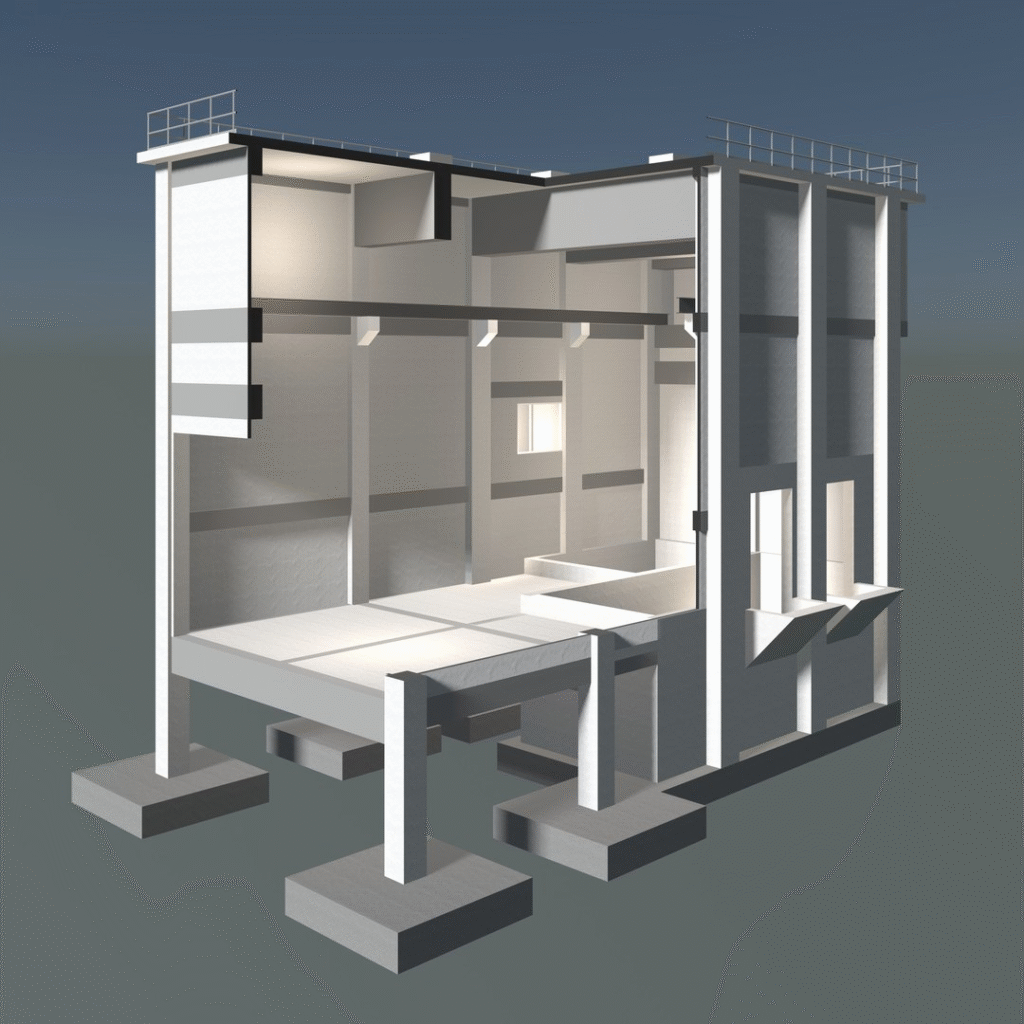
Continuous Development Through Historical Placement Evaluations
As these systems evolve, moreover, they are becoming more accessible to medium-sized contractors, not just giant enterprises. This democratization of technology balances the gambling element within the creative activity.
- Increased competition for small creative companies
- Improved Customer Delight Through Predictable Transportation Timelines
- More capable of changing the challenge requirements
With these advancements, forecasting is not just a planning tool – it stems from the central operating model.
Final Thoughts
Intelligent predictive systems are transforming how manufacturing work is planned, managed, and delivered. By combining statistical intelligence with existing virtual tools, companies can exponentially reduce uncertainty and increase long-term impact. The ability to predict tariffs, optimize resources, and mitigate hazards is now critical to achieving sustainable supply in the industry. As time goes on, companies that invest early in advanced forecasting will have a strong, aggressive edge and deliver reliable work results.
FAQs
1. What is smart enterprise forecasting in manufacturing?
Smart business forecasts are digital planning tools that use facts, analytics, and past trends to anticipate job costs, timelines, and risks to help manufacturing teams make more accurate and informed choices before and during execution.
2. Why are predictive structures essential to long-term manufacturing success?
They reduce uncertainty, increase budget accuracy, and help avoid delays. Over time, this leads to better pipelines, improved profitability, and reliable event delivery.
3. How do virtual tools increase the accuracy of production planning?
Digital gear integrates configuration, pricing, and scheduling data into a single system. This allows teams to confront problems earlier, increase coordination, and reduce errors that typically occur in manual planning.
4. Can small creative companies benefit from temporary structures?
Yes, even small businesses can benefit greatly. These systems help them compete with large companies by increasing cost control, reducing waste, and increasing efficiency in performance.
5. What place do facts have in modern building forecasting?
The data is the foundation of simultaneous forecasting. It makes it easier to anticipate future results based on past challenges, and allows for more accurate planning and better risk control throughout creation.
Visit More : widemagazine.co.uk

1 Comment
Pingback: 6 EU Car Import Services Worth Comparing Before You Buy in 2026 - Wide Magazine