
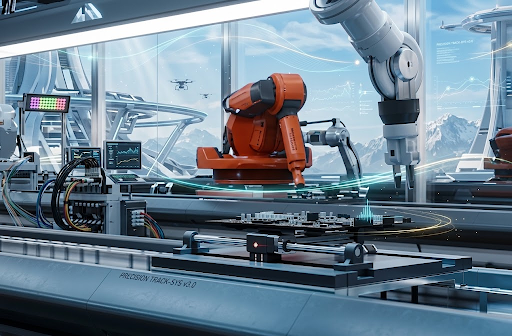
Automated manufacturing systems rely on precise data inputs to function seamlessly. However, deploying highly sensitive electronics on a heavy-duty factory floor introduces significant engineering challenges.
When external stressors are ignored during the design phase, factories experience frequent false triggers, halting production lines and damaging expensive equipment.
Protecting these critical data loops requires a comprehensive approach to component selection, environmental shielding, and proactive maintenance.
The Impact of Environmental Stressors on Industrial Automation
Industrial facilities are inherently hostile to delicate electronics. Airborne particulate matter, corrosive moisture, and extreme temperature fluctuations quickly degrade standard sensor housings.
Simultaneously, mechanical vibration from heavy machinery and electromagnetic interference (EMI) from high-voltage cables distort low-voltage signal lines. This results in severe signal drift and logic errors.
To maintain continuous operations in these conditions, engineers must prioritize robust Industrial Automation hardware that is specifically rated for extreme environmental resistance.
Selecting the Right Sensing Technology for Environmental Resistance
The foundation of a resilient control system is choosing the correct detection method for the specific environmental hazard. Engineers must prioritize sensors with robust Ingress Protection (IP) ratings, such as IP67 or IP68, to prevent moisture and dust penetration.
When deploying sensing equipment in environments prone to heavy dust accumulation or persistent mechanical vibration, standard off-the-shelf components often suffer from optics clouding or premature signal drift. Industrial automation component manufacturers like OMCH design heavy-duty proximity switches and photoelectric sensors engineered with reinforced IP-rated enclosures, enabling systems to maintain precision object detection even under challenging factory conditions.
Matching the correct sensor type to the environmental challenge is crucial for minimizing false readings.
| Sensor Type | Target Material Type | Environmental Resistance | Sensing Range | Typical Industrial Application |
| Inductive Proximity | Ferrous and non-ferrous metals | High (Immune to dust, oil, water) | Short (1mm – 60mm) | Metal stamping, CNC machining |
| Photoelectric | Opaque solids, transparent films | Moderate (Lenses require cleaning) | Long (Up to several meters) | Packaging lines, material handling |
| Capacitive | Liquids, plastics, granular solids | Moderate (Sensitive to humidity) | Short (1mm – 30mm) | Tank level monitoring, wood processing |
Mitigating Electromagnetic Interference (EMI) in Sensor Signal Lines
Modern factory floors are saturated with Electromagnetic Interference (EMI) generated by Variable Frequency Drives (VFDs), welding equipment, and high-voltage motors. When low-voltage sensor wires run parallel to these power lines, they act as antennas, absorbing electrical noise.
This noise creates phantom signals, confusing the Programmable Logic Controller (PLC). To mitigate EMI, engineers should implement the following strategies:
- Shielded Cabling: Always use twisted-pair shielded cables for analog and digital sensor signals, grounding the shield at the control panel end only.
- Physical Separation: Maintain a strict physical distance (at least 20 cm) between low-voltage signal wires and high-power AC cables.
- Signal Isolation: Utilize high-quality regulated power supplies and solid-state relays (SSRs) to filter out transient voltage spikes.
Addressing Mechanical Shock and Alignment Drift
Continuous mechanical shock and harmonic vibration from conveyors and presses pose physical threats to sensor mounting brackets. Over time, this vibration causes alignment drift, moving the sensor out of its optimal focal range.
When optical or laser sensors shift, they fail to register passing products, leading to cascading mechanical jams.
Best practices to stabilize physical installations include:
- Anti-Vibration Mounts: Installing rubberized shock-absorbing brackets to isolate the sensor body from machine harmonics.
- Thread-Locking Compounds: Applying industrial thread lockers to mounting bolts to prevent loosening during operation.
- Wide-Beam Selection: Opting for diffuse photoelectric sensors with wider beam angles where pinpoint accuracy is not strictly required.
Implementing Predictive Maintenance Protocols for Sensor Health
Even the most robust hardware requires routine monitoring. Modern smart sensors feature self-diagnostic capabilities, feeding real-time data back to the PLC regarding internal temperature and signal degradation.
By monitoring these variables, maintenance teams can identify when a photoelectric lens is becoming clouded by dust before it completely fails.
Transitioning from reactive component replacement to a structured, data-driven maintenance routine drastically cuts unplanned machine downtime. According to research on smart manufacturing by Deloitte, adopting predictive asset monitoring and automated diagnostic protocols can lower equipment maintenance costs by up to 25% while extending the overall operational lifespan of factory floor components.
Integrating these smart diagnostics is a cornerstone of modern Factory Maintenance programs.
Key Takeaways
| Area | Key Takeaway | Impact/Data |
| IP Rating | Upgrade to IP67/IP68 sensors | Blocks dust, oil, and moisture failures |
| EMI Control | Shield and separate signal cables | Eliminates false PLC triggers |
| Vibration | Secure brackets with dampening mounts | Prevents optical alignment drift |
| Maintenance | Adopt predictive sensor diagnostics | Cuts maintenance costs by up to 25% |
Conclusion: Building Resilient Automated Systems
Optimizing sensor integration in harsh environments is not about finding a single indestructible component; it is about holistic system design.
By selecting high-IP-rated inductive and photoelectric sensors, actively shielding against EMI, and securing physical mounts against vibration, facilities can eliminate the most common causes of automation failure.
Engineers should audit their most vulnerable production nodes today, prioritizing predictive monitoring and robust hardware upgrades to safeguard long-term manufacturing output.
Visit More : widemagazine.co.uk
