
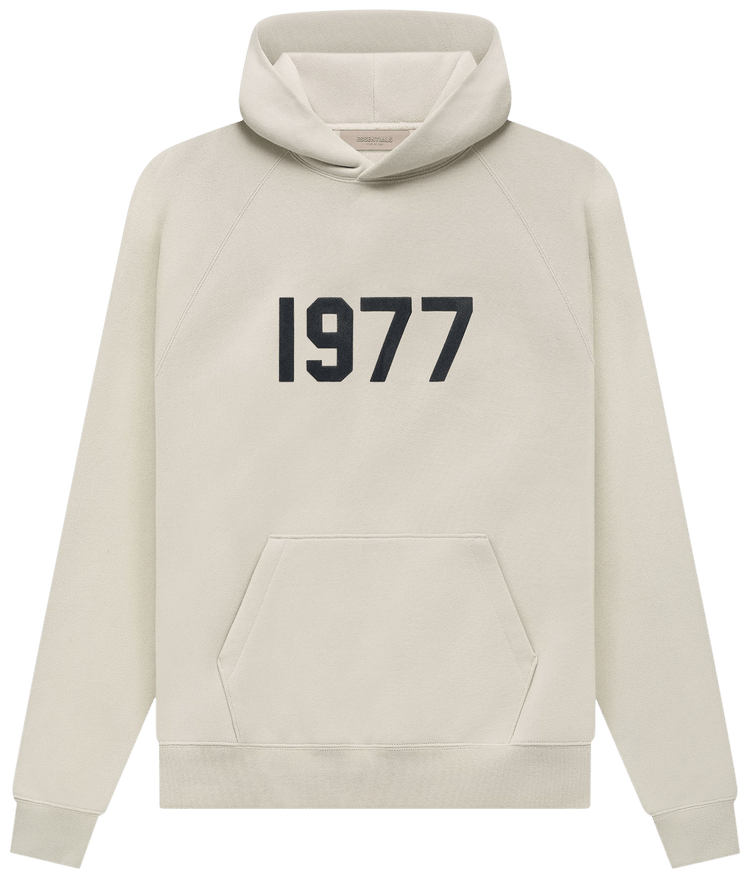
There are sixty-four hoodies sitting on one category page, which sounds like a good problem until you’re about four rows down and the scroll bar has hardly budged. Most of us give up around then, open three tabs we never properly compare, and buy whichever one happened to still be open an hour later. If you are hunting for an Essentials Hoodie and the sheer length of the page has already worn you down, the fix isn’t more scrolling. It’s deciding what you’re filtering on before you look at a single thumbnail.
The page won’t sort itself
Sorting by price gets you nowhere here, because the whole hoodie category lives between £110 and £120. Ten pounds. Across sixty-four garments. So the usual shortcut – cheapest first, work upwards until something looks decent – collapses on the first click, and you’re left squinting at thumbnails that all read as roughly the same shape in roughly the same four or five colours.
Thumbnails lie a bit too. A pale grey and a light oatmeal look identical at that size. A drop-shoulder cut and a straight pullover look identical on a flat product shot. Which means your eyes are doing the filtering, badly, on the least reliable information the page gives you.
The names do more work than the photos
Here’s the bit most people skip, though. The product names are doing real work – a cut in one, a colour in another, a fabric in a few, and then a decent chunk that tell you nothing beyond the label and whatever is printed on the front. I counted them, and the split goes like this.
| What the name tells you | Hoodies that say it |
| A cut or closure – zip-up, pullover, popover, crewneck, cropped, drop shoulder, oversized, long sleeve | 11 |
| A neutral colour – black, grey, beige, brown, cream, white, tan, oatmeal, heather, sycamore | 19 |
| A brighter colour – blue, green, pink, orange, maroon, crimson, burgundy, plum, mint, peach, coral, teal, yellow | 13 |
| A fabric – fleece, brushed, nylon | 4 |
| Only the label, a print or a year | 18 |
Only one hoodie names a colour and a fabric at the same time, so those rows overlap by exactly one garment and the rest sit in a single box each. Which is more useful than it probably sounds – roughly three quarters of the page can be sorted on text alone, before a single image has finished loading.
Filter one: how it opens
So the opening comes first, before colour, because it’s the one decision you can’t wear your way out of later. A zip-up can come off on an overheated train without wrecking your hair, and it vents when somebody has set the office radiators to tropical, which on a British November afternoon happens more often than it should. Pullovers and popovers sit cleaner across the chest, and they layer under a shell without a zip ridge digging in. A crewneck hoodie lands somewhere between the two. Cropped and drop-shoulder, meanwhile, are a shape decision and not a warmth one at all.
Eleven of the sixty-four spell this out in the name. For the rest you’re reading the photograph, and a front pocket with no zip running through it is usually your answer.
Filter two: neutral or not
Nineteen hoodies name a neutral. Thirteen name something louder. That split is the fastest cut you can make, and it’s not a style question so much as a question about what else is in your wardrobe.
And you do have to be honest about which pile you actually live in. Say your coats run navy and charcoal and most of your trousers are black – then a mint or a coral hoodie turns into the one loud thing you own, and that goes one of two ways. Favourite, or drawer. Nothing in between, really. Neutrals – the oatmeals, the heather, the sycamore – disappear under a shell in a damp Manchester October and look smart enough on their own in April, which is boring and also exactly why people buy them twice.
- Pick neutral if the hoodie has to work under everything you already own.
- Pick a colour if it’s going to be the piece doing the talking.
- Pale neutrals show more on the cuffs and hem, so count your washing habits in.
Filter three: what it’s made of
Only four of the sixty-four put a fabric in the name – a fleece, a brushed finish, a cotton fleece, a nylon – and those four are worth pulling out early, because fabric decides whether the hoodie is a layer or an outer piece. Brushed and fleece interiors trap heat and go soft fast. Nylon sheds drizzle and does almost nothing for warmth on its own.
At 4 °C on a Leeds morning, a brushed fleece under a jacket is comfortable and a nylon one isn’t, and no amount of good styling fixes that. For the remaining sixty, check the individual listing. The category page doesn’t tell you.
Three on a shortlist, and how to break the tie
Run those three filters and sixty-four becomes something like three. Say a pullover, a neutral, a brushed interior – that’s a shortlist you can actually think about instead of scrolling past.
Breaking the final tie is where most people overthink it. The price gap between your three is a few pounds, so forget it. Picture the hoodie on a specific Tuesday instead: the walk to the station in drizzle, the overheated train, an hour at a desk. Whichever one you’d keep on through all three is the one to buy.
| Key TakeawaysPrice can’t narrow this category – £110 to £120 covers all sixty-four.Read the names first: cut, colour and fabric sort about three quarters of the page before any image loads.Decide the opening before anything else, because wearing it differently won’t change it.Nineteen neutrals against thirteen brighter colours – choose by what your coats already are.Fabric is named on only four listings, so open the individual page for the rest. |
What happens to the other sixty-one
Nothing, and that’s the point. A long category page isn’t a problem to be solved in one sitting – it’s a shop with deep stock in a narrow price band, which is unusual and quite useful once you stop treating every listing as a live option. You’re not choosing from sixty-four. You’re choosing from the three that match a decision you made before you opened the page.
So work out the opening, the colour family and the fabric, in that order, and let the page do the rest. Then go and have a proper look at the handful that survive – that’s the bit worth your time, and it takes about four minutes.
