
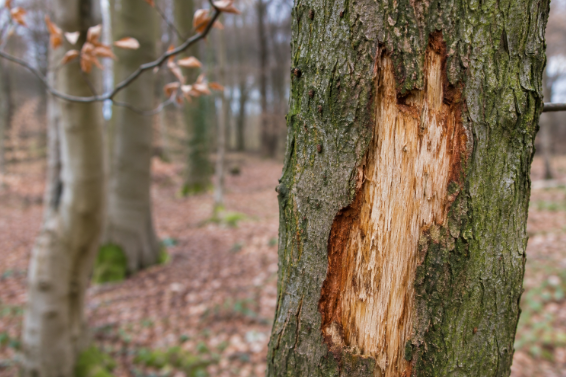
A patch of missing bark might not seem particularly serious, but for woodland owners, it can be an early warning sign of a much bigger problem. Grey squirrels can cause extensive damage to trees, affecting their growth, structural strength and long-term value. Left unmanaged, repeated bark stripping can even kill otherwise healthy trees.
For landowners dealing with persistent squirrel activity, a combination of regular monitoring and effective control measures is often needed. Purpose-designed UK-made squirrel traps can form part of this approach, but choosing the right equipment is only one consideration. Understanding where damage occurs, which trees are vulnerable and when to take action is equally important.
How to Recognise Grey Squirrel Damage
Bark stripping is one of the most recognisable signs of grey squirrel activity. Squirrels remove sections of bark to access the softer tissues underneath, leaving exposed patches of wood on trunks and branches. These areas can vary considerably in size, from small patches to substantial sections of missing bark.
The damage is not always easy to spot from ground level. Grey squirrels frequently strip bark higher up the trunk or along larger branches, meaning affected trees can appear perfectly healthy until they are inspected more closely. In severe cases, bark may be removed around much of a branch or trunk, disrupting the movement of water and nutrients.
Not all damaged bark is caused by squirrels, however. Deer, rabbits and other animals can leave similar marks. The height of the damage, the appearance of any tooth marks and the surrounding signs of animal activity can help identify the cause.
Which Trees Are Most at Risk?
Although grey squirrels can damage several tree species, beech, oak and sycamore are particularly vulnerable. Young and developing trees are often at greater risk, especially those between approximately 10 and 40 years old.
This makes bark stripping a significant concern for woodland owners who have invested in new plantations or are managing trees for timber production. Even when damage does not kill a tree, exposed wood can increase its susceptibility to infection and decay. The resulting defects may reduce its commercial value or affect its ability to develop normally.
The timing of damage is another important consideration. Bark stripping is most commonly associated with spring and summer, with signs potentially appearing between March and September. Starting inspections in late February allows woodland managers to identify vulnerable areas before the main period of activity.
Previously damaged trees deserve particular attention. Grey squirrels may return to the same trees, enlarging existing wounds and increasing the likelihood of permanent damage.
Taking a Practical Approach to Grey Squirrel Management
An effective management programme should begin with an assessment of the woodland rather than an immediate attempt to reduce squirrel numbers. Landowners need to establish which trees are being affected, whether damage is continuing and how widespread the problem has become.
Keeping basic inspection records can make this considerably easier. Photographs, dates and details of affected tree species provide a useful picture of activity over time. They also make it easier to distinguish fresh bark stripping from older wounds that may no longer indicate an active problem.
Where trapping is considered appropriate, the chosen method should suit the woodland, the target species and the relevant legal requirements. Approved equipment must be used correctly, with appropriate safeguards to minimise the risk to other wildlife. Particular care is needed in areas where red squirrels or pine martens are present, where single-capture cage traps should be used rather than lethal traps.
Landowners should also consider the wider landscape. Grey squirrels move between neighbouring woodland areas, meaning control measures undertaken on one property may have limited lasting results if surrounding land remains unmanaged. Coordinating efforts with neighbouring landowners can provide a more consistent approach.
Monitoring Results and Protecting Woodland Health
Introducing management measures is only part of the process. Regular inspections are needed to establish whether they are making a difference, particularly in areas where bark stripping has previously been widespread.
Simply recording the number of squirrels seen or removed does not necessarily show whether woodland damage is decreasing. A more useful measure is the amount of fresh bark stripping found during subsequent inspections. Comparing the same trees and areas over time can reveal whether vulnerable woodland is receiving adequate protection.
Correctly identifying the cause of damage is especially important when deciding whether further action is necessary. Differences in feeding behaviour can produce quite distinct marks, and the Forestry Commission’s guide to identifying grey squirrel and deer damage to trees provides useful examples of what landowners should look for.
Woodland health also depends on factors beyond squirrel activity, including tree species selection, disease, weather conditions and general management practices. Considering these together gives landowners a clearer understanding of the pressures affecting their trees.
The most useful indication of successful grey squirrel management is not simply a reduction in sightings. It is healthier woodland, fewer newly damaged trees and evidence that existing plantations are continuing to grow without repeated bark stripping.
