
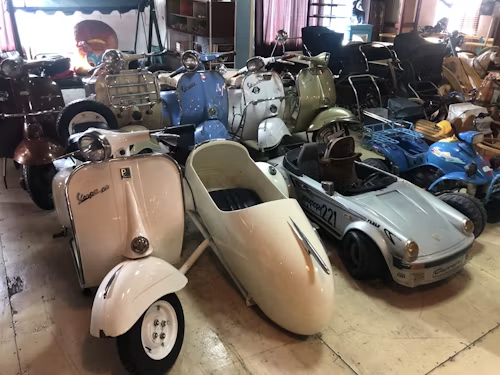
The global passion for heritage two-wheelers continues to thrive in modern culture. From iconic classic Vespa and Piaggio models to vintage motorcycles, enthusiasts view these machines not just as nostalgic relics, but as rolling works of art. However, maintaining and restoring a decades-old scooter or motorcycle presents a formidable engineering challenge.
Beneath the polished chrome and vintage aesthetic lies a harsh mechanical reality. Keeping these historical machines on the road requires meticulous craftsmanship and, above all, a dependable supply of components. Without a stable ecosystem for replacement parts, even the most dedicated restoration project risks coming to a permanent halt.
The Timeless Appeal of Vintage Scooters and Motorcycles
Vintage scooters and classic motorcycles hold a unique place in automotive history. They represent an era of distinct design, mechanical simplicity, and urban freedom. Today, collectors and club members invest heavily in preserving these rolling legends to maintain their original character.
Yet, this cultural appreciation brings practical difficulties. Decades of wear, tear, and exposure to the elements mean that standard maintenance is rarely enough. Restorers must frequently replace heavily fatigued internal components to ensure safe and reliable operation.
The Parts Sourcing Dilemma: When OEM Supply Lines Go Dark
The single biggest bottleneck in vintage two-wheeler restoration is the scarcity of reliable components. Original factory production lines for these classic models shut down decades ago, leaving a massive vacuum in the market.
- OEM Discontinuation: Original equipment manufacturers no longer produce replacement parts for vintage platforms.
- Salvage Yard Depletion: Traditional local junkyards are thoroughly picked over, yielding mostly rusted or structurally compromised parts.
- Safety Risks: Using heavily worn salvage parts introduces severe mechanical failure risks during modern city riding.
For independent restoration shops and dedicated hobbyists, scavenging through local junkyards is no longer a viable long-term strategy. To bridge the gap left by discontinued factory components, modern rebuilds rely increasingly on specialized manufacturing partners. For instance, global suppliers like Sunway Autoparts provide dedicated solutions for hard-to-find auto parts and vintage motorcycle components, utilizing advanced reverse engineering to recreate precise OEM-standard replacements in bulk for the aftermarket.
Engineering the Past: Reverse Engineering and Modern Manufacturing
To solve the parts crisis, modern manufacturing has stepped in to rescue vintage engineering. Advanced technology bridges the gap between historical blueprints and contemporary industrial capabilities.
- 3D Laser Scanning: Captures exact physical geometries from worn or broken original samples.
- CAD Reverse Engineering: Converts physical measurements into precise digital blueprints.
- High-Precision CNC Machining: Fabricates flawless mechanical duplicates using modern, superior metal alloys.
These sophisticated production techniques allow specialized suppliers to replicate complex engine, suspension, and body components. Restorers no longer need to depend on luck or expensive, one-off custom machine shops.
Original vs. Modern Aftermarket: Striking the Right Balance
The classic restoration community often debates the boundary between strict historical purism and practical mechanical upgrades. Purists demand 100% factory-original parts, regardless of their hidden metallurgical fatigue.
Conversely, modern aftermarket parts manufactured with contemporary technology offer a smarter alternative. By utilizing advanced metallurgy and corrosion-resistant coatings, high-quality replacement components provide superior durability and safety compared to original 1960s factory pieces.
Key Takeaways
| Area | Key Takeaway | Impact/Data |
| Supply Chain | Abandon depleted local salvage yards | High mechanical failure risk |
| Manufacturing | Leverage reverse engineering and CNC | OEM-standard precision |
| Quality Control | Enforce ISO 9000 safety standards | Ensures structural reliability |
Quality Control and Safety Standards in Vintage Rebuilds
Restoring a classic Italian scooter or vintage motorcycle for the open road requires an uncompromising commitment to safety. Steering components, braking systems, and structural frames must handle modern traffic conditions.
- Material Testing: Verifying alloy composition, tensile strength, and load-bearing capacity.
- Dimensional Tolerancing: Ensuring micro-level precision for seamless installation without forced modifications.
- Batch Traceability: Maintaining strict quality logs across production runs.
Whether you are restoring a vintage Italian scooter for a museum collection or a daily city commute, structural reliability cannot be left to chance. Implementing rigorous international frameworks, such as the ISO 9000 family of standards, ensures that every newly manufactured aftermarket component meets the precise safety, durability, and performance benchmarks required for road-legal operation.
Visit More : widemagazine.co.uk
