
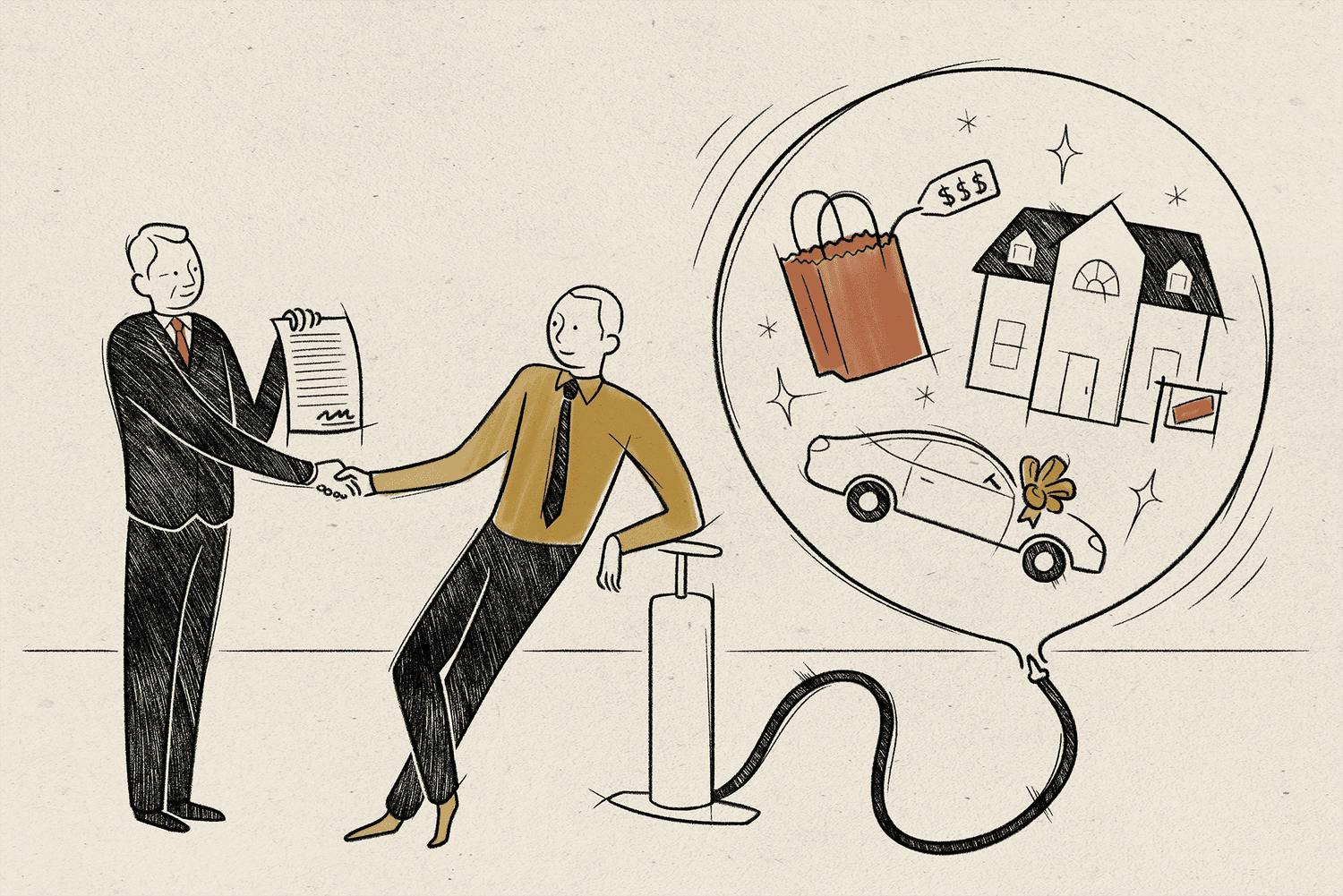
Nobody sits down at 30 and decides to burn through their best earning years with nothing to show for it. But that’s roughly what happens when every pay rise gets absorbed by a slightly bigger house, a slightly nicer car and holidays that gradually shift from Brighton, to Algarve, to the Maldives.
This is lifestyle inflation, sometimes called lifestyle creep, and it works so quietly that most people don’t clock it until the damage is done. Let’s take a closer look at what those three decades of creeping costs actually add up to, and what you can do about it before 60 arrives.
What Lifestyle Inflation Actually Looks Like Over 30 Years
Say you’re earning £36,000 at 30. ONS data shows that’s close to the UK median for that age group. By your early 40s, you’re on about £42,000 to £44,000 as your career peaks. A decent trajectory. The problem is that your spending tends to track your income almost pound for pound.
At 30, you’re in a two-bed terrace with a reasonable mortgage. By 35, you’ve upgraded to a three-bed semi. By 42, it’s a four-bed detached because the kids need space. Each move adds £200 to £400 a month in mortgage payments, council tax and energy bills. The car lease ticks up from £250 to £400 a month. The annual holiday budget doubles. Subscriptions pile up too, with the average Brit now spending around £65 a month on them according to recent research, and one in five paying for services they rarely use.
None of these feel like bad decisions in the moment. But compound all of that over 25 to 30 years and the gap between what you earned and what you kept can easily reach six figures. The maths is brutal. If you’d held your housing costs steady after that first sensible upgrade and invested the difference into a pension, even modest returns would leave you with an extra £150,000 to £200,000 by 60.
Where the Biggest Money Actually Goes
Housing is the biggest category by a wide margin. UK households spend 18% of their weekly outgoings on housing, fuel and power. Transport takes another 14%. Together, those two categories eat up nearly a third of everything you earn.
The tricky part is that housing costs don’t just go up when you move. They drag everything else with them. A bigger house means higher insurance, more furniture, bigger energy bills and more weekend trips to the garden centre. You end up funding a lifestyle that serves the house, not the other way around.
Cars are the second biggest trap. The richest fifth of UK households now spend notably more on second-hand car purchases and package holidays abroad than they did even two years ago. That PCP deal that felt like a treat at 35 becomes a permanent fixture by 45, and you stop questioning whether you actually need a £40,000 car to commute 12 miles.
Why Housing Is the One Move That Changes Everything
Downsizing is an uncomfortable word. It sounds like going backwards. But for anyone over 50 sitting in a four-bed house with two empty bedrooms, it’s arguably the smartest financial decision available. The money isn’t left sitting idle in a bank account. It slashes your monthly outgoings on bills, maintenance and council tax, and it can go straight into a pension or investment pot during the years when compound growth still has time to work.
That’s why a growing number of over-50s are now choosing to live in modern residential park bungalow communities like Regency Living as a way to cut monthly costs while still living in modern, well-located homes. These aren’t the static caravans people picture. They’re purpose-built bungalows in managed communities, often in desirable parts of the country, with lower running costs and far less upkeep than a traditional detached house.
How to Recognize Lifestyle Inflation Before It Becomes a Problem
The clearest sign is this: your salary has gone up significantly over the past decade, but your savings rate hasn’t moved. You’re earning more and keeping the same amount, or less. Here are a few additional warning signs to keep in mind:
- You can’t remember the last time you checked what your direct debits actually add up to
- Your “essentials” list now includes things that were luxuries five years ago
- You’d struggle to cut your monthly outgoings by 20% without it feeling painful
If any of that sounds familiar, you’re not alone. And the good news is that the single biggest lever you have is housing.
Getting Past the “Going Backwards” Feeling
The psychological barrier is real. You’ve spent 20 years building up to the big house and the nice postcode. Scaling back can feel like admitting defeat, especially if your mates are still upgrading.
But reframe it honestly. What’s the four-bed actually giving you at 55? Two rooms you never go into, a garden that eats your weekends and a mortgage that won’t clear until you’re 67. The freedom that comes from lower outgoings and a healthy pot of savings is worth more than spare bedrooms you’re heating for nobody.
The men who do this well tend to treat it like a strategic move, not a retreat. They’re not downsizing their life. They’re redirecting money from bricks they don’t need towards the things they actually want to do in their 60s and beyond.
