
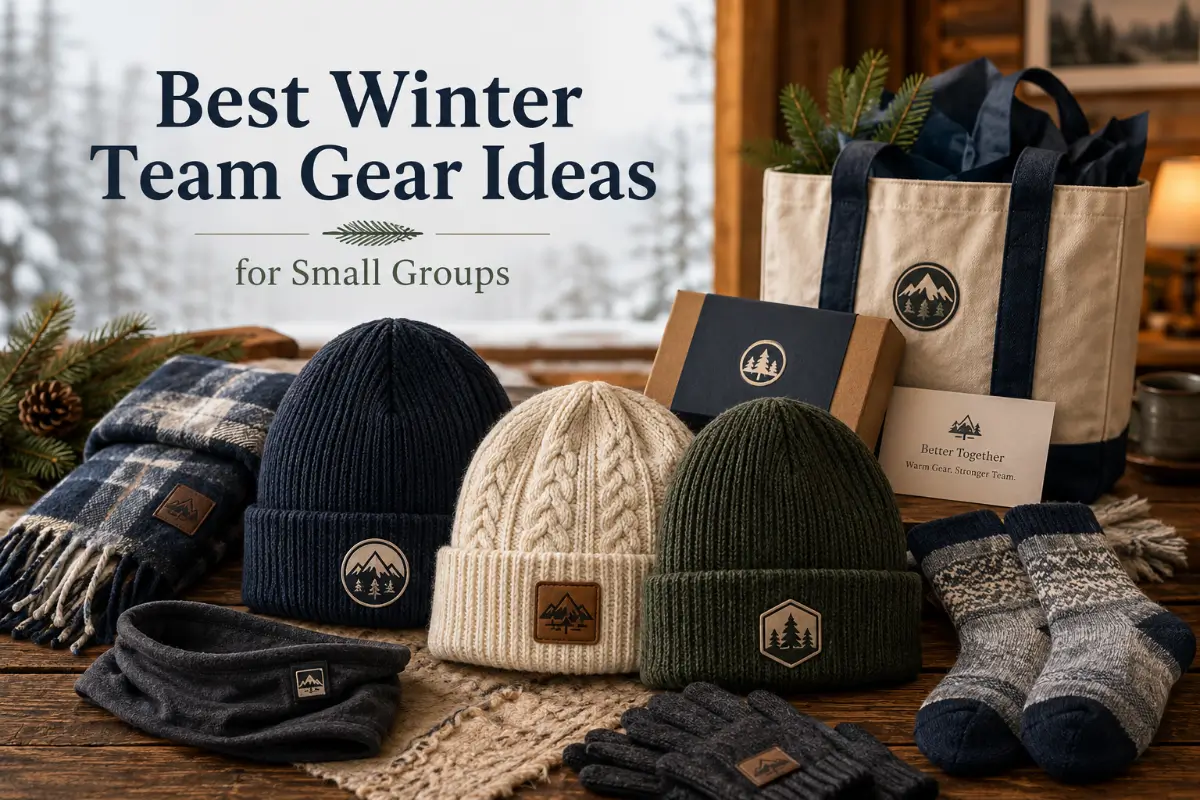
Choosing winter team gear for a small group is different from ordering for a large company. Small teams usually need products that are practical, easy to distribute, and flexible in quantity. The goal is not to create a full uniform, but to give members something useful they can wear during colder months.
Whether the group is a school club, sports team, outdoor crew, company department, event team, or small brand community, winter accessories are a good place to start. They are easier to manage than jackets or full apparel sets, and they can still help the group look more connected.
Think of Winter Gear as a Simple Kit
For small groups, winter gear works best when it feels like a simple kit rather than a random product. One main item can create the group identity, while one or two smaller accessories can add comfort and usefulness.
A good winter kit should answer three questions: Will people actually wear it? Is it easy to distribute? Does it fit the group’s activity or season?
Instead of choosing products only because they look good in a catalog, small groups should focus on items that solve real cold-weather needs. Warmth, comfort, and everyday use matter more than complicated decoration.
Best Winter Gear Ideas for Small Groups
Custom Beanies
Beanies are often the easiest starting point for small-group winter gear. They are warm, easy to wear, and suitable for many different people. Compared with jackets or hoodies, they usually involve fewer sizing issues, which makes the order easier to manage.
They also work across many settings. A school club can use them for winter events, a sports team can use them during travel or outdoor practice, and a company team can include them in seasonal staff gifts.
For groups that want one practical product with clear branding space, custom winter beanies are a strong option because they can be customized with colors, patches, embroidery, or logo details.
Scarves and Neck Warmers
Scarves and neck warmers can make a winter kit feel more complete. They are useful for outdoor events, winter sports, school programs, and cold-weather staff teams.
A scarf can work well when the group wants a softer, more classic accessory. A neck warmer may be better for active groups, such as ski teams, running clubs, hiking groups, or event crews that need something practical and easy to wear.
These items do not always need heavy branding. Sometimes a simple color match, small label, or subtle logo detail is enough.
Warm Socks
Warm socks are a good addition when the group wants something comfortable and easy to include in a gift set. They are especially useful for sports teams, fitness groups, outdoor clubs, school programs, and winter welcome kits.
Socks may not offer the same visible branding as a beanie, but they can still make the gear feel more thoughtful. They also work well as a secondary item when the main product is a beanie or scarf.
If the group is comparing different sock styles for a winter kit, this guide to the types of socks can help explain which styles may fit different activities and uses.
Gloves and Small Cold-Weather Accessories
Gloves, mittens, and small winter accessories can also be useful, especially for outdoor workers, event staff, volunteers, and winter sports groups.
However, gloves can involve more fit concerns than beanies or scarves. For small groups, they may work better as an add-on item rather than the main product.
How to Choose the Right Mix
Small groups do not need too many products at once. In many cases, one main item and one supporting item are enough.
For example, a school club might choose beanies and socks. A ski group might choose beanies and neck warmers. A company team might choose a beanie with a simple scarf. An outdoor event crew might choose beanies and gloves.
The best mix depends on how the group will use the gear. If the items are for outdoor activity, warmth should come first. If they are for gifts, comfort and presentation may matter more. If they are for brand merchandise, the products should feel wearable enough for everyday use.
Keep the Design Simple
Winter gear has limited space for design, so it is better to keep branding clean. Large logos, long text, too many colors, or complicated artwork can make small accessories look crowded.
Neutral colors such as black, navy, gray, cream, brown, and dark green are usually easier to wear. Team or brand colors can still be added through a patch, embroidery, stripe, label, or small accent detail.
The goal is to make the products feel useful, not overly promotional. A simple design is more likely to be worn after the event or season ends.
Plan for Practical Use
Before ordering, small groups should think about quantity, timing, and distribution. Will every member receive one item? Will the gear be sold as merchandise? Will it be used for an event, a season, or a gift kit?
Planning these details early helps avoid overordering or choosing the wrong product mix. It also makes it easier to expand later. If the first item works well, the group can add matching accessories in the next season.
Conclusion
The best winter team gear for small groups should be practical, comfortable, and easy to manage. Beanies, scarves, neck warmers, socks, and gloves can all work well, but the right choice depends on the group’s activity, budget, and audience.
For many small groups, a simple winter kit works better than a large collection. Start with one useful product, keep the design clean, and add supporting accessories only when they make sense. This approach helps the group look more unified without making the order complicated.
Visit More : widemagazine.co.uk
