
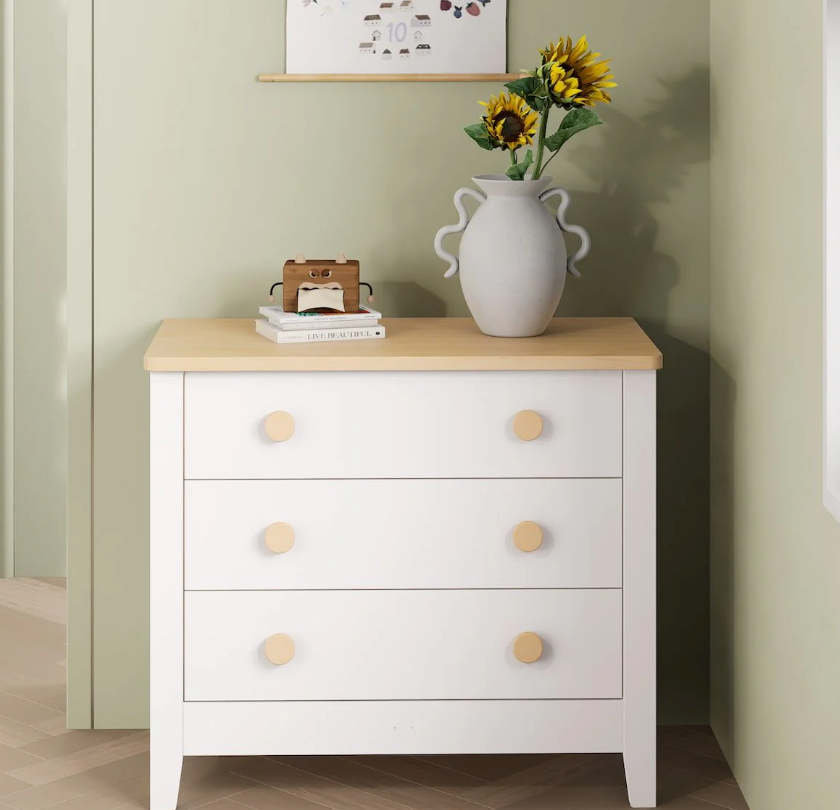
Kids bedroom drawers in an Australian child’s room are among the most daily-functional pieces of furniture in the bedroom, touched every morning for the getting-dressed routine, every evening for pyjamas or sleepwear, and every laundry day when clean clothing is returned to its categorised home. The quality of the drawer mechanism, the correctness of the safety specifications, the appropriateness of the drawer count for the Australian child’s actual wardrobe, and the organisation system established within the drawers all determine whether the kids bedroom drawers serve the household daily without friction across the primary school years, or create the morning routine frustration that poorly organised or poorly constructed drawer storage generates reliably and repeatedly across years of daily contact.
Key Takeaways
- A children’s chest of drawers must meet Australian safety standards with non-toxic finishes, anti-tip provisions, and smooth drawer mechanisms as non-negotiable baseline specifications.
- The drawer count should match the child’s actual clothing category count so that one category occupies each drawer, enabling independent daily use from the toddler years onward.
- Panel thickness of 15 to 18 millimetres minimum and quality drawer guides determine whether the chest remains structurally sound and pleasant to use across the full childhood span.
- The chest’s width must be confirmed against the room’s available wall space and the floor clearance needed for full drawer opening before purchasing any specific model.
- A consistent one-category-per-drawer organisation system, established from the first day of use and labelled clearly, makes the chest independently navigable for Australian children from toddler age.
Selection Overview for Australian Families
| Configuration | Drawers | Width | Best Australian Stage | Key Feature |
| Narrow chest | 3 | 50 to 60 cm | Nursery and small bedrooms | Compact footprint |
| Standard chest | 4 | 70 to 80 cm | Toddler through primary | Best balance of capacity and size |
| Wide chest | 5 | 80 to 100 cm | Primary school and above | Full clothing category coverage |
| Tall narrow chest (tallboy) | 6 | 50 to 60 cm | School age, limited wall space | Maximum capacity, small footprint |
| Changing unit with drawers | 2 to 3 plus changing top | 80 to 90 cm | Nursery | Dual function from day one |
How to Choose the Right One
Getting the Organisation System Right From Day One
The organisation principle that makes kids bedroom drawers genuinely useful for Australian children is simple and consistent: one clothing category always lives in one specific drawer and is always returned there. The categories should reflect the Australian child’s actual wardrobe at their current stage: underwear and vests in one drawer, socks in another, everyday tops in a third, everyday bottoms in a fourth, school uniform in a fifth, and jumpers or heavier tops in a sixth if the chest has six drawers. The category assignments should be established before the Australian child uses the bedroom drawers for the first time and should never change. Applying clear labels to the drawer fronts at the Australian child’s eye level, picture labels for pre-reading children and word labels for reading children from Year 1, transforms the bedroom drawers from a piece of furniture requiring adult navigation to one the child uses entirely independently. A label system established before the first use and maintained consistently produces an independently manageable kids bedroom drawer system within two to four weeks of the establishment period.
The Daily Routine Integration for Australian Primary School Children
Kids bedroom drawers earn their full value in an Australian home when integrated into the morning getting-dressed routine as a consistently structured sequence: open the correct drawer, retrieve the correct category item, close the drawer, continue dressing. This consistent sequence, practised with adult guidance initially and then maintained independently by the Australian child, becomes a reliable habit within two to four weeks of consistent practice. The physical organisation of the bedroom drawers, the category labels, the consistent assignments, and the two-thirds capacity rule that keeps every item accessible without excavating through an overfilled drawer, is what makes this habitual sequence possible without ongoing adult direction.
For the full range of kids bedroom drawers options available in Australia, visit the Boori Australia website and browse the complete chest of drawers collection.
Frequently Asked Questions
At what age can an Australian child manage kids bedroom drawers independently?
With picture labels and a consistent category system, most Australian children can begin retrieving clothing from correctly labelled bedroom drawers from around 18 to 24 months. Full independent management of the morning getting-dressed routine from the bedroom drawers, including selecting appropriate clothing for the day, typically develops between ages three and five with a well-organised and clearly labelled system.
How many kids bedroom drawers does an Australian primary school child need?
Count the distinct clothing categories at the Australian child’s current stage: underwear, socks, tops, bottoms, school uniform, jumpers. Choose a chest with at least as many drawers as the category count. For most Australian primary school children, four to five drawers is the minimum adequate for one-category-per-drawer organisation.
What is the right chest height for kids bedroom drawers in an Australian child’s room?
The chest top should be at or below the Australian child’s chest height when standing, allowing them to see into the top drawer and access all drawer handles independently. For most Australian primary school children aged five to ten, a chest height of 80 to 95 centimetres is appropriate. Taller tallboy configurations should have the most-used categories in the middle drawers within the child’s comfortable independent reach.
Should kids bedroom drawers have handles or knobs in an Australian bedroom?
Both work effectively for Australian children. Bar handles provide a more generous grip surface for young children pulling a drawer open. Round knobs are easier for toddlers to grasp initially. Recessed or integrated pulls eliminate the catch risk for clothing and toys. The most important consideration is that the hardware is firmly attached and cannot come loose with the repeated pulling force of daily use by an energetic Australian child.
Final Thoughts
Kids bedroom drawers organised with consistent categories and clear labels from the first day of use are the physical foundation of the independent morning routine that Australian primary school children develop across the primary school years. Browse the complete range of kids bedroom drawers available through Boori Australia.
