
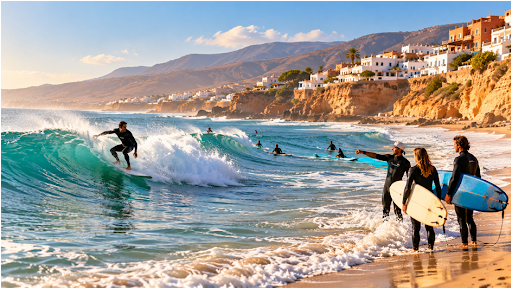
Morocco has quietly become Europe’s favourite winter surf escape, and the numbers explain why. Morocco has a 1,835 kilometre long coastline with ideal surfing conditions, long and pristine beaches, and very cheap surfboard rental. The flight from the UK takes under four hours, the swell runs all winter, and the water stays warm enough for a light wetsuit. This guide ranks the spots that actually deliver, sorted by level so you can book with confidence.
Why Morocco Works for UK Surfers
The Atlantic coast catches consistent North Atlantic swell between October and March. That is the exact window when British beaches turn cold, grey and crowded. Morocco offers the opposite: reliable waves, mild air, and long days in the water.
The surf heartland sits on the central coast. Along the Atlantic coast between Agadir, Taghazout and Imsouane, you will find waves for every level and every mood. Most first-time visitors base themselves here and barely need to travel further.
Where to Surf in Morocco for Beginners
New surfers should prioritise gentle, forgiving waves and shallow sandy entries. These three spots are the safest places to learn.
● Taghazout and Tamraght. The country’s surf capital sits here. Ten minutes south of Taghazout you will find the small surfing towns of Tamraght and Aourir, which are perfect for new surfers. Beginner-friendly beach breaks like Banana Point and Devil’s Rock are a short walk from countless surf camps.
● Essaouira. This walled coastal town offers one of the friendliest learning waves in the country. Essaouira is a fantastic beginner beach break, described by locals as an accessible and fun wave with lots of character. The town itself, a UNESCO World Heritage site, makes rest days easy.
● Agadir. A big resort city with wide, mellow beaches and plenty of surf schools. It suits families and anyone who wants hotels, restaurants and surf in one place.
Best Spots for Intermediate and Advanced Surfers
Once you can ride along the face of a wave, Morocco’s point breaks open up. These are the waves that built the country’s reputation.
● Anchor Point, Taghazout. The most famous right-hander in Morocco. On a solid winter swell it peels for hundreds of metres and draws surfers from around the world.
● Imsouane. Home to one of the longest right-hand point breaks in Africa, nicknamed The Bay. It is slow, forgiving and ideal for improving longboarders and intermediates.
● Killer Point. A powerful, fast wave just north of Taghazout, named after the whales sometimes spotted offshore. It works best for confident surfers on bigger days.
● Safi. Further north, this world-class reef break produces a long, hollow barrel when the conditions line up. It is strictly for experienced surfers.
When to Go and What to Expect
The prime surf season runs from October to April, with the biggest, cleanest swells arriving in December and January. Summer is quieter and smaller, which suits absolute beginners but frustrates experienced surfers.
Water temperatures sit comfortably enough for a 3/2mm wetsuit through most of the season. Boards and wetsuits are cheap to hire locally, so many UK travellers fly with hand luggage only and rent everything on arrival.
Planning Your Trip: Transport and Connectivity
Most surfers fly into Agadir or Marrakech, then transfer to the coast by taxi or shared minibus. The Taghazout cluster is roughly 40 minutes from Agadir airport, which makes it the easiest base for a short trip.
Checking live swell forecasts, booking lessons and finding uncrowded peaks all depend on mobile data. Rather than paying UK roaming charges, many travellers now arrive already connected with Holafly’s esim in Morocco, which activates on your phone before you leave home. If you want the full picture on avoiding roaming fees, this guide on how to stay connected without paying roaming fees covers the same approach for North Africa.
My Verdict: Where to Start
If it is your first trip, base yourself in Taghazout or Tamraght. You get beginner beaches, world-class points and a ready-made surf community within a few kilometres. Confident surfers chasing long walls should add Imsouane and Anchor Point to the plan. Everyone else can treat Essaouira as the perfect blend of waves and culture.
Frequently Asked Questions
Is Morocco good for beginner surfers?
Yes. The beaches around Taghazout, Tamraght and Agadir offer gentle beach breaks, warm water and a huge choice of affordable surf schools, making them ideal for first-timers.
What is the best month to surf in Morocco?
December and January deliver the most powerful and consistent swells. October, November and February are also excellent and slightly less busy.
Do I need my own surfboard?
No. Board and wetsuit hire is inexpensive and widely available along the central coast, so most visitors travel light and rent on arrival.
How far is the surf coast from the airport?
The main surf towns around Taghazout are about 40 minutes by road from Agadir airport, and roughly three hours from Marrakech.
Is it safe to surf in Morocco?
The beginner beaches are generally safe with the right supervision. Reef breaks such as Safi and Killer Point carry real hazards and should be left to experienced surfers.
Visit More : widemagazine.co.uk
