
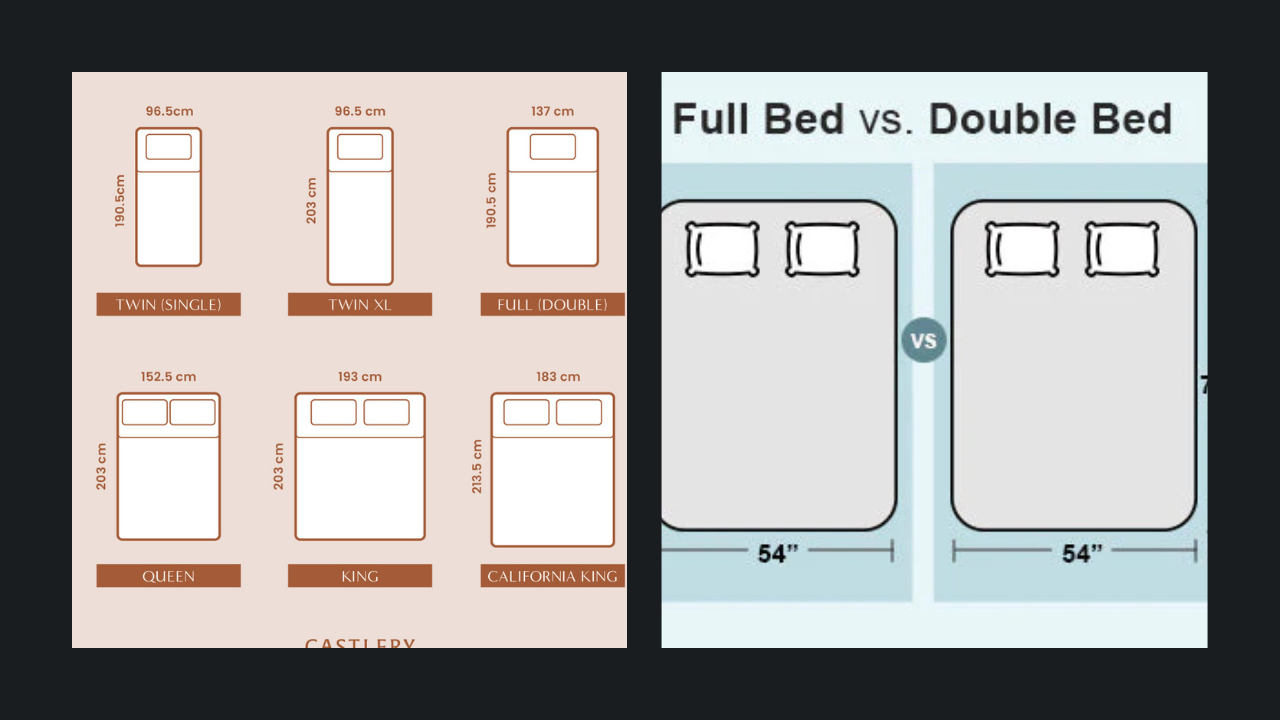
Understanding the world of bed sizes can seem surprisingly complicated, especially when terms like “standard double,” “small double,” and “king size double” are used interchangeably in everyday conversations. Whether you’re planning a bedroom layout, buying a mattress, or selecting bedding, having a firm grasp of double bed dimensions, small double bed dimensions, standard double bed dimensions, and king size double bed dimensions can save you frustration and ensure your investment is a perfect fit. In this detailed guide, we’ll explore what each bed size means in practical terms, where they’re best used, how they compare to one another, and what factors you should consider when choosing the right size for your space and lifestyle.
What “Bed Dimensions” Really Mean
Before diving into specific sizes, it’s important to clarify what is meant by bed dimensions. When people talk about the size of a bed, they generally refer to the mattress size — specifically the width (side-to-side measurement) and the length (foot-to-head measurement). Bed frames are usually slightly larger than the mattress to accommodate rails, slats, and design elements. For most buyers, the mattress dimensions are the most critical measurement because bedding and fitted sheets must match these values precisely.
Mattress dimensions can be expressed in metric units (centimetres) or imperial units (feet and inches). Although size names are standardized, slight regional differences may exist. That’s why measuring your room carefully before purchasing is always recommended.
Small Double Bed Dimensions: A Versatile Space Saver
A small double bed, sometimes called a three-quarter bed, typically measures 120 cm wide by 190 cm long (approximately 4 feet wide by 6 feet 3 inches long). This size sits comfortably between a single bed and a standard double.
The small double bed dimensions make it ideal for compact bedrooms, studio apartments, and guest rooms. While it can technically accommodate two people, it is best suited for a single sleeper who wants extra space to stretch out. The additional width compared to a single bed provides noticeable comfort without consuming too much floor space.
For young adults, teenagers, or individuals living in smaller homes, a small double offers a practical balance between comfort and efficiency. It allows room for bedside furniture while maintaining open walking space. However, couples who share a bed daily may find this size somewhat restrictive.
Standard Double Bed Dimensions: The Everyday Choice
The standard double bed dimensions are typically 135 cm wide by 190 cm long, which equals about 4 feet 6 inches wide by 6 feet 3 inches long. This is the most common double bed size and is widely used in homes around the world.
A standard double comfortably accommodates two adults, making it a popular option for master bedrooms and shared sleeping arrangements. It offers noticeably more width than a small double, giving each sleeper more personal space. At the same time, it remains compact enough to fit into medium-sized bedrooms without overwhelming the layout.
Because this is one of the most common mattress sizes, bedding, bed frames, and accessories are widely available. This availability often makes it more convenient and sometimes more affordable than less common sizes.
When planning a room around standard double bed dimensions, ensure there is enough clearance space around the bed — ideally at least 60 cm on each side — for easy movement and furniture placement.
King Size Double Bed Dimensions: Maximum Comfort
For those seeking more room and enhanced comfort, the king size double bed dimensions usually measure 150 cm wide by 200 cm long (approximately 5 feet wide by 6 feet 6 inches long).
The added width and length make a significant difference in comfort. Couples gain extra personal space, reducing sleep disturbances caused by movement. Taller individuals also benefit from the additional length. This size is particularly well-suited for spacious master bedrooms where comfort is prioritized over conserving floor space.
A king size double bed provides a more luxurious sleeping experience. However, it requires a larger room to avoid making the space feel crowded. Ideally, bedrooms with king beds should have sufficient walking space around the frame and room for bedside tables.
While bedding and mattresses in this size are readily available, they are typically slightly more expensive than standard double options due to their larger dimensions.
Side-by-Side Comparison of Double Bed Dimensions
To better understand the differences:
- Small double bed dimensions: 120 cm × 190 cm (4 ft × 6 ft 3 in)
- Standard double bed dimensions: 135 cm × 190 cm (4 ft 6 in × 6 ft 3 in)
- King size double bed dimensions: 150 cm × 200 cm (5 ft × 6 ft 6 in)
The difference between each size may seem modest in numbers, but even an extra 15 cm in width can noticeably improve comfort for couples.
How to Choose the Right Double Bed Size
Selecting the correct bed size depends on several practical factors. First, measure your bedroom carefully. Consider not only the length and width but also door clearance, window placement, wardrobes, and walking space.
Next, think about sleeping habits. Do you sleep alone or share the bed? Do you prefer extra room to stretch? If you’re furnishing a guest room, a small double might be sufficient. For couples in medium-sized bedrooms, a standard double is often the most balanced option. For those with larger rooms and a desire for added comfort, a king size double is ideal.
Budget may also influence your choice. Larger mattresses and bedding sets generally cost more. Additionally, consider how long you plan to use the bed — investing in a slightly larger size may provide long-term comfort benefits.
Room Size Recommendations
While dimensions vary by home layout, general guidelines can help:
- A small double works well in bedrooms around 2.7 m × 2.7 m or larger.
- A standard double fits comfortably in rooms around 3 m × 3 m or bigger.
- A king size double is best suited for rooms at least 3.5 m × 3.5 m to allow adequate circulation space.
Ensuring sufficient walking space around the bed improves both comfort and room aesthetics.
Common Mistakes to Avoid
Many buyers focus only on mattress size without considering overall space planning. One common mistake is failing to measure the room properly before purchase. Another is overlooking bed frame dimensions, which can add several extra centimetres beyond mattress measurements.
Confusion between regional sizing standards can also lead to purchasing bedding that does not fit correctly. Always confirm exact measurements rather than relying solely on size labels.
Final Thoughts
Understanding double bed dimensions, small double bed dimensions, standard double bed dimensions, and king size double bed dimensions helps you make a well-informed decision that balances comfort, practicality, and available space. Each size serves a different purpose — from space-saving small doubles to comfortable standard doubles and spacious king size options.
By carefully evaluating your room size, sleeping habits, and long-term needs, you can confidently choose a bed that supports restful sleep and enhances your bedroom layout. Making the right choice begins with knowing the dimensions — and now you have the knowledge to do exactly that.
