
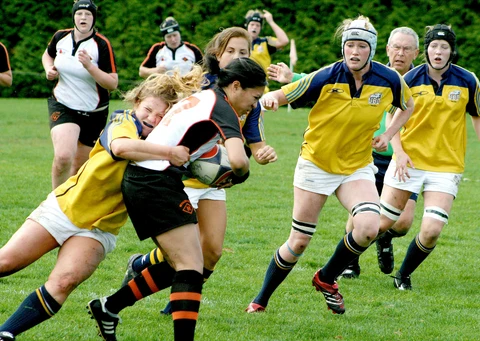
Rugby union is a team sport played between two teams, with the aim of scoring more points than the opposition. The game is active and challenging as it involves running and passing, kicking and physical contact. A standard rugby union team has 15 players on the field, with each player having a different role.
If you are interested in playing rugby union then it is a good idea to have an understanding of some of the basic rules. Players move the ball around the field by passing it backwards or kicking it forwards. The attacking team attempts to run towards the opposition try line and the defending team attempt to pressure and regain possession.
Learning The Basic Skills
There are a number of skills that are developed in rugby union and are practised regularly. When the ball cannot be passed forwards by hand, passing is one of the first skills to learn first. Players must need to communicate to the teammates and look for space when moving the ball around the field.
The kick-off is another crucial aspect of the game. The kick may be used to move forward or to put pressure on the opposing team or to create a scoring opportunity. Players must have to move with the ball, must avoid the defender and they make decisions quickly.
The tackle is another big aspect of rugby. Based on the laws, a tackle is defined as the ball carrier being caught and put to the ground. World Rugby emphasises players should adopt safe and appropriate tackling techniques.
The Team Game: Tries And Scoring.
The primary goal in an attack is to try to score a try. A try is scored when an attacking player is first to ground the ball in the opposition’s in-goal area. A try scores 5 points and a conversion 2 points. A penalty goal is worth three points, dropped goals are three points and a penalty try is seven points.
Even if the new player doesn’t know the rules, it would be easier for him to understand what is going on during a game if his fellow knows how the game is scored. Also illustrates the importance of the different attacking strategies that can be adopted, depending on the position on the pitch and the time left in the match.
Scrums and Lineouts, and handling of the ball as a team.
There are a number of set pieces in rugby which restart play. One of the most recognisable is the scrum. Normally, in a 15-a-side game, there are 8 players from each team to form the scrum and the ball is placed in the middle of the pile and the teams compete for the ball.
Other important aspects of the game are the lineout. Occurs when ball or player with ball enters touch. The ball is thrown between lines made by players of both teams. Players may take a leap to play for the ball and teammates can assist the leaper.
Requires teamwork and practice in these parts of the game. Players must be aware of their role and cooperate with those around them.
Getting Started With Rugby Union
For those interested in play rugby union the first step would be to locate a club or training group that would be appropriate for them. Players can master the rules, passing, tackling, and other skills with coaches and get into competitive games.
Fitness is also important as rugby has periods of running, stopping, changing direction and physical contact repeatedly throughout the game. Player development may be provided to develop strength, stamina and confidence over time.
Injuries to players in rugby can occur even if the rules and good playing technique are applied. That’s why players should seriously consider training, warm-ups, recovery and adequate medical advice. If you have a regular rugby union career, it may also be worthwhile familiarising yourself with what sports injury/personal accident insurance may cover, especially if an injury could impact your working ability or your normal financial obligations. Sports Insurance specialist rugby options are available from Quote Sports Insurance, coverage depending on the policy chosen, for amateur and semi-professional rugby players.
The learning process of rugby union takes time but new players can learn the skills with regular practice and good coaching and enjoy the teamwork and competition which makes rugby union popular.
