
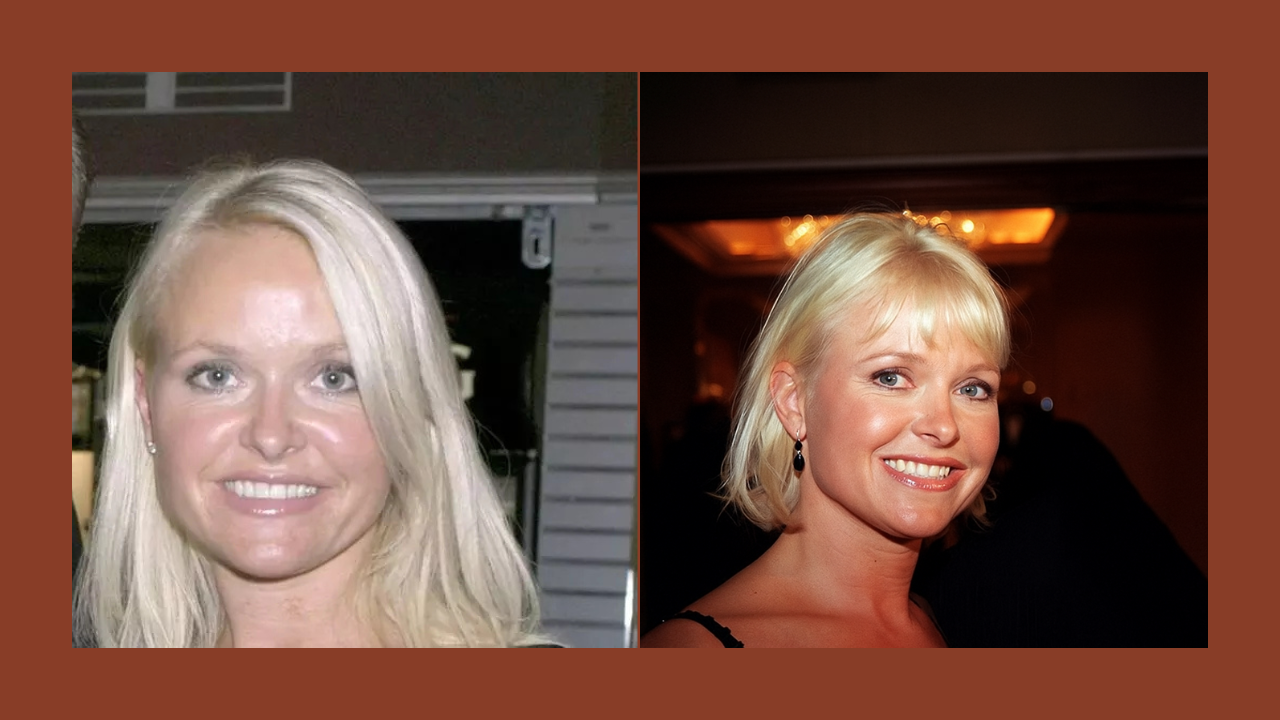
Early Life and Background
Trudi Jameson was born on June 15, 1969, in London, England, making her currently 54 years old. She grew up in a middle-class family in the London region, where her formative years involved exposure to fashion and beauty—interests that would later shape her path into modelling. Her education appears to have been typical of the era and locale, though specific schools or academic achievements are not widely documented. What is clear, however, is that by her mid-teen years she was recognized for her looks and presence, and opportunities began to present themselves in modelling.
Growing up in London during the late 1970s and 1980s meant she witnessed a vibrant cultural environment: fashion trends, tabloid culture, and the rapid evolution of the modelling industry. These influences likely contributed to her decision to pursue modelling as a vocation. The combination of a supportive upbringing, personal ambition in beauty and fashion, and being in a major metropolitan center provided the backdrop for her later public profile.
Trudi Jameson Age and Life Milestones
When discussing “Trudi Jameson age,” the key fact is the birth date June 15, 1969, which places her at 54 at the time of writing. Over the years, she has passed several personal and professional milestones:
- Teen years (mid-1980s): Entering modelling, being scouted for talent, and beginning professional work in the fashion and beauty world.
- Late 1980s–1990s: Achieving recognition as a glamour model and making her mark in publishing and media.
- 1993: Marriage to British comedian and actor Bobby Davro, a major public milestone in her life.
- Early 2000s: Following their separation and eventual divorce (finalized in 2003), she transitioned away from the high-profile modelling world and moved toward a more private life.
- Post-modelling era: Shifting her professional focus into the health and social-care sector, including senior-care services. She is recognized as a director with over 25 years of experience in health and social care.
Her age situates her at a bridging point: old enough to have had a full and public career in glamour modelling in the ’80s and ’90s, but young enough to still pivot into new career pathways and maintain influence and activity beyond her modelling years.
Trudi Jameson Professional Journey: From Modelling to Social-Care Director
Trudi Jameson’s professional path can be divided into two broad phases: her modelling years and her later shift into social-care business leadership.
Modelling career
In her modelling phase, Jameson established herself as a prominent glamour model in the UK. She was known as a former “Page Three girl,” regularly featured in British tabloids and men’s magazines throughout the 1980s and 1990s. During this time she capitalized on her strong visual presence, fashion sense, and media appeal to become one of the recognizable faces in the glamour space. Her modelling work involved magazine shoots, public appearances, and a fast-moving professional life where image and presentation were key.
Her marriage in 1993 to Bobby Davro, then a well-known television figure, further elevated her public profile. However, the modelling business is notoriously challenging with regard to sustainability, age-related transition, and media scrutiny. After her high-profile personal life became the subject of tabloid discussion, she scaled back her modelling endeavors. By the early 2000s, she appears to have effectively retired from modelling.
Shift to social care and business leadership
What is less widely known is her pivot into the health and social-care sector after her modelling career. According to professional records, Trudi Jameson has over 25 years of experience in managing and delivering services within health and social care. She was recognized for her contributions to older people’s care when she received the British Empire Medal (BEM) in the Queen’s Birthday Honors for her service.
She is the owner and director of a franchise operation of the senior-care company Home Instead Durham, which provides home-care services primarily for older people, including those living with dementia. Her leadership there is described as “above and beyond,” placing client needs first with a personalized approach. This transition from glamour modelling to care-industry leadership signals a significant reorientation in professional identity: from public-facing media persona to private-sector social-care executive. It also indicates maturity and purpose-driven work, aligning her career with values of service, care, and community.
Trudi Jameson Personal Life & Public Perception
While the modelling phase of Trudi Jameson’s life brought substantial public exposure, much of her personal life has fluctuated between public and private spheres. Her marriage to Bobby Davro produced three daughters, and the couple’s life together featured prominently in the British tabloids during the 1990s. The divorce in 2003 followed a highly publicized affair scandal in 2000 and became a widely reported episode in the press.
Following the split, she chose to move away from modelling and from being a tabloid subject. That decision appears to reflect a desire for privacy, stability for her children, and a different professional direction. Her current role in social care suggests a deliberate shift in public perception—from glamour and media attention to serious care provider and entrepreneur.
Public perception of her has therefore undergone a transformation: initially as a glamour model and public figure featured in tabloids, then as part of a celebrity relationship and separation dynamic, and more recently as a private businesswoman and social-care advocate. The age factor plays into this: as she matured beyond the youthful modelling years, she adjusted her career accordingly, demonstrating adaptability and resilience.
Legacy and Impact
Trudi Jameson’s journey highlights several key themes: the fleeting nature of glamour modelling, the pressures of public-life relationships, and the potential for reinvention and meaningful professional pivoting. From her modelling heyday in the 1980s and 1990s, she represents an era of British popular culture—one where “Page Three” modelling was part of mainstream media consumption. Her age now places her as someone who lived through that era, pivoted into a different field, and continues to contribute in another domain.
Her impact lies not only in her modelling legacy but even more so in her later work: having built a senior-care business and being awarded for services to older people, she shows how someone can transition from one public-facing identity to another more service-oriented identity. That makes her story relevant for those interested in career transitions, life-stage evolution, and service leadership beyond first-career fame.
Why Her Age Matters
When you search for “Trudi Jameson, Trudi Jameson age,” what you’re really looking at is how age provides a lens on her life phases. At 54, she reflects both experience and possibility. She is old enough to have had a full modelling career and public-life chapter, yet still young enough to lead in another sector and remain professionally active. Age in her case is not just a number—it marks the shift from youthful public exposure to mature business and care leadership.
Her age also underscores change: the modelling industry often emphasizes youth, but she has moved into an industry—senior care—where age, experience, and empathy are assets. In this way, her age reflects a reinvention rather than the fading of a spotlight.
Conclusion
In summary, Trudi Jameson’s age—born June 15, 1969; currently 54—is integral to understanding her life story. From her early life in London, discovery as a model, rise to fame in the 1980s and 1990s, marriage and subsequent divorce, to her transformation into a leader in senior-care services, each stage has been marked by both public interest and private evolution. The professional background that spans glamour modelling and social-care entrepreneurship is unusual, and her age ties those chapters together meaningfully.
Her story is one of several transitions: from teen modelling to celebrity, from tabloid subject to businesswoman, and from youth-oriented glamour to mature service-based leadership. For anyone reading about “Trudi Jameson, Trudi Jameson age,” the takeaway is that age is not simply a biographical detail—it is the marker of lived experience, changing roles, and sustained relevance beyond early fame.
