
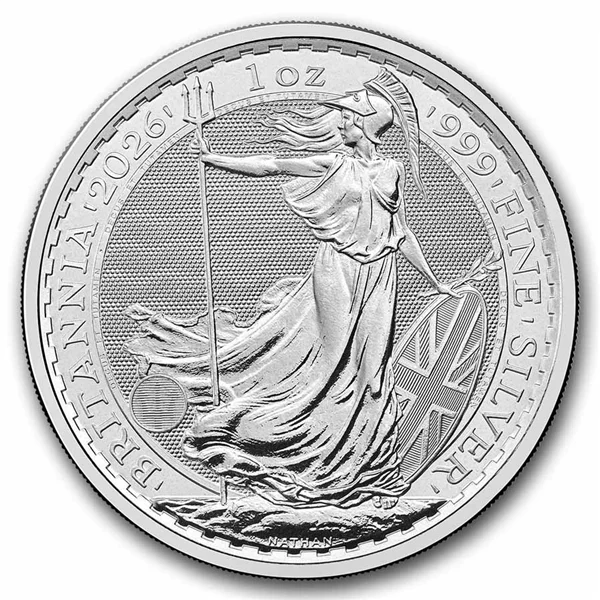
The Royal Mint has already put its 2027 silver Britannia on sale, and it carries a small detail worth noticing: a “30” wave privy mark. Next year marks 30 years since the first silver Britannia appeared in 1997, and the coin pairs Philip Nathan’s classic Britannia with a background texture showing the anniversary number.
For many UK buyers, the silver Britannia is the first precious metal coin they ever hold. It is British, widely recognised and easy to buy one coin at a time. But there are a few things worth understanding before you buy one, from what the face value really means to why silver costs more at the till than gold does.
The Royal Mint sells the coin directly, and many independent dealers stock it too. The Silver Britannias at BTC Mints page, for example, links to related silver series such as the Maple Leaf, Philharmonic and Kangaroo, so you can compare similar coins. Here are five things to check, using the Royal Mint’s own figures and HMRC guidance as of October 2026.
1. Know exactly what one ounce gets you
According to the Royal Mint’s product page for the 2027 coin, the one-ounce silver Britannia contains one troy ounce of 999 fine silver, measures 38.61mm across and carries a face value of £2. The obverse shows the official coinage portrait of King Charles III by Martin Jennings. The Mint also points out that the metal content of its coins is assured through the Trial of the Pyx, a testing ceremony that dates back centuries.
The £2 stamped on the coin tells you nothing about what it is worth. On 25 October 2026, the Royal Mint’s website quoted silver at £41.70 per ounce, many times the denomination.
2. Learn the four security features
Every bullion Britannia carries four visual security features, which the Royal Mint lists as micro-text, a latent image, engraved shield lines and surface animation. The Mint says they reduce the risk of counterfeiting and make the coin easier to authenticate when you come to sell. Take a minute to study a genuine coin, or the Mint’s own photographs, so you know what to look for.
Where you buy matters just as much. BTC Mints’ authenticity checks are a useful example of what to ask any dealer: it says its stock comes only from sovereign mints and LBMA Good Delivery refiners, that each order ships with a certificate of authenticity, and that you get your money back in full, return postage included, if a piece ever proves not to be genuine.
3. Legal tender status and Capital Gains Tax
Because Britannias are UK legal tender, they are treated differently for Capital Gains Tax. HMRC’s Capital Gains Manual (section CG76881, updated 22 October 2026) states that coins which are sterling currency are not chargeable assets, and that only coins which are legal tender count as currency. The Royal Mint says its silver bullion coins are exempt from CGT for UK residents.
This is general information, not tax advice. A silver bar or a non-legal-tender round does not have the same status, and tax rules can change. If you hold larger amounts, speak to an accountant.
4. Expect VAT on silver, not on gold
This is the point that surprises most first-time buyers. HMRC’s VAT Notice 701/21 exempts investment gold from VAT, which covers gold coins minted after 1800 with a fineness of 900 or more that have been legal tender in their country of origin. Silver is not covered by that exemption.
The Royal Mint confirms that physical silver and platinum bullion is subject to VAT at the current rate of 20%, while its gold Sovereigns and Britannias are VAT free for private buyers. So a silver Britannia costs noticeably more than its metal value at the point of sale, and that gap is worth factoring in if you ever sell.
If you order from a dealer based outside the UK, check who pays import charges. Many overseas sellers make this clear in their terms; BTC Mints’ shipping page, for one, puts import duties, VAT and customs charges on the buyer.
It is also worth knowing that physical bullion is not regulated by the Financial Conduct Authority. The Royal Mint notes that the Financial Ombudsman and the Financial Services Compensation Scheme do not cover these purchases.
5. Plan your storage before you buy
Silver is bulky: the same sum buys a much bigger pile of silver than of gold, and it needs a little care. The Royal Mint warns about “milk spotting”, white marks that can appear on silver coins, sometimes after around six months in storage. It suggests a soft microfibre cloth rather than anything abrasive, and advises against cleaning coins in excellent condition at all.
For home storage, the Mint recommends an airtight, waterproof box, with coins kept apart in acid-free tissue or soft bags to stop scratching. Leave single coins in their original capsules where possible. It also notes that standard household cover often does not include bullion, so check your policy wording. If you would rather not keep coins at home, the Royal Mint offers its own storage facility, The Vault.
The bottom line
The silver Britannia is a straightforward, well-documented coin with clear specifications and a long record behind it. Before you buy, check the security features, understand the CGT treatment and remember that VAT applies to silver. Then decide where you will keep it. A few minutes of homework now makes owning and, one day, selling your Britannias far simpler.
