
Ever Wonder What’s Swimming Right Under Your Boat?
Picture this. You’re standing on the deck, salt air on your face, and something huge breaks the surface just yards away. Was that a whale? A dolphin? Something else entirely?
Here’s the thing. Most visitors to Southern California have no idea what actually lives in these waters. They assume “the ocean” is just one big blue blank. But the stretch of coast between Newport Beach and San Diego is packed with marine life, and knowing what’s down there changes everything about your trip.
Let’s fix that. By the end of this, you’ll know exactly what you might see, when to see it, and why some spots deliver better odds than others.
The Ocean Between Here and San Diego Isn’t Empty
Look, this coastline runs along one of the richest marine corridors on the West Coast. Cold, nutrient-heavy water rises up from below. That feeds tiny creatures. Those feed fish. And the fish, well, they feed the giants.
Boats leaving Newport Bay head straight into the Newport Coast marine protected area. That means kelp forests, sea lion colonies, and resident dolphins before you even reach open water.
Newport Landing has been running trips here for over 20 years. That’s two decades of logged sightings, and the crew knows these waters like their own backyard.
Who Swims These Waters? A Season-by-Season Look
The cast of characters changes with the calendar. Some animals live here all year. Others pass through on epic journeys thousands of miles long.
Want the quick version? Here’s a breakdown.
| Season | What You Might See | Highlight Species |
|---|---|---|
| Winter/Spring (Dec–Apr) | Gray whales on migration, humpback, fin, minke, occasional orca | Pacific gray whale |
| Summer/Fall (May–Nov) | Blue whales, humpback, fin, minke, Risso’s dolphins | Blue whale, the largest animal on Earth |
| Year-round | Common and bottlenose dolphins, sea lions | Resident dolphin pods |
Notice something? There’s no bad time to go. That’s the beauty of Southern California.
Gray Whales: The Winter Travelers
From December through April, Pacific gray whales cruise past on one of the longest migrations of any mammal. They swim from Alaska down to Mexico and back. Some travel as cow-calf pairs, mothers guiding their young along the coast.
You might spot their spouts first. Then a broad, mottled back rolls up. It’s a quiet thrill.
Blue Whales: Summer’s Giants
Here’s a wild fact. The blue whale is the largest animal that has ever lived, and they show up off this coast in summer and fall. These animals can stretch longer than a basketball court.
Watching one lunge-feed near the surface? That sticks with you.
Dolphins: The Locals Who Never Leave
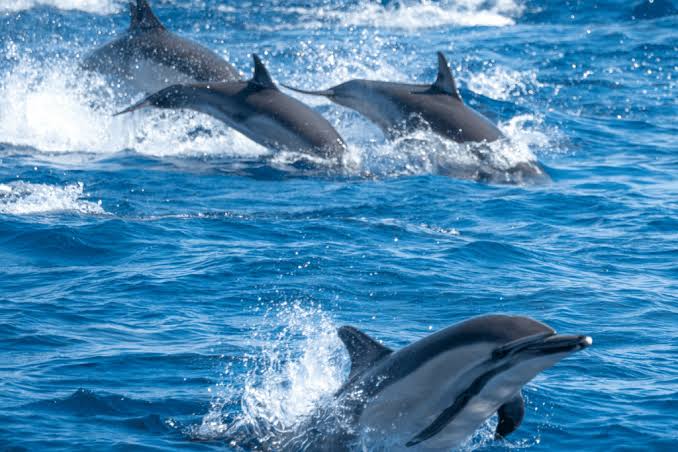
Whales get the headlines. But the dolphins might steal your heart. Common and bottlenose dolphins live here year-round, often in pods hundreds strong.
They love to ride the bow wave. Kids press against the rail, laughing, as dolphins race alongside. It happens on most trips out of Newport Bay.
Why Where You Depart Actually Matters
Here’s what a lot of folks miss. Not every harbor opens onto the same ocean.
Some SoCal whale watching operators launch from busy industrial ports. You start your trip weaving past container cranes and cargo ships. Not exactly the postcard.
Boats from the Balboa Peninsula are different. They slide out of Newport Bay directly into protected coastal waters. Kelp forest, sea lion rookery, and resident dolphins, all before the open ocean even begins.
If you’re staying up north, you can also compare options for whale watching long beach and see how a short drive south changes the whole experience.
Planning a Coastal Road Trip? Read This
A lot of travelers drive the coast, hitting Los Angeles, Orange County, then heading toward San Diego. Smart move. But it raises a question: where should you actually get on a boat?
Newport Beach sits in a sweet spot. It’s a real beach town, not just a launch point. You get the auto ferry, the Balboa Pavilion, the pier, and Fashion Island all within reach. Your whale trip becomes part of a full day, not a rushed errand.
If your route ends further south, you can look into whale watching san diego too. Different city, similar species, but Newport gives central and northern OC visitors a shorter drive and a beach-town day rolled into one.
What Makes a Trip Worth Your Afternoon
You might feel overwhelmed choosing an operator. There are a bunch of them, and the websites all blur together. It’s frustrating when everyone claims to be “the best.”
So let’s cut through it with real proof points.
Newport Landing runs a large fleet with multiple departures daily, all year. More boats mean more eyes on the water. More eyes mean a stronger sightings record. Simple math.
The crew are naturalists. That means they can name the species you’re looking at and explain the behavior you’re watching. Why is that whale rolling? What are those dolphins doing? You’ll actually get answers.
And here’s the honest part. Nobody can guarantee a whale. Nature doesn’t take orders. But with a deep sightings log and trips going out most days, the odds here are among the highest on the coast.
The Little Creatures That Steal the Show
Whales and dolphins get top billing. Fair enough. But don’t sleep on the supporting cast.
Sea lions lounge on buoys and bark like grumpy neighbors. Seabirds wheel overhead, diving for fish. On a good day, you might catch Risso’s dolphins, those pale, scarred travelers that keep to deeper water.
The kelp forest itself teems with life. It’s an entire underwater world, and it’s right there beneath the boat.
Frequently Asked Questions
What’s the best time of year to see whales near Newport Beach?
Honestly, any month works. Gray whales pass through from December to April on their migration. Blue whales, the biggest animals on Earth, arrive in summer and fall. Dolphins and sea lions stick around all year. So your timing depends on which species tops your list.
Can I really see a blue whale off this coast?
Yes, and it’s not rare in season. From roughly May through November, blue whales feed in these waters. They’re the largest animals that have ever lived. Seeing one surface near the boat is a genuine bucket-list moment, and it happens on trips out of Newport Bay every year.
Are whale watching trips good for kids?
Most kids love them, especially when dolphins ride the bow wave. Trips are family-friendly and run year-round. The exception? Very young toddlers may get restless on longer outings. If you’ve got little ones, ask the crew about shorter departures and where to sit for the smoothest ride.
How is Newport Beach different from other departure spots?
Two big things. First, boats exit into a marine protected area, not a working industrial port, so you see wildlife right away. Second, Newport is a full beach town. You can pair your trip with the pier, the ferry, and shopping, making it a whole day instead of one quick stop.
So, What’s Really Out There?
Turns out the ocean between Newport Beach and San Diego is anything but empty. Gray whales in winter. Blue whales in summer. Dolphins and sea lions all year long, plus a whole cast of seabirds and smaller creatures riding the currents.
The secret to seeing them? Pick the right harbor and the right crew. Departing from the Balboa Peninsula with Newport Landing puts you in protected waters fast, with naturalists who know exactly what you’re looking at.
Ready to find out what breaks the surface next to your boat? Book a trip, grab a spot at the rail, and keep your eyes on the water. You never know what’s about to show up.
