
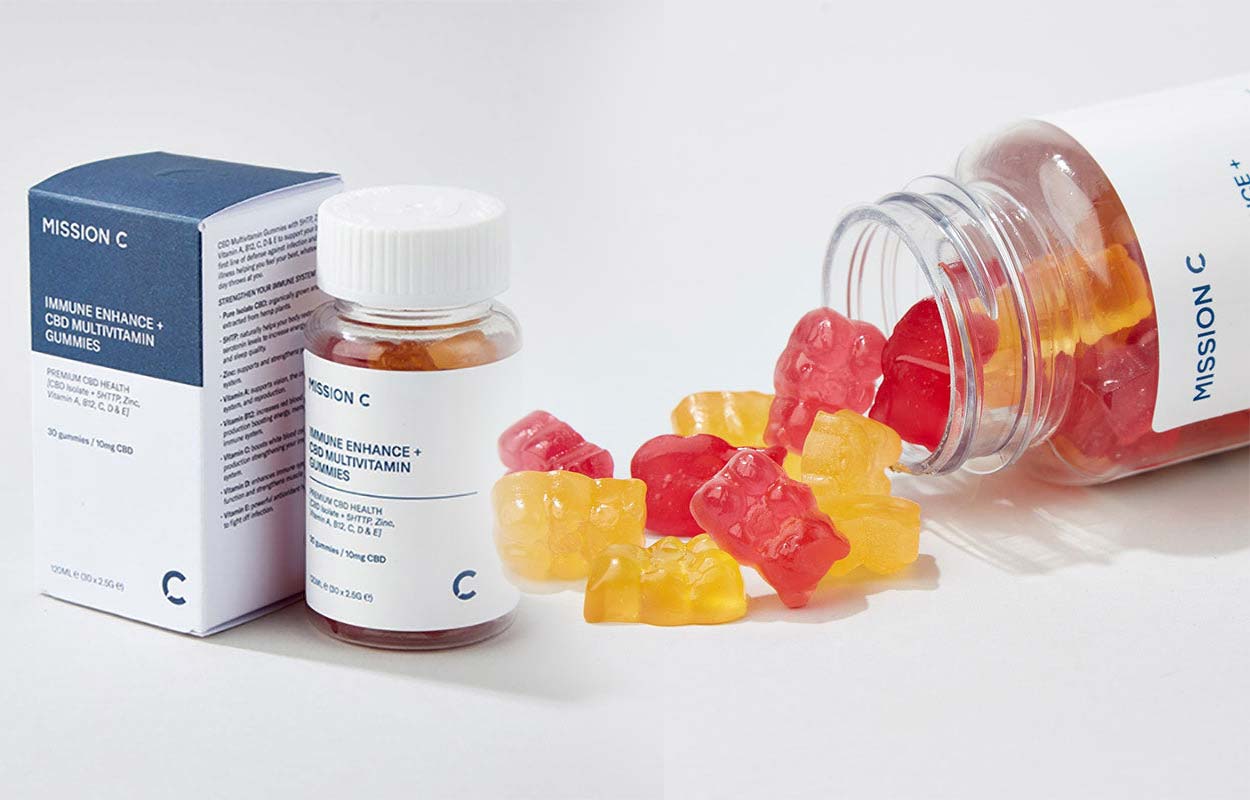
THC gummies appear frequently in online searches, social media discussions and product descriptions. Yet a colourful sweet labelled “cannabis”, “hemp” or “full spectrum” tells you very little about whether it can lawfully be sold or possessed in the United Kingdom. The rules depend on the cannabinoids present, how a product is formulated and supplied, and which legal framework applies.
The key distinction is simple: tetrahydrocannabinol (THC) is a controlled substance in the UK, whereas pure cannabidiol (CBD) is not controlled in the same way. That does not make every CBD edible lawful, or every trace of THC automatically prohibited. This guide explains the differences, the exceptions and the claims that deserve closer scrutiny in 2026.
What Are THC Gummies?
THC gummies are edible sweets containing tetrahydrocannabinol, a cannabinoid associated with the intoxicating effects of cannabis. In markets where recreational cannabis is legal, THC-focused gummies may be sold with a stated amount of THC per sweet. Those overseas retail practices do not establish legality in the UK.
THC gummies should also not be confused with CBD gummies. CBD-led products contain cannabidiol as their principal advertised cannabinoid. Some are made with full-spectrum hemp extracts, which may include traces of other cannabinoids. Others use CBD isolate. The appearance, fruit flavour or packaging of a gummy cannot establish what it contains; only a reliable ingredient declaration and suitable laboratory analysis can help clarify that.
Why the Wording Matters
“Cannabis gummies”, “full-spectrum gummies”, “THC edibles” and “CBD sweets” are sometimes used interchangeably online, even though they can describe materially different formulations. A headline CBD amount, such as 25 mg per gummy, is not a statement about the amount of THC. Consumers should look for separate cannabinoid measurements and should not assume that a familiar term has a consistent legal meaning.
Are THC Gummies Legal in the UK?
As a general rule, recreational THC gummies are not lawful consumer products in the UK. THC is controlled as a Class B drug under the Misuse of Drugs Act 1971. Possession, production and supply of controlled products can be criminal offences unless a specific licence, legal exemption or other lawful route applies.
The Home Office explains that a CBD product containing controlled cannabinoids may itself be controlled. Certain preparations can satisfy the narrow “exempt product” definition in the Misuse of Drugs Regulations 2001, but the conditions are technical and cumulative. No retailer can establish legality simply by printing “legal THC” on a packet.
This is why searches for THC gummies UK should prompt careful checking of the underlying legal rules, not an assumption that every search result or retail description is an approved source of intoxicating edibles. An online page is not a government licence or a legal determination.
Does the 0.2% THC Rule Make Gummies Legal?
No. The widely repeated 0.2% figure is often misunderstood. It is associated with industrial hemp cultivation and licensing rules, not a general permission for finished edible products to contain up to 0.2% THC by weight. A label stating “under 0.2% THC” therefore does not, by itself, demonstrate that a gummy is legal to sell or possess.
What About the One-Milligram Exemption?
Another common claim is that a product is automatically legal whenever it contains less than one milligram of THC. That is not what the legislation says. The exempt-product definition includes a one-milligram condition relating to controlled drugs in a component part, alongside other requirements concerning the product’s design and whether the controlled drug can readily be recovered.
All relevant conditions must be considered. Testing methods, other controlled cannabinoids and the particular formulation can also matter. Businesses need specialist legal and analytical advice rather than relying on a simple “1 mg per pack” slogan. Consumers should not use that number as permission to buy recreational THC sweets.
Are CBD Gummies With Trace THC Different?
They can be. Pure CBD is not a controlled drug, but a finished CBD gummy is subject to more than one set of rules. If controlled cannabinoids are present, drugs legislation is relevant. Because CBD extracts and isolates used in foods are classed as novel foods, food law matters as well.
A legitimate assessment therefore asks two separate questions: does the product comply with controlled-drug law, and does it have an appropriate position under food regulation? Passing one test does not answer the other. “Hemp-derived” or “non-intoxicating” are descriptions, not stand-alone legal exemptions.
What Does the Food Standards Agency Say?
The Food Standards Agency (FSA) maintains a Public List of CBD food products associated with novel-food applications progressing through its system. Importantly, inclusion on that list does not mean the product is authorised or endorsed by the FSA. At the time of writing in October 2026, the FSA’s published guidance states that no CBD extracts or isolates have yet been authorised as novel foods, although applications are progressing.
What About Prescription Cannabis Products?
There is a distinct medical route for certain cannabis-based products. Since 2018, specialist doctors have been able to prescribe qualifying cannabis-based medicinal products where clinically appropriate and in accordance with the relevant safeguards. These are regulated medicines, not ordinary sweets available through unrestricted recreational retail.
A prescription pathway does not make online THC confectionery lawful. Nor does it mean a product described as a “sleep gummy” has approved medicinal status. Food supplements cannot be presented as treatments for insomnia, anxiety, pain or other medical conditions without satisfying the applicable medicines rules.
Anyone seeking advice about a medical condition or prescribed medicine should speak with an appropriately qualified healthcare professional rather than relying on marketing for cannabis edibles.
Six Checks for Understanding an Online Gummy Listing
1. Identify Which Cannabinoid Is Being Measured
Check whether milligram figures refer to CBD, THC, another cannabinoid or the entire hemp extract. “1,000 mg gummies” may describe the CBD total across a packet rather than THC content per piece. Separate amounts per serving and per container make the information easier to interpret.
2. Read the Certificate of Analysis
A batch-specific certificate of analysis (COA) should identify the tested sample, laboratory, date, cannabinoids measured and relevant reporting limits. A COA can support claims about composition; it is not itself an authorisation to sell a product. Tests may differ in how they report THC and related compounds.
3. Question Broad Legal Claims
Be cautious with phrases such as “legal because it is hemp”, “below 0.2%”, “FSA-approved” or “legal under 1 mg”. Each may omit important legal conditions. Ask for a clear explanation supported by applicable law and independent testing rather than a generic badge.
4. Check the Full Ingredient List
Edible gummies can contain sweeteners, colouring agents, gelatine, flavourings and allergens as well as cannabinoids. Ingredient transparency matters separately from legality, particularly for consumers with dietary restrictions or allergies. Packaging should also identify the responsible business.
5. Assess the Supplier’s Transparency
A UK contact address, clear company details, accessible customer support and credible documentation are useful signs of accountability. They do not prove that a controlled product is lawful, however. An attractive website, next-day delivery promise or customer review cannot replace compliance evidence.
6. Avoid Medical Promises
Claims that a sweet cures, treats or relieves a condition should raise concerns. The FSA has stated that CBD foods have no authorised health claims, including claims about sleep, pain or anxiety. Sellers should distinguish general product information from claims requiring medicinal approval.
Safety and Practical Considerations
Legality and safety are different questions. A product can be marketed as “natural” and still carry risks. Edible products may have delayed and unpredictable effects, and brightly coloured sweets can be especially concerning if children mistake them for ordinary confectionery.
The FSA advises healthy adults to limit CBD intake from foods to 10 mg a day. It advises vulnerable groups, including children, people who are pregnant or breastfeeding, those trying to conceive and people taking medication, to avoid CBD unless under medical direction. This advice concerns CBD food products; it is not a suggested dose or an endorsement of THC edibles.
Cannabinoid products should be stored securely away from children and pets. If someone may have swallowed an unknown or controlled edible and becomes unwell, obtain appropriate urgent medical advice. Do not drive or operate machinery while impaired.
Can You Bring THC Gummies Into the UK From Abroad?
Do not assume that a product bought legally in another country can be imported into the UK. The UK’s controlled-drug rules apply at the border, and importation can require Home Office licensing unless a relevant exemption applies. Overseas packaging, a receipt or an American dispensary label does not change UK law.
Frequently Asked Questions
Can UK Shops Sell Recreational THC Gummies?
Generally, no. THC is a controlled cannabinoid, and recreational THC gummies are not ordinary lawful retail confectionery. Exceptional licensing, exempt-product or prescription routes must not be confused with a general permission to sell intoxicating edibles.
Are CBD Gummies Automatically Legal If They Contain No THC?
Not automatically. Even when controlled cannabinoids are absent, applicable food rules still matter. CBD extracts and isolates added to food fall within the UK’s novel-food framework, so the product’s regulatory status must be assessed separately.
Is “Full Spectrum” the Same as THC-Free?
No. Full-spectrum is a description of the extract and may indicate that a range of cannabinoids is present. It does not guarantee the absence of THC or other controlled cannabinoids. Look for specific, batch-relevant laboratory results.
Does FSA Public List Inclusion Mean a Product Is Approved?
No. The FSA explicitly says its Public List is not an endorsement and does not amount to formal authorisation. It also does not determine whether the finished product meets controlled-drug requirements.
Final Thoughts
For UK consumers, the most important point is that recreational THC gummies are not simply another legal sweet available online. THC remains controlled, and neither a hemp label, a 0.2% claim nor a reference to the FSA Public List makes a product automatically lawful.
CBD-led gummies and prescription cannabis products sit within different, carefully defined regulatory frameworks. Understanding those distinctions is more valuable than trusting shortcuts in product advertising. When claims are unclear, consult authoritative UK guidance and seek qualified advice instead of treating a seller’s description as legal confirmation.
