
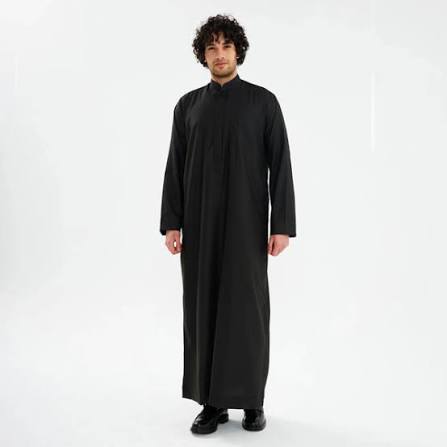
Walk into almost any UK mosque on a Friday and you’ll notice something that would have been rare twenty years ago: alongside the classic white, a growing number of men are wearing black.
It isn’t hard to see why. A black thobe looks sharp without trying, hides the realities of a British commute far better than white, and moves easily from the masjid to a family dinner to a wedding. UK specialists like Men Thobes UK now carry an entire range of Black Thobes For Men across Omani, Emirati, Moroccan and Arabic cuts, which says a lot about how far demand has grown. For many men, it has become the one thobe they reach for when they want to look put-together without overthinking it.
But buying one, especially online in the UK, can be surprisingly frustrating. Sizes rarely match. Fabrics that look rich in photos turn out thin and shiny. And if you’re taller, broader or simply not built like a size chart, finding something that fits properly can feel impossible.
This guide covers everything worth knowing before you buy.
Why black works so well in the UK?
White thobes carry deep tradition and remain the default for many men, particularly in Gulf countries where the heat makes light colours practical. Britain, however, is a different climate altogether.
Here, black makes practical sense:
• It suits the weather. In grey, cold months, darker fabrics feel more natural and pair easily with coats, jackets and knitwear.
• It’s forgiving. Rain splashes, bus seats and a toddler with sticky hands are far less of a crisis in black.
• It’s dressier. A well-cut black thobe reads as formal, which makes it a strong choice for Eid, nikkahs and evening events.
• It’s flattering. Dark colours create a clean, streamlined line that works across almost every body type.
In fact, darker winter thobes are common across the Gulf too, often in heavier fabrics, which is part of why the look feels authentic rather than a trend.
The main styles, explained
“Black thobe” covers a lot of ground. The cut and detailing change the whole feel of the garment, so it helps to know the main regional styles.
Saudi and Arabic style. Usually features a structured, shirt-style collar and buttoned cuffs. It’s the most formal and tailored-looking option, which makes it ideal for work events or occasions where you want a crisp silhouette.
Emirati style. Collarless with a clean neckline and often a long tassel (the tarboosha) at the front. It’s minimal and elegant, and black-and-gold Emirati thobes have become especially popular for Eid.
Omani style. Also collarless, typically with a round neckline and a decorative tassel, often with subtle embroidery around the neck. Comfortable and relaxed, it suits everyday wear and Jummah.
Moroccan style. Looser and flowing, sometimes with a hood (a djellaba-inspired cut). Hooded black thobes are increasingly popular in the UK because they’re genuinely practical in autumn and winter.
Embroidered and designer. Tonal black-on-black embroidery, gold piping or printed detailing adds interest without becoming loud, a good middle ground for weddings and celebrations.
Fabric matters more than colour
This is where many cheap black thobes fall down. Black is unforgiving with poor fabric: it shows fading, pilling and that tell-tale synthetic shine much faster than lighter colours.
What to look for:
• Toyobo-finish fabric. Japanese-style Toyobo finishes are widely used for premium thobes because they drape well, hold colour and resist creasing.
• Soft cotton. Breathable and comfortable for long days and regular wear.
• Cashmere wool blends. Warmer and heavier, excellent for UK winters.
• Silk blends. A subtle sheen that works beautifully for weddings and Eid.
A quick test when your thobe arrives: hold it to daylight. Good black should look deep and even, not grey or patchy, and it shouldn’t feel slippery or plasticky to the touch.
The fit problem nobody talks about
Here’s the honest truth: most fit issues with thobes aren’t your fault. They come from the way thobes are usually sold.
Most retailers buy stock in fixed sizes, typically S to XL, and resell it. That means:
• Tall men end up with thobes sitting well above the ankle.
• Broader men find them pulling across the chest and shoulders.
• Plus-size men often discover their size simply isn’t stocked, or costs more.
• Families buying matching thobes from different sellers find the “same” colour never quite matches.
A thobe should fall to just above the ankle, sit comfortably across the shoulders with room to raise your arms in prayer, and allow you to sit, kneel and prostrate without pulling. If it can’t do that, it doesn’t fit, no matter what the label says.
This is why made-to-measure has become so popular. Specialist UK makers who manufacture in their own workshops cut each thobe after it’s ordered, rather than reselling pre-made stock. Because nothing is pre-made, size stops being a stock problem: every size from S through to 8XL is cut the same way and costs the same, and you can send a few simple measurements instead of guessing from a chart.
Matching the black thobe to the occasion
Jummah and everyday wear. Plain black in soft cotton, Omani or Arabic style. Simple, breathable and easy to care for.
Eid. This is where you can lift it slightly: black and gold piping, tonal embroidery, or an Emirati cut with a statement tassel.
Nikkah and weddings. Black is a striking choice for grooms and groomsmen, especially in winter. The key is consistency: have everyone measured individually but cut from the same fabric batch so the colours match perfectly in photos.
Winter. A hooded Moroccan-style black thobe in a heavier blend is hard to beat for warmth and comfort.
Father and son. Matching black thobes for Eid have become a lovely tradition in many families, and again, ordering together from one batch is what makes them actually match.
If you’re shopping around, it’s worth browsing a dedicated black thobe range side by side, so you can compare collar styles, embroidery and detailing in one place before deciding what suits the occasion.
How to care for a black thobe
Black keeps its depth much longer with a little care:
1. Wash inside out in cold or cool water to protect the colour.
2. Use a detergent for darks and skip bleach entirely.
3. Avoid tumble drying where possible; hang to dry away from direct sunlight.
4. Iron on the reverse at a moderate heat, especially if there’s embroidery.
5. Wash less often when you can; airing between wears keeps it fresh and slows fading.
A quick buying checklist
Before you click “buy”, ask:
• Is it made to my measurements, or will I be guessing a size?
• What’s the fabric, and is it suited to the season I’ll wear it in?
• Does the style match the occasion: everyday, Eid or wedding?
• If I’m buying for family, will every piece come from the same batch?
• How long will delivery take, and is there an express option if Eid is close?
That last one matters more than people think. Every year, thousands of men leave thobe shopping until the final week before Eid. Ordering made-to-measure a couple of weeks early takes the stress out entirely.
The bottom line
The black thobe has earned its place in British Muslim wardrobes because it does everything well: it’s practical for the climate, elegant enough for celebrations, and timeless enough to wear for years.
The difference between a thobe you love and one that sits at the back of the wardrobe almost always comes down to two things: fabric and fit. Get those right, and a single good black thobe will carry you from Friday prayers to your brother’s wedding and every Eid in between.
