
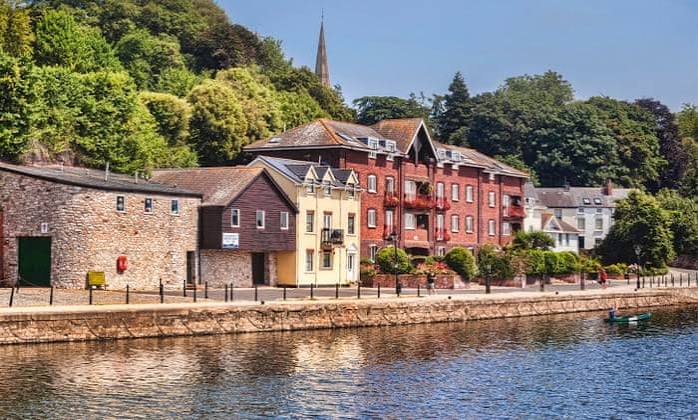
Exeter’s city centre is not the only option for buyers who want to live close to work, transport links and everyday amenities. Neighbourhoods such as St Thomas, Heavitree, Pinhoe and Topsham offer different housing types, commuting options and compromises worth considering before you move.
The right area depends on whether you prioritise walkability, access to Exeter’s railway stations, family space or a quieter setting. This guide compares the neighbourhoods and explains what buyers should check before choosing where to live.
1. St Thomas: Practical Living West of the River Exe
St Thomas is worth considering if you want a residential neighbourhood with local shops, rail connections and access to the city centre. It sits on the western side of the River Exe, with Cowick Street serving as its main shopping street.
Housing includes traditional terraces and other established homes. The area suits buyers who value everyday convenience over living in Exeter’s historic core. Its own railway station provides services on the Exe Valley corridor, while the route across the river connects the neighbourhood with central Exeter.
The trade-off is that the experience varies between streets. Check parking arrangements, road noise and the distance to your workplace before committing to a property. The location near the river also makes it sensible to review flood risk for the specific address.
2. Heavitree and Whipton: Established Housing with Everyday Amenities
Heavitree is a practical option for buyers who want established housing and access to eastern Exeter. Its streets include period terraces and larger family houses, while the local centre provides shops and services for daily needs.
Heavitree Pleasure Ground offers green space and recreation. The neighbourhood also has connections towards the Royal Devon and Exeter Hospital, making the location relevant for hospital staff and households with regular appointments.
Whipton, further east, gives buyers another area to investigate. The two neighbourhoods have connections through local roads and bus services, although journey times depend on the specific address and traffic conditions.
The main compromise is that some routes carry substantial traffic. Check parking, noise and walking conditions at different times of day. Devon County Council identifies existing traffic pressures and active travel connections in the Heavitree and Whipton area.
3. Pinhoe: A Northern Option for Buyers Seeking More Space
Pinhoe, north-east of Exeter, combines an established village centre with newer residential development. It can suit buyers who want a more suburban setting while retaining access to Exeter’s employment areas and services.
The housing stock varies between older properties and modern developments. That means buyers should compare the maintenance requirements, garden sizes, parking provision and estate layouts rather than judging the area from one property listing.
Pinhoe railway station is on the local route towards Exeter Central and beyond. The neighbourhood also provides access towards the M5, although the actual driving time depends on the property and destination.
New-build areas may offer energy-efficient homes and modern layouts. In exchange, buyers should investigate estate charges, construction quality, public transport frequency and how established local facilities are.
4. Topsham: Estuary Living with a Separate Town Character
Topsham sits on the eastern side of the Exe estuary and feels different from Exeter’s suburban neighbourhoods. Its historic centre includes period cottages, older townhouses, converted buildings and newer homes.
The area suits buyers who want local shops, independent businesses and access to waterside walks. Topsham railway station connects with Exeter and Exmouth on the Avocet Line, providing an alternative to travelling by car.
Housing varies considerably. Older properties can offer character but may require more attention to insulation, damp, maintenance and parking. Modern flats and houses may provide different practical advantages, depending on their location and design.
Topsham is not simply a cheaper version of central Exeter. Buyers should compare the full cost and time of commuting, the property’s flood risk where relevant, and whether the town’s pace of life suits their routine.
5. Alphington and Exwick: Compare the Commute with the Housing
Alphington, south-west of Exeter, is a useful area to investigate if you want a residential setting with access to routes out of the city. Its housing includes established 20th-century properties alongside other types of homes.
The area connects towards the A30 and routes around the western and southern sides of Exeter. Buyers who drive should test their commute at the times they normally travel, rather than relying on an off-peak journey estimate.
Exwick, on the western side of the city, offers another alternative to central living. The area has established residential streets and access towards the River Exe and surrounding routes.
For both neighbourhoods, the key question is how much space and convenience you gain compared with the time spent travelling. Compare specific streets, parking arrangements, local facilities and the condition of individual properties.
How to Compare Exeter Neighbourhoods Before Making an Offer
A lower asking price does not automatically make a property cheaper to own or more convenient to live in. Buyers should assess the total cost of moving to an area, including commuting, repairs, parking and any service charges.
Create a shortlist using these checks:
- Travel: Test the route to work, school or regular appointments at peak times.
- Property condition: Check insulation, windows, roofing, damp and potential maintenance costs.
- Transport: Confirm the nearest station or bus stop and the frequency of services.
- Local facilities: Visit shops, parks and main roads to understand the daily experience.
- Future plans: Review relevant planning applications and local development proposals.
- Flood risk: Check the specific address through the Environment Agency’s flood risk information and the property’s survey.
If you need help comparing available properties and local considerations, you can speak to estate agents in Exeter about your search criteria and the areas you are considering.
A useful approach is to visit each shortlisted neighbourhood more than once. A Saturday afternoon and a weekday evening can reveal different levels of traffic, noise and activity.
Frequently Asked Questions About Living in Exeter
Which areas of Exeter should I consider if I cannot afford the city centre?
St Thomas, Heavitree, Whipton, Pinhoe, Alphington and Exwick are useful areas to compare. Each has different housing types, transport connections and local amenities. The right choice depends on your budget, commuting needs and preferred property. Rather than assuming an area is cheaper, compare current asking prices for similar properties and assess the total cost of living there.
Is St Thomas a good area for commuting into Exeter city centre?
St Thomas has its own railway station and sits across the River Exe from the city centre. Parts of the neighbourhood also provide access to Cowick Street and local bus services. The practical commute depends on your exact address and destination. Walk the route, check service times and assess road conditions before deciding whether the location suits your routine.
What is it like to live in Pinhoe?
Pinhoe combines an established local centre with newer residential development. It may suit buyers who prefer a more suburban environment and want access to Exeter’s transport network. Housing varies in age and design, so compare individual developments carefully. Check parking, service charges, public transport frequency and travel times to work before making an offer.
Is Topsham suitable for first-time buyers?
Topsham is worth considering if you want a distinct town setting with shops, local amenities and rail connections towards Exeter. Its housing includes period properties, converted buildings and modern homes. Affordability varies by property type and location. First-time buyers should compare deposit requirements, mortgage costs, maintenance needs and commuting expenses rather than judging the area by its reputation alone.
What should I check before buying a property in Exeter?
Start with the property’s condition, location, transport options and ongoing costs. Check the flood risk where relevant, parking arrangements, local planning proposals and the likely commute. If you are considering a school catchment, confirm the current admissions rules with the relevant authority. A viewing at different times of day can help identify issues that are not obvious during a single visit.
Visit More : widemagazine.co.uk
