
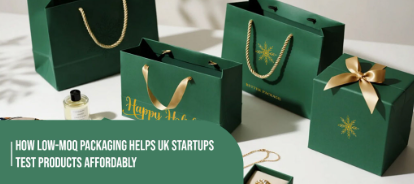
Startups rarely have perfect forecasts. A new product may sell faster than expected, require a design change or move towards a different customer segment after launch. Large packaging orders can reduce unit cost but create a serious risk when the product, artwork or demand is still uncertain. Low minimum order quantity packaging allows a startup to test the complete market offer, not just the product. It provides real feedback on protection, shelf presence, unboxing and fulfilment before cash is committed to a long production run. The higher unit cost can be worthwhile when it buys learning and preserves flexibility.
Use packaging as part of the market test
A product test should examine whether customers understand the proposition, trust the presentation and receive the item safely. Include packaging questions in feedback rather than treating the box as a fixed background detail. This matters because packaging performance is judged in use, not in a design file. Develop a concise checklist that includes measurements, materials, artwork placement, assembly details, and approval requirements, and apply it consistently to both samples and final deliveries.
Start with a focused custom range
When sourcing Custom Product Boxes UK, choose the smallest number of sizes and variants needed to test the concept. A single adaptable structure with controlled artwork changes is easier to compare than several unrelated formats. The practical value appears when the rule can be repeated across normal orders. Ask the team that packs, stores, displays or returns the product to review the proposal before production, because small practical issues are easiest to solve at sample stage.
Test messages and visual hierarchy
`Short runs make it possible to compare a headline, colour or information layout without holding months of obsolete stock. Change one major variable at a time so sales and customer comments are easier to interpret. A useful way to control the decision is to turn it into a measurable specification. Compare at least two practical alternatives, keeping the product packaging and sales channel consistent.
Record the effect on protection, labour, storage, presentation and total cost.`Short runs make it possible to compare a headline, colour or information layout without holding months of obsolete stock. Change one major variable at a time so sales and customer comments are easier to interpret. A useful way to control the decision is to turn it into a measurable specification. Compare at least two realistic options using the same packed product and sales channel. Record the effect on protection, labour, storage, presentation and total cost.
Protect cash and storage space
Low-MOQ orders reduce the amount paid before demand is proven and limit the space needed for flat or assembled boxes. This is particularly useful for home-based brands, shared studios and early fulfilment operations. The strongest result comes from combining design intent with operational reality. Prototype the entire package and watch how someone interacts with it without any guidance. Note every hesitation, awkward movement, or moment of confusion, then use those observations to refine the design before approving the final order.
Plan the move to larger production
Low quantity should be a learning stage, not a permanent habit by default. Set reorder points and volume triggers for reviewing tooling, print method, board grade and supplier pricing. For a growing business, repeatability is as important as the first visual impression. Keep a verified physical sample alongside a clear written specification. These benchmarks help ensure consistent quality as production scales, designs are updated, or you switch to a different supplier.
Test delivery-friendly dimensions
For lightweight products, Small Parcel Boxes can help a startup compare presentation with practical postage and packing needs. Measure the complete packed unit and test labels, closures and customer opening before scaling. This is also an area where a well-defined supplier brief can help minimise unnecessary costs and maintain consistency. Once the feature has launched, set a review date and assess customer feedback, damage reports and packaging observations to determine whether it should be kept, simplified or improved.
Ask suppliers the right questions
Clarify whether setup, cutting tools, colour matching, samples, delivery and artwork changes are included. Also ask how easily the specification can move from a short digital run to a larger production method. Treat the decision as part of the wider product and customer journey rather than an isolated print choice. Avoid changing several variables at once. A controlled test makes it easier to understand whether the structure, print, insert or message caused the improvement.
Define what the test must teach you
Before ordering, write three or four questions the packaging test should answer. Examples include whether customers understand the product, whether the item survives delivery, whether the box fits the desired postal format and whether the design photographs well. Collect evidence against those questions through surveys, return reasons, fulfilment notes and sales. A short run creates value only when the business captures the learning and uses it in the next specification.
Common Mistakes to Avoid
A low MOQ is not automatically a good test if the business changes several elements at once or collects no feedback. Avoid ordering multiple structures, colours and messages without a clear comparison plan. Do not assume the short-run print will look identical to a later long-run process; ask the supplier how colour and finish may change. Another mistake is remaining on expensive test quantities after demand becomes predictable. Set decision points in advance so evidence from the launch leads to a refined specification, better pricing and an appropriate scale-up order.
A Practical Next Step
Choose a representative product and use the article’s recommendations to create a concise, one-page packaging brief. Cover the packed dimensions, product risks, sales channel, essential messaging, expected order volume, and the type of customer experience you aim to deliver. Ask a supplier for a structural sample and a clearly itemised quotation, then test the complete pack with the people who will store, assemble and receive it. This small controlled project provides evidence before the approach is extended across the wider range.
Conclusion
Low-MOQ packaging helps UK startups replace assumptions with evidence. It allows them to test product fit, branding, customer response and fulfilment while limiting stock exposure. The aim is not to chase the lowest unit price at the earliest stage; it is to learn enough to place a larger order with confidence. A planned transition from test quantities to scaled production can improve both cash efficiency and packaging quality.
Frequently Asked Questions
What counts as a low packaging MOQ?
There is no single number because it depends on the structure, material and print method. The useful definition is an order size small enough to test demand without creating excessive stock risk.
Is digital printing suitable for startup packaging?
Often, yes. It supports shorter runs and artwork variation, although colour, finish and unit cost should be compared with the intended later production method.
When should a startup increase its packaging order quantity?
Increase volume when sales are repeatable, the design is stable, storage is available and the unit savings clearly exceed the extra stock and cash-flow risk.
Visit More : widemagazine.co.uk
