
Dental restorations are intended to provide long-lasting solutions for damaged or missing teeth, but their performance over time is influenced by several clinical factors. Bite alignment and occlusion directly impact how crowns, bridges, and implants function and how well they withstand everyday forces in the mouth.
The outcome of dental restorations is determined not only by the skill of the clinician or the materials chosen. Variations in how teeth meet and move under pressure can have significant effects on oral health, and Harley Street dentists regularly assess bite relationships to identify factors that may influence the long-term performance of these restorations. For patients with multiple treatments, understanding the effect of bite is important in maintaining both the appearance and durability of dental work.
Defining occlusion and the principles of balanced biting
Occlusion refers to how the upper and lower teeth come into contact during functions like chewing, speaking, or resting. Each individual’s bite pattern contributes to stability and influences how forces are distributed across teeth and restorations.
Ideally, chewing loads are distributed evenly across all teeth. This balanced approach helps prevent specific crowns, bridges, or implants from bearing excessive stresses. When bite alignment is harmonious, restorations are subject to less wear and can function alongside natural teeth more effectively.
A balanced bite is intended to protect dental restorations from excess pressure that might cause fractures or movement. Clinicians consider not just the points of contact but also the timing and sequence of these contacts. Assessing these details can help identify potential issues affecting the lifespan of prosthetic work.
Bite problems and how they compromise restorations
Misaligned bites can create uneven or increased stress on dental restorations, potentially affecting their durability. Misaligned teeth, where the upper and lower arches do not meet properly, can concentrate forces on certain crowns, bridges, or implants. This increases the risk of premature wear, especially if teeth adjacent to restorations are missing or have shifted.
Malocclusion patterns, such as crossbite or open bite, influence the direction and concentration of chewing forces in the mouth. These conditions can contribute to chipping or loosening of restorations. Changes in bite following tooth loss or adjustment of dental work may also create ongoing stresses if not properly managed.
As bite patterns evolve, restorations may be exposed to new forces after additional dental procedures. Even with careful attention to care, some misalignments might not become evident until a problem, such as a crown fracture or implant strain, occurs. Early intervention and monitoring can help address discrepancies before more complex issues develop.
Patients who have had restorations for many years may notice gradual bite changes due to continued adjustment of teeth. This adaptation can expose restorations, such as crowns and bridges, to forces they were not originally intended to accommodate.
The influence of bruxism and clenching on dental work
Bruxism, or unconscious grinding and clenching of teeth, often during sleep, can be a significant risk factor for restorative failure. The repetitive forces exerted can create microscopic cracks in crowns or contribute to surface wear and chipping of various dental materials. Over an extended period, this kind of pressure may reduce the service life of crowns, bridges, and implants.
Daytime parafunctional habits like clenching can also elevate stress levels on restorations. Persistent muscle contraction caused by clenching puts additional load on crowns and bridges, which may wear down tooth surfaces or lead to structural issues at the margins, such as weakening the connection between the restoration and the natural tooth structure. Bridges, particularly, can be at risk of connector fatigue due to these forces.
Dental implants are affected differently, as they do not have a periodontal ligament to cushion biting forces. The effects of bruxism can be more pronounced, potentially leading to bone loss around the implant or mechanical complications such as screw loosening. Protective strategies, like using occlusal guards, are sometimes recommended if such habits are identified.
Specific risks facing crowns bridges and dental implants
Different restorations have distinct responses to bite and occlusal forces. Crowns and onlays can develop tiny fractures when exposed to excessive force, which may increase the chances of unexpected failure. Adhesive deterioration can lead to unwanted movement and may require reattachment.
Bridges rely on multiple supporting teeth (abutments). Excess force on any one abutment can lead to premature wear or even fracture of that tooth, while connector failure can compromise the bridge’s overall function and stability by creating stress points.
Dental implants, lacking the natural shock absorption of periodontal ligaments, may be more sensitive to overload. Excess bite forces can result in complications such as peri-implant inflammation, bone resorption, or loosening of the implant components. Managing these potential issues requires thorough planning and ongoing evaluation.
The optimal performance of all these restorations hinges on ensuring proper bite balance. Correcting any bite issues before fitting new dental restorations is a key step in the restorative treatment process.
How dentists assess and analyse bite alignment during treatment
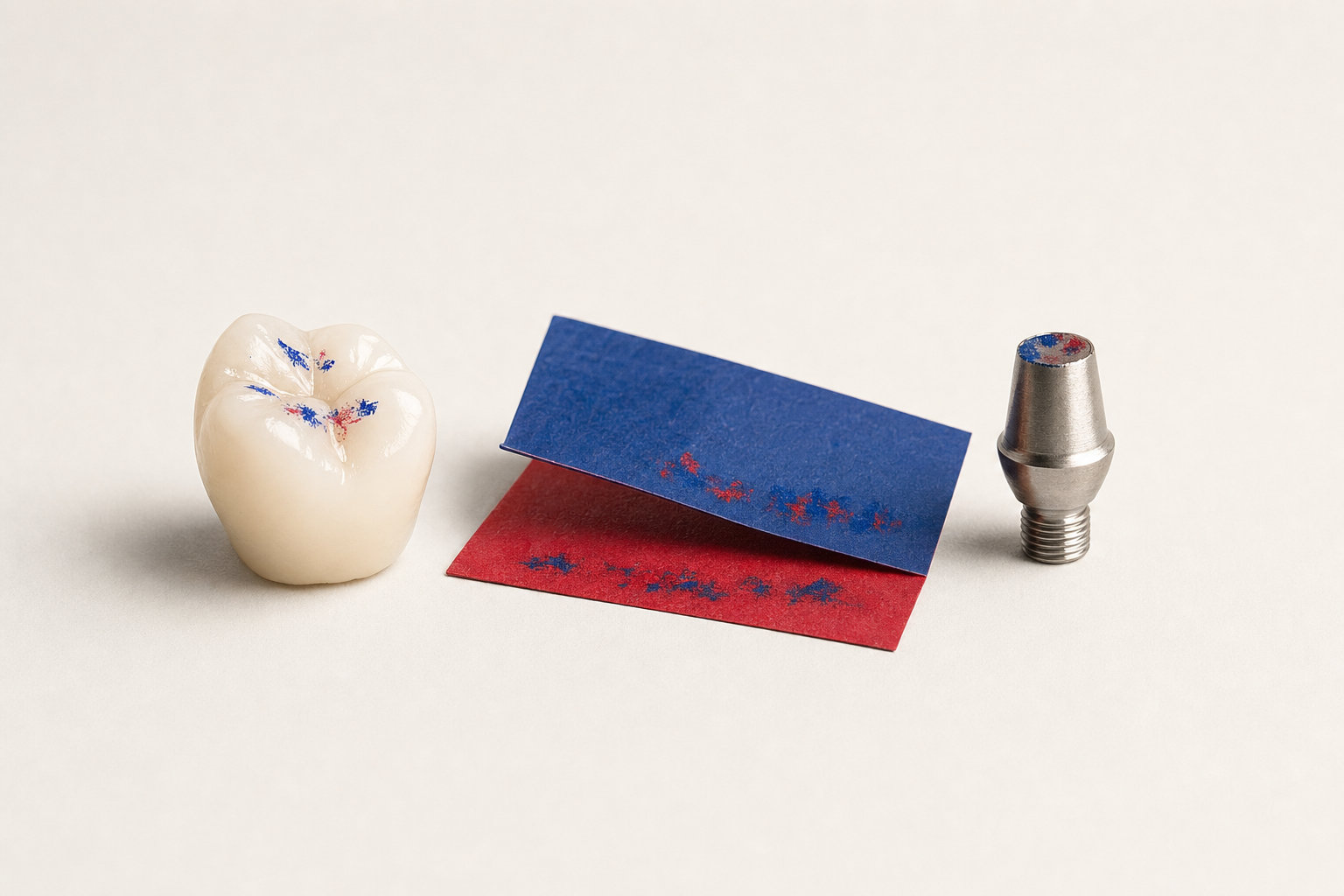
Evaluating bite alignment forms a standard part of restorative and general dental assessments. Clinicians typically begin with a clinical examination, using marking tools such as bite paper to reveal contact points and identify potential high-pressure areas on restorations.
Advanced diagnostic methods, including digital scanners and jaw tracking equipment, can supplement traditional examinations by mapping jaw movements and visualising biting forces in detail. When evaluating jaw alignment and the supporting bone structure, dental professionals may use imaging techniques such as X-rays for a clearer assessment. Impressions or digital models of the bite help inform the correct design and placement of crowns, bridges, and implants. Analysing these records allows dental teams to anticipate and address areas where restorations may experience higher than ideal stress.
Treatment options and prevention strategies for long-term results
Careful planning before and after fitting dental restorations can help maximise their longevity. Selective adjustment—reshaping natural teeth or dental work—can be used to redistribute biting pressure, reducing stress on specific areas. Designing crowns or bridges with attention to how they interact with existing teeth assists in creating a balanced occlusion.
Occlusal guards, commonly worn during sleep, are recommended in suitable cases to help absorb excessive biting forces and shield restorations, particularly in patients identified as having bruxism. Where more complex bite issues are present, orthodontic treatment or reconstruction may be necessary to provide a stable foundation for further restorative work.
Material selection and restoration design—such as providing sufficient thickness and optimal contours—also influence clinical outcomes. Periodic monitoring and minor adjustments can help restorations continue to function well as bite relationships evolve over time.
Patient actions that contribute to restorative longevity
Daily habits play a role in supporting how long dental restorations remain effective. Avoiding habits such as nail-biting, chewing on hard objects, or persistent clenching can help minimise unnecessary wear and reduce the risk of fractures or loosening. Early recognition of issues, including signs like chipping, increased sensitivity, headaches, or subtle movement of restorations, facilitates timely dental review.
Ongoing dental check-ups are important for detecting bite changes and monitoring restoration condition. This ongoing care, provided by dentists in Essex, enables any needed adjustments to be made at an early stage, helping to keep crowns, bridges, and implants performing as intended.
