
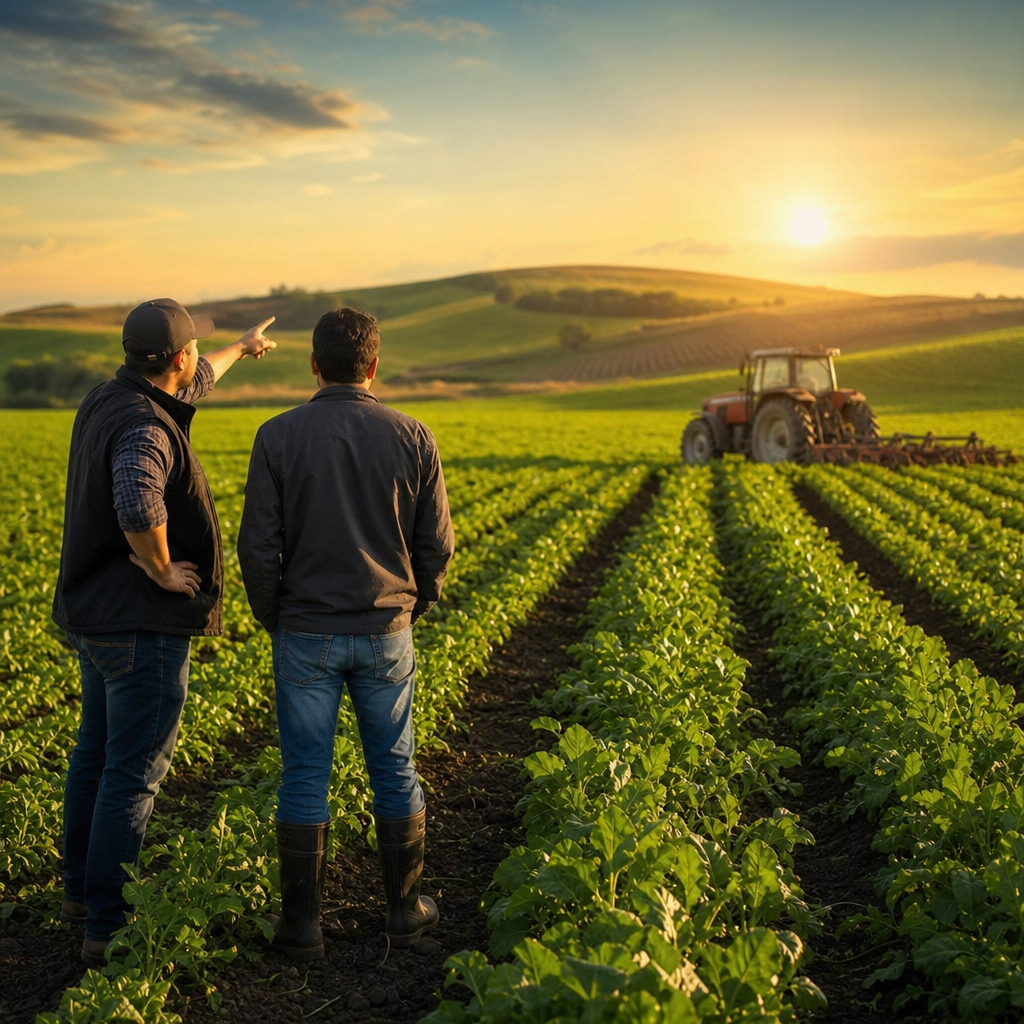
Agriculture has always been about more than a single harvest. The most enduring farming operations are built on deliberate decisions — about land, machinery, succession, and the kind of infrastructure that outlasts any one season. Whether you are managing a multi-generational family farm or scaling a newer operation, the principles of long-term agricultural planning remain consistent: invest wisely, maintain what you own, and position your land and assets for the future. This article explores how farmers can think strategically about equipment, land value, and legacy-building in a way that creates lasting agricultural wealth.
Why Long-Term Thinking Separates Thriving Farms from Struggling Ones
Short-term decisions in farming often feel necessary — a broken tractor demands immediate attention, a poor harvest forces budget cuts, and market volatility can push operators into reactive mode. But the farms that endure across decades are those that maintain a long-term perspective even when short-term pressures mount. This means treating equipment not just as a tool for today’s work, but as a capital asset that affects operational efficiency, resale value, and the overall financial health of the business.
It also means understanding that land is not simply a place to grow crops. It is a strategic asset with development potential, conservation value, and long-term appreciation that can be unlocked through careful planning. Farmers who recognize this dual nature of their land — productive today, potentially transformative tomorrow — are better positioned to make decisions that benefit not just themselves, but the next generation as well.
The Role of Quality Equipment in Farm Longevity
Investing in Reliable Machinery
Farm equipment is the backbone of daily operations. A reliable tractor, a well-maintained combine, or a properly serviced planter can mean the difference between a successful planting season and a costly delay. Farmers who cut corners on equipment quality often find themselves spending more in repairs, downtime, and lost productivity than they would have spent on a better initial investment.
Choosing the right equipment dealer is just as important as choosing the right machine. H&R Agri-Power has built a strong reputation across the agricultural community for providing farmers with access to high-quality equipment and the kind of knowledgeable support that helps operations run smoothly season after season. Working with a trusted dealer means you are not just buying a machine — you are gaining a partner who understands the demands of modern farming and can help you make informed decisions about your equipment portfolio.
Maintenance as a Long-Term Strategy
Even the best equipment requires consistent maintenance to deliver its full value over time. Establishing a rigorous maintenance schedule — oil changes, filter replacements, hydraulic checks, and seasonal inspections — extends the working life of machinery and protects the investment made in acquiring it. Farms that treat maintenance as a priority rather than an afterthought tend to experience fewer catastrophic breakdowns and maintain higher resale values when it comes time to upgrade.
Documentation matters too. Keeping detailed service records for every piece of equipment not only helps with maintenance scheduling but also adds tangible value when selling or trading in machinery. Buyers and dealers alike place a premium on well-documented equipment with a clear service history.
Land as a Strategic Asset: Beyond the Crop
Understanding the Full Value of Agricultural Land
Agricultural land holds value on multiple levels. Its productive capacity — the ability to grow crops, raise livestock, or support other agricultural activities — is the most obvious. But land also carries potential value tied to location, infrastructure, water access, and increasingly, development opportunity. Farmers who understand these layers of value are better equipped to make decisions about whether to hold, sell, lease, or develop portions of their land over time.
For landowners interested in exploring the development dimension of their property, understanding strategic land promotion can be an illuminating starting point. This approach allows landowners to work with promoters who manage the planning process, potentially unlocking significant value from land that may not currently be in active agricultural use — all without requiring the landowner to navigate complex planning systems alone.
Balancing Productivity with Future Potential
One of the more nuanced challenges in farm management is balancing current productivity with future potential. Intensive farming practices that maximize short-term yields can sometimes degrade soil health, reduce biodiversity, and limit the long-term productive capacity of the land. Conversely, conservation-focused approaches may sacrifice some immediate output but build the kind of soil and ecosystem health that supports farming for generations.
The most successful farm operators find a middle path — maintaining strong productivity while investing in soil health, cover cropping, rotational grazing, and other practices that preserve the land’s long-term value. This is not just good environmental stewardship; it is sound business strategy.
Succession Planning: Ensuring the Farm Outlasts You
Perhaps the most overlooked aspect of long-term farm planning is succession. Many farm operators spend decades building a productive, profitable operation only to see it fragmented or sold off because no clear succession plan was in place. The emotional and financial complexity of transferring a farm to the next generation — or to a trusted non-family operator — requires early, honest, and ongoing conversation.
Succession planning involves far more than deciding who gets the land. It includes structuring ownership in a way that minimizes tax liability, ensuring that incoming operators have the skills and resources to manage the business, and addressing the expectations of family members who may not be directly involved in farming. Legal and financial advisors with agricultural experience are invaluable in this process, helping families navigate the complexities of estate planning, business structure, and asset transfer.
Insights from experienced farm operators who have successfully navigated this transition offer a valuable perspective on building a farm that outlasts you — emphasizing that legacy is not accidental. It is the result of intentional planning, open communication, and a willingness to prepare the next generation well in advance of any formal handover.
H&R Agri-Power: A Partner in Agricultural Excellence
For farmers committed to building operations that stand the test of time, having the right partners makes all the difference. H&R Agri-Power has established itself as a trusted resource for agricultural equipment across a wide service area, offering a comprehensive inventory of machinery backed by expert support and service. Their team understands the unique demands of modern farming and works alongside operators to ensure that equipment decisions align with both current needs and long-term goals.
Whether you are outfitting a new operation, upgrading aging machinery, or seeking guidance on the right equipment for a specific application, working with a dealer that prioritizes your long-term success is an investment in itself. The relationship between a farmer and a trusted equipment partner is one that pays dividends across many seasons.
Conclusion: Legacy Is Built One Decision at a Time
Building a farm that endures requires a mindset that extends beyond the current growing season. It demands attention to equipment quality, land stewardship, financial planning, and succession strategy — all working together in service of a larger vision. The farmers who succeed across generations are not necessarily those with the most land or the newest machinery. They are the ones who make thoughtful, informed decisions consistently over time, and who surround themselves with the right partners, advisors, and resources to support that journey. Start with what you can control today, and plan deliberately for the farm you want to leave behind.
Visit More : widemagazine.co.uk
