
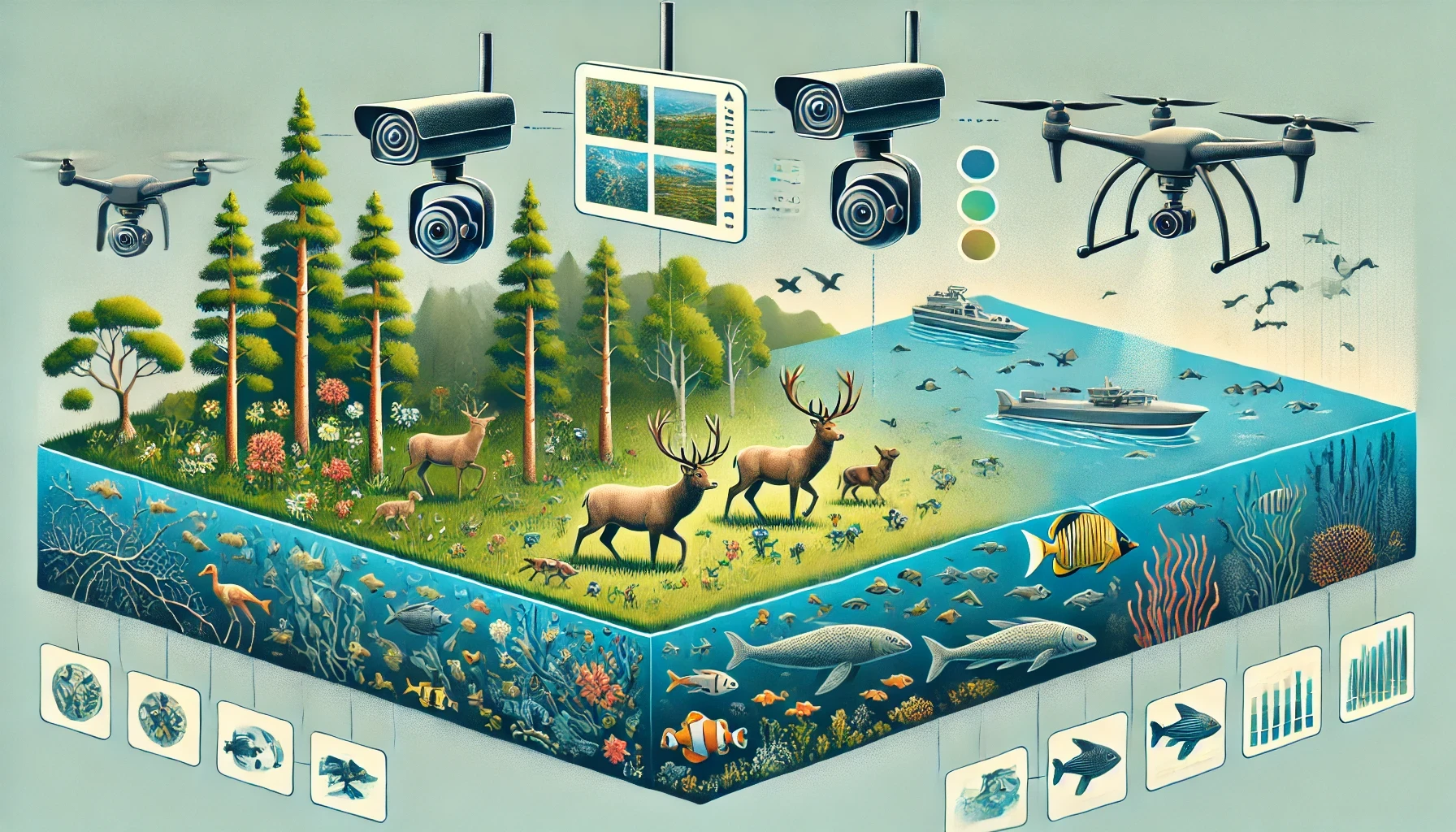
Most institutions have historical records. Far fewer have historical records that can stand up to comparative research, cross-institution analysis, and serious conservation interpretation. That is the strategic gap a Zoological Records & Research Database is designed to close. It is not just a place to hold old information. It is a system for converting validated records into research-grade evidence.
Species360 frames this clearly. Its Zoological Records & Research Database is described as a structured research platform for academic, analytical, and conservation-focused study, built from validated, standardized records gathered across participating institutions. It also states that the platform is not operational software and exists specifically to support historical analysis, longitudinal research, and species-level insight. That distinction is not cosmetic. It is the core of the value proposition.
Historical data is useless when it is not analytically coherent
A large archive can still be strategically weak. If records are inconsistent, incomplete, or structured around operational habits rather than analytical comparability, they become difficult to use for serious research. Institutions then end up with history that is technically preserved but functionally trapped. The information exists, but extracting reliable insight becomes expensive, slow, and methodologically fragile.
That is why a Zoological Records & Research Database matters. It is designed around analytical coherence rather than simple retention. The goal is not merely to store what happened. The goal is to make historical patterns visible, comparable, and defensible. For academic teams, conservation analysts, and institutional leaders, that difference is enormous because it separates searchable history from research-ready evidence.
Research-grade standardization is the real differentiator
Species360 explains that its research database draws from records originally collected through ZIMS and benefits from shared standards including consistent taxonomic references, harmonized demographic fields, standardized life-history formats, unified identifiers, and structured historical continuity. It also states that this framework reduces the inconsistencies that often limit cross-institution research.
This is the part decision-makers should focus on. Standardization is what allows different institutions, time periods, and datasets to speak the same language. Without that, the burden falls on researchers to clean, map, and reconcile data before they can even begin analysis. A proper Zoological Records & Research Database removes that drag. It shifts effort away from technical reconciliation and toward higher-value interpretation, which is where serious research should spend its time.
Historical continuity gives the database its strategic edge
Short-term data is often overvalued because it is easier to access and easier to discuss. But conservation intelligence is rarely built on short windows. Species360’s public description stresses that its database supports access to historical zoological records spanning years and in many cases decades, enabling study of lifespan trends, reproductive outcomes, survivorship, lineage records, and long-term transfer histories.
That long horizon is the real moat. It allows researchers to identify slow-moving patterns that would remain invisible in operational reporting cycles. It also gives institutions a better basis for assessing whether management strategies are producing durable outcomes rather than temporary improvements. Historical continuity is what turns a database from a reference source into an instrument for pattern recognition.
Separation from operational systems is a strength, not a weakness
Many buyers misunderstand this category because they expect every animal-related database to manage daily workflows. Species360 is explicit that its Zoological Records & Research Database does not record real-time husbandry updates, manage veterinary scheduling, document feeding logs, oversee institutional compliance, or replace zoo management systems. Operational tasks remain within ZIMS, while the research database exists to support interpretation and insight generation.
That separation is strategically smart. Research systems and operational systems serve different purposes, different users, and different decision speeds. Blending them creates confusion, bloated workflows, and compromised outputs. The strongest research environments maintain a clean distinction between live operational entry and analytical use. That preserves clarity for users and prevents the database from becoming an awkward hybrid that does neither job well.
Comparative research only becomes credible when structure remains stable
Comparative work fails fast when the underlying structure changes from one source to another. Species360 states that the database is designed for longitudinal and comparative research, allowing users to analyze demographic shifts, population dynamics, sustainability, regional outcomes, and long-term management patterns because record structures remain consistent over time.
For universities, consortiums, and conservation organizations, that is a decisive advantage. Comparative studies are only as credible as the consistency of the underlying framework. Stable structure reduces analytical uncertainty, supports replicable methods, and gives findings more institutional weight. This is why the database should be seen as a methodological asset, not just a content asset. It improves the quality of the question as much as the quality of the answer.
The database improves collaboration by reducing data friction
Cross-institution collaboration is often slowed by translation work. One partner uses different identifiers, another applies different demographic fields, and another has records shaped by local workflows that do not map cleanly to external datasets. Species360 addresses this by positioning the database as a common data foundation for multi-institution studies, joint publications, cross-regional analysis, and coordinated conservation evaluations.
That has major business and research implications. Collaboration becomes faster when teams can work from a common structure instead of negotiating one from scratch for every project. It also makes partnerships more scalable. Instead of building a custom data reconciliation effort each time, institutions can participate in research ecosystems with less friction. That lowers the transaction cost of collaboration and increases the practical likelihood of useful collective work.
There is a governance advantage in making the platform purpose-specific
A well-defined Zoological Records & Research Database is easier to govern than a blurred all-in-one platform. When the system is purpose-specific, access rules, methodological expectations, research approvals, and data stewardship standards become easier to define and defend. Ambiguity is bad for governance because it expands interpretation, and expanded interpretation usually creates risk.
That matters for leadership teams making procurement or architecture decisions. A database built for research use can be evaluated against research outcomes, analytical rigor, and stewardship standards rather than vague promises about doing everything. Purpose-specific systems also make internal alignment easier. Staff know what belongs where, researchers know what the resource is for, and executive sponsors can evaluate return based on the right criteria.
The commercial logic is stronger than the category name suggests
“Research database” sounds academic. That can make senior decision-makers underestimate the commercial and institutional value. In practice, the commercial case is substantial. Stronger research infrastructure improves credibility with academic partners, sharpens conservation storytelling, supports external funding cases, and increases the strategic value of historical records that would otherwise remain underused.
There is also an efficiency argument. When teams spend less time wrangling fragmented legacy data, they can produce analysis faster and at higher quality. That reduces hidden labor costs and improves time-to-insight. For institutions operating in grant environments, nonprofit structures, or partnership-heavy ecosystems, that speed matters. The platform may not generate value through direct workflow automation, but it generates value by making serious analysis possible at a much lower coordination cost.
Future relevance will come from methodological trust, not just larger datasets
The future of conservation data will reward trustworthiness more than raw scale. Bigger datasets are only useful when researchers can understand provenance, structure, consistency, and analytical limits. Species360’s framing of a layered ecosystem, where standardized collection remains separate from research output while staying connected to a core data foundation, is strategically aligned with that future.
That matters because more institutions will want analytical outputs, but fewer will trust black-box systems that obscure how records become insight. The organizations that win long term will be the ones that offer depth, continuity, and methodological clarity. For stakeholders evaluating long-horizon research capability, a serious zoological records research resource is not just useful. It is becoming foundational.
Conclusion
A Zoological Records & Research Database fills a gap that many institutions do not notice until they try to do serious longitudinal or comparative work. Historical data alone is not enough. What matters is whether that history is structured, standardized, and separated clearly from operational workflows so it can support credible research.
That is why this category deserves more executive attention. It is not an archive product. It is a decision-quality product for institutions that want to turn years of records into dependable conservation intelligence. The stronger the research foundation, the stronger the institution’s ability to interpret change, justify strategy, and contribute meaningfully to larger scientific and conservation efforts.
Visit More : widemagazine.co.uk
