
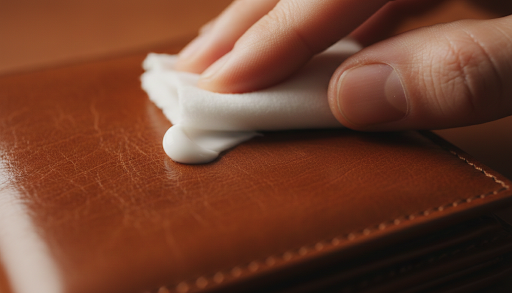
A leather wallet ages with you. It sits in your pocket, holds your essentials, and develops a rich patina over time. But without proper care, that same wallet dries out, cracks, and loses its luster. You don’t want that.
You want a wallet that looks better every year. You want that deep, warm shine and soft, supple feel.
Conditioning your leather wallet gives you exactly that. This guide walks you through how to condition a leather wallet step by step, using seven expert tips that protect your investment and keep your wallet looking stunning for decades.
Let’s start with why conditioning matters more than most people realize.
Why Leather Conditioning Matters More Than You Think (And How It Prevents Cracking)
Leather comes from animal hides. During tanning, manufacturers remove moisture and replace it with oils and fats. Those oils keep leather flexible.
Over time, natural evaporation, body heat, and dry air pull those oils out. The leather fibers lose lubrication, rub against each other, and break. That’s how cracks start.
Conditioning does three essential things:
- Replenishes lost oils – This restores flexibility.
- Creates a protective barrier – It slows down future moisture loss.
- Prevents fiber breakage – Lubricated fibers slide instead of snap.
Most people wait until they see cracks. By then, damage is permanent. You cannot reverse a crack; you can only prevent it.
Identifying Your Leather Type: Vegetable-Tanned vs. Chromexcel vs. Finished Leather
Before you apply anything, know what you’re working with. Using the wrong product ruins the finish.
Vegetable-Tanned Leather
- Tannins from bark and plants
- Absorbs conditioner deeply
- Darkens temporarily
- Develops rich patina
Chromexcel Leather (Hot-Stuffed)
- Horween’s famous combination-tanned leather
- Contains heavy waxes and greases from the tannage
- Needs very little conditioning
- Over-conditioning makes it greasy
Finished or Corrected-Grain Leather
- Has a surface coating (pigment or polyurethane)
- Resists absorption
- Conditioner sits on top
- Use only light, spray conditioners
Full-Grain vs. Top-Grain
- Full-grain: natural surface, absorbs well
- Top-grain: sanded surface, absorbs moderately
Put a drop of water on the surface. If it beads and sits, you have a heavy finish. If it darkens and soaks in within 10 seconds, you have an absorbent leather like veg-tan.
People also ask: Can I use coconut oil on my leather wallet?
No. Coconut oil goes rancid over time and weakens leather fibers. Use dedicated leather conditioners.
With your leather type identified, gather the right tools.
Essential Tools and Cleaners You’ll Need Before Conditioning (Don’t Skip These)
Skipping preparation damages your wallet. Dirt and old polish trap under conditioner, creating a sticky, blotchy mess.
Here’s your checklist:
Cleaners
- Saddle soap – For heavy soil (use sparingly)
- Leather cleaner – pH-balanced, no alcohols
- Distilled water – Tap water has minerals that stain
Applicators
- Lint-free microfiber cloths (3–4 pieces)
- Cotton balls (for tight stitching areas)
- Soft horsehair brush (for buffing)
Conditioners (Pick one based on your leather)
- Bickmore Bick 4 – Safe for all leathers, won’t darken
- Saphir Renovateur – Best for high-end veg-tan
- Chamberlain’s Leather Milk – Great for heavy-duty conditioning
- Venetian Shoe Cream – Excellent for Chromexcel
Optional but helpful
- Leather balm (adds water resistance)
- Gloves (keeps skin oils off the leather)
Do not use:
Olive oil, Vaseline, baby oil, furniture polish, or silicone sprays. These cause long-term fiber rot or seal the pores permanently.
Now that you have your supplies, clean the wallet properly.
Step 1 – How to Clean Your Leather Wallet Without Damaging the Fibers
Cleaning removes abrasive dirt. Abrasive dirt acts like sandpaper when you rub conditioner in.
Follow this exact process:
Empty the wallet completely
Remove cards, cash, receipts. Check all slots. Even a tiny paper scrap scratches the leather when you apply pressure.
Brush off loose dirt
Use a soft horsehair brush. Sweep in one direction. Don’t scrub back and forth—that pushes dirt into pores.
Spot-test your cleaner
Apply a tiny amount to an inside corner (like the bottom of a card slot). Wait 2 minutes. Look for color transfer or finish damage.
Clean with gentle circular motions
Dampen a microfiber cloth with distilled water. Apply a pea-sized amount of leather cleaner to the cloth—never directly onto the wallet. Work in small circles. Focus on high-touch areas: edges, corners, and the fold.
Wipe away residue
Use a second damp (not wet) cloth to remove cleaner residue. Don’t soak the leather. Excess water raises the grain and makes the surface rough.
Let it dry completely
Wait 20–30 minutes in a room-temperature space. No direct sunlight, no hair dryers. Heat shrinks leather unevenly.
Pro tip: If your wallet has stitching that looks dirty, use a soft toothbrush with a drop of saddle soap. Brush gently along the stitch line, not across it.
People also ask: How do I know if my wallet is clean enough?
Run a white cotton ball over the surface. If it shows any gray or brown residue, clean again. A clean surface feels slightly tacky, not slippery.
Your wallet is now clean and dry. Time to condition.
Step 2 – The Right Way to Apply Leather Conditioner (Avoid Greasy Residue)
Most people use too much conditioner. That’s the number one mistake.
Apply sparingly
Put a dime-sized amount of conditioner on your fingertip or a clean cloth. For a small wallet (cardholder), use half that.
Warm it up
Rub the conditioner between your fingers for 5 seconds. Warm conditioner penetrates faster and spreads thinner.
Work in thin layers
Spread conditioner in small, circular motions. Cover one section at a time—for example, the front panel. Don’t move to the next section until you’ve fully worked in the current one.
Focus on flex points
Pay extra attention to:
- The fold (where the wallet bends)
- Corners (high wear areas)
- Stitching edges (where fibers dry out fastest)
Let it absorb
Wait 5–10 minutes. The leather will look slightly darker and feel damp. That’s normal.
Buff off excess
Use a dry microfiber cloth. Buff vigorously in small circles. The surface should feel warm to your touch. If it feels greasy or looks streaky, you used too much. Buff more or wipe with a clean cloth.
The touch test: After buffing, the leather should feel smooth, not sticky. Your finger should glide, not drag.
Expert rule: Two thin layers beat one thick layer. If the leather absorbs the first layer completely within 10 minutes, apply a second thin layer. Otherwise, stop.
Now let’s talk about those hidden spots people forget.
Step 3 – Conditioning Stitching, Edges, and Hard-to-Reach Areas
Stitching and edges dry out faster than flat surfaces. They have more surface area exposed to air and friction.
Stitching
Conditioner lubricates thread fibers. Dry thread snaps under stress.
Dip a cotton swab in conditioner. Roll it gently along each stitch line. Don’t press hard—you don’t want conditioner pooling in the holes. Let it sit for 2 minutes, then dab with a dry swab.
Edges (burnished or painted)
- Burnished edges (bare, smooth leather edges): Apply conditioner with your fingertip. Rub along the edge, not across it.
- Painted edges (colored edge coating): Use only a tiny amount. Wipe off immediately. Excess conditioner lifts paint over time.
Card slots
Inside card slots collect dust and skin cells. Fold a microfiber cloth over your finger. Dab a drop of conditioner on the cloth. Slide your finger into each slot. Rotate gently. Remove and buff with a dry part of the cloth.
The bill compartment fold
Open the wallet fully. Apply conditioner to the crease line. Work it in with the pad of your thumb. This area sees the most stress. Dry creases become cracks within months.
People also ask: Should I condition the inside of my leather wallet?
Yes, but lightly. The inside has less finish and absorbs faster. Use half the amount you use on the outside.
After treating these hidden areas, you need to let the wallet rest.
Step 4 – How Long to Let Conditioner Absorb (And Why Patience Pays Off)
Rushing ruins results. Conditioner needs time to penetrate the fiber structure.
Absorption times by leather type
- Vegetable-tanned: 20–40 minutes
- Chromexcel: 10–15 minutes (waxes block faster absorption)
- Finished leather: 5–10 minutes (most conditioner sits on top)
- Shell cordovan: 30–60 minutes (very dense fibers)
What to do during absorption
Lay the wallet flat and open. Don’t fold it. Folding pushes conditioner toward the crease and starves the edges.
Leave it in a room with 40–60% humidity. Too dry (under 30%) and the conditioner evaporates before absorbing. Too humid (over 70%) and the leather swells unevenly.
Signs of full absorption:
- The leather feels cool to the touch (evaporation finished)
- Darkened areas return to near-original color
- Surface feels dry but not tight
If after 30 minutes the leather still feels tacky or looks greasy, you over-conditioned. Buff again with a dry cloth. If that doesn’t work, wipe gently with a slightly damp cloth, then buff.
Now bring back that beautiful shine.
Step 5 – Buffing for a Natural, Non-Greasy Shine (No Synthetic Polish Needed)
Buffing generates friction. Friction creates heat. Heat spreads remaining conditioner evenly and aligns surface fibers for a natural glow.
Use a clean, dry microfiber cloth
Fold it into a small pad. Old cloths with residue leave streaks.
Buff in one direction
Move from the center of the wallet toward the edges. Circular buffing works for small areas, but directional buffing gives a more uniform sheen.
Apply medium pressure
You want warmth, not stretching. If you see the leather distorting, ease up.
Change cloth surfaces frequently
Each square inch of cloth picks up excess conditioner. Flip to a clean area every 30 seconds.
Final pass with a horsehair brush
A soft brush lifts the nap (micro-fuzz) on unfinished leathers like veg-tan. This creates a soft, warm glow that cloths can’t achieve. Brush lightly for 15 seconds per side.
The shine test: Hold the wallet at a 45-degree angle to a light source. You should see a soft, even reflection—not a mirror shine (that’s for polished dress shoes, not wallets).
People also ask: Can I over-buff my leather wallet?
No, but aggressive buffing can scratch soft leathers like lambskin. Use light pressure and a very soft cloth.
Your wallet now looks rejuvenated. But how often should you repeat this?
Step 6 – How Often to Condition Your Leather Wallet (Seasonal Schedule)
Over-conditioning softens leather too much. It loses structure and sags. Under-conditioning leads to cracks. Find the sweet spot.
General rule
Condition every 6 months for wallets in normal use.
Adjust based on your climate
- Dry climate (Arizona, Colorado, Australia): Every 3–4 months
- Humid climate (Florida, Southeast Asia): Every 8–9 months (humidity slows oil loss)
- Cold, dry winters anywhere: Condition before winter and after winter
Adjust based on use
- Daily carry in jeans pocket: Condition every 4 months (friction and heat accelerate drying)
- Occasional use (dress wallet): Condition every 12 months
- Work wallet (tools, outdoor gear): Condition every 2–3 months
Visual cues that tell you “condition now”
- Leather feels rough or papery
- Surface looks ashy or has white bloom (wax separation)
- Wallet feels stiff when you open it
- Fine lines appear at the fold (pre-cracks)
Never condition more than once a month. Fibers become waterlogged and lose tensile strength.
If you use a heavy wax-based conditioner like Obenauf’s LP, condition only twice per year. Wax builds up and seals pores completely after multiple applications.
Now let me share the mistakes I see ruin more wallets than neglect.
Step 7 – 5 Common Wallet Conditioning Mistakes That Ruin Leather (And How to Avoid Them)
Even experienced people make these errors. Avoid them, and your wallet outlasts three others.
Mistake 1: Conditioning without cleaning
Dirt turns into mud under conditioner. The wallet looks blotchy and feels gritty.
Always clean first. A 2-minute wipe-down prevents permanent staining.
Mistake 2: Using saddle soap as conditioner
Saddle soap cleans. It also strips oils. Using it alone dries leather further.
Follow saddle soap with a real conditioner. Don’t use saddle soap more than twice a year.
Mistake 3: Applying conditioner to wet leather
Water blocks the pores. Conditioner sits on top and forms a greasy film.
Wait until the leather feels completely dry to the touch—usually 20–30 minutes after cleaning.
Mistake 4: Storing wallet while still damp
Damp leather in a dark drawer grows mold. Mold eats leather fibers permanently.
After conditioning, leave the wallet open in a ventilated area for 2 hours before closing it or putting it away.
Mistake 5: Using automotive or furniture conditioners
Those products contain silicones, solvents, and artificial fragrances. Silicone coats the surface, prevents future conditioning, and accelerates cracking underneath.
Buy a conditioner labeled specifically for leather goods. Bick 4, Saphir, and Leather Honey are safe bets.
People also ask: Can I fix a leather wallet that feels sticky after conditioning?
Yes. Wipe it with a dry cloth. If that fails, dab a cloth in a 1:10 solution of white vinegar and water. Wipe once. Then buff dry. The vinegar cuts excess oils without stripping everything.
Now that you know the complete process, let’s talk long-term maintenance.
Bonus: Daily Care Habits That Reduce How Often You Need to Condition
Less conditioning means less risk of over-conditioning. These habits keep your wallet happy between treatments.
Rotate your wallets
If you own more than one, switch every few weeks. Resting a wallet lets fibers relax and redistribute oils naturally.
Keep it out of direct sunlight
UV rays break down leather fibers. A sunny car dashboard destroys a wallet in one summer.
Avoid back-pocket carry
Body heat and pressure accelerate oil evaporation and flatten the leather’s natural grain. Front-pocket carry cuts conditioning needs by half.
Wipe it weekly
A dry microfiber cloth once a week removes skin oils and abrasive dust. This simple habit adds years of life.
Use a leather protector spray (optional)
A non-silicone spray adds water resistance. Apply it only after conditioning and buffing. Reapply every 3 months if you live in a rainy climate.
Don’t overfill your wallet
A stretched wallet stresses the stitching and creases. Stretched fibers lose their ability to hold conditioner evenly. Switch to slim leather wallets that allow you to carry your essentials easily.
Final Thoughts: Your Wallet Deserves This 30-Minute Routine
You now know exactly how to condition a leather wallet step by step. Seven expert tips guide you from cleaning to buffing, with specific advice for stitching, edges, and different leather types.
Set aside 30 minutes twice a year. Clean, condition, buff. That small investment returns a wallet that feels soft, looks rich, and lasts decades. Compare that to buying a new $50 wallet every 18 months because the old one cracked.Real leather asks very little. Give it simple care, and it rewards you with decades of use. Start your journey with premium leather wallets that tells your story—not a story of neglect, but of respect for quality craftsmanship.
Visit More : widemagazine.co.uk
