
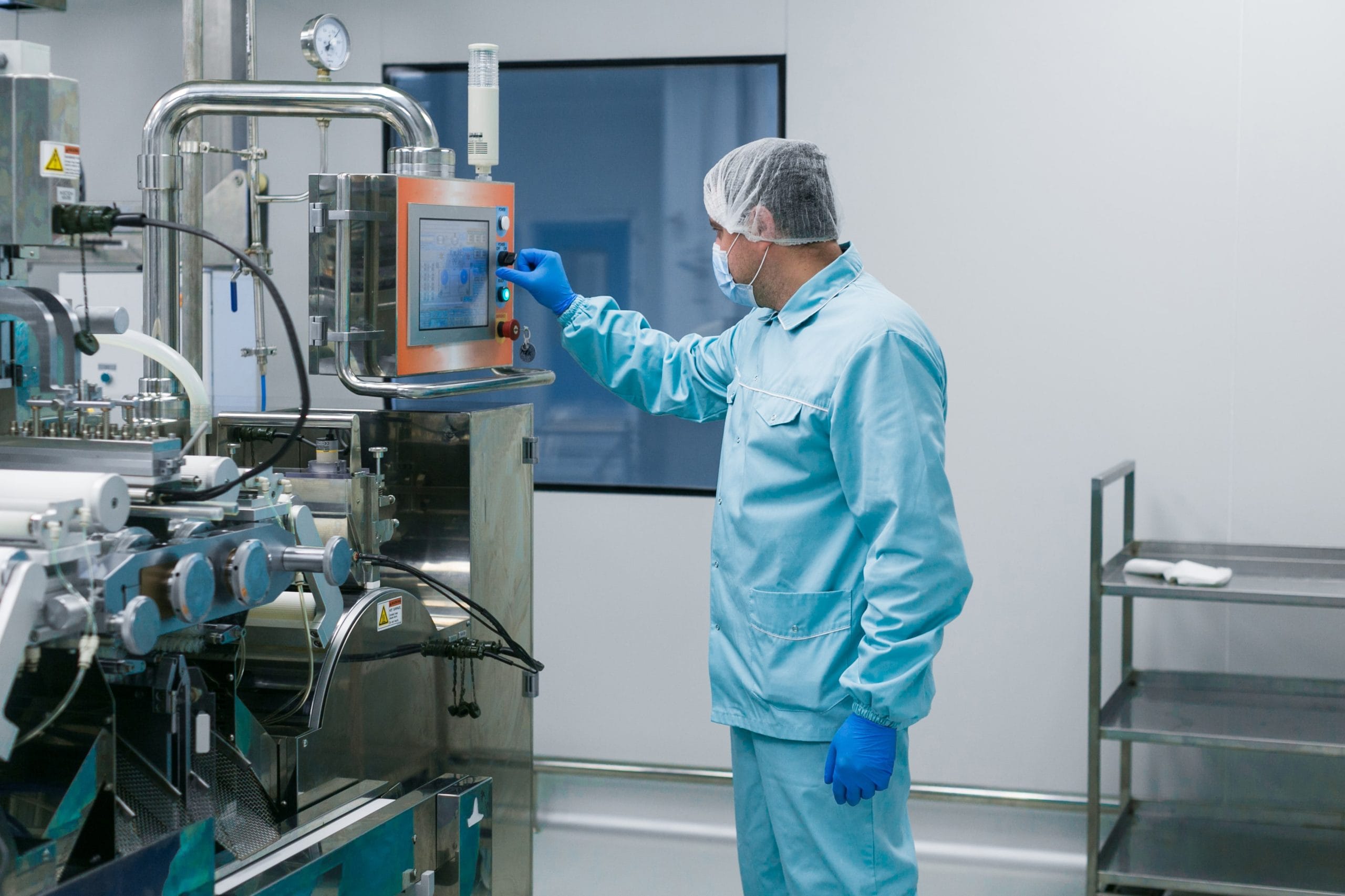
Contract Development and Manufacturing Organizations (CDMOs) have moved from behind-the-scenes roles to leading pharmaceutical R&D and manufacturing.
This transformation is reflected in industry trends, as nearly half of global pharmaceutical production is now outsourced to CDMOs. The global CDMO services are projected to grow steadily and reach roughly $190+ billion by 2029 – a testament to the growing reliance on these organizations.
For biotech innovators and pharma R&D teams, leveraging CDMO services has become an essential strategy to accelerate timelines, access specialized expertise, and control costs in an increasingly complex drug development landscape.
Key Drivers Behind the Growing Reliance on CDMO Services
Several factors in the pharma industry have fueled the surging reliance on CDMO services in recent years:
1. Rising Drug Complexity & Specialization
Modern therapeutics – from biologics and peptides to gene therapies – often require specialized equipment and expertise that many companies lack in-house.
CDMO services have stepped in to fill this gap by providing cutting-edge technologies and highly skilled scientific teams for complex projects. As the pipeline of advanced therapies grows, sponsors increasingly turn to CDMOs who can handle new modalities and sophisticated chemistry.
2. Cost Pressures and Need for Efficiency
Drug developers face intense pressure to do more with less. Outsourcing to a CDMO allows companies to avoid massive capital investments in manufacturing infrastructure and reduce overhead costs.
By paying only for the capacity and services they need, firms can redirect funds to research or clinical trials.
3. Accelerating Time-to-Market
Speed is critical, especially for competitive therapeutic areas. Top CDMO services maintain ready-to-use facilities, experienced staff, and proven processes that significantly shorten production timelines.
Leveraging a CDMO’s existing platform can fast-track a compound from laboratory to clinic much faster than building capabilities from scratch.
Agile CDMOs that employ AI-driven process optimization and automation have been known to cut project durations substantially, helping innovators reach first-in-human studies or commercialization sooner.
4. Increasing Clinical Trial Volume
The number of drug candidates entering clinical trials globally has surged, straining internal resources. CDMO services provide the flexible capacity to produce clinical trial materials without diverting a sponsor’s internal focus.
They are indispensable partners in scaling up production as a molecule progresses through trials, ensuring supply keeps pace with development.
5. Small Biotech Outsourcing Model
Small and mid-sized biotechs typically lack manufacturing facilities or extensive process development teams. These companies overwhelmingly prefer to outsource production to CDMOs so they can remain lean.
CDMO services become the engine that carries a therapy through development, while the biotech concentrates on the science. This model has enabled many startups to advance drug candidates all the way to approval with minimal internal infrastructure.
6. Big Pharma Focus and Flexibility
Even large pharmaceutical companies are outsourcing non-core activities to CDMOs to increase flexibility and reduce fixed costs. Rather than tying up capital in expanding plants for every new product, big players utilize CDMO services for surge capacity or specialized processes.
This hybrid approach lets them focus internal teams on proprietary technologies and late-stage research while trusted partners handle production and secondary development work. It also provides a buffer against demand fluctuations – capacity can be dialed up or down via outsourcing.
Notably, the share of life science companies outsourcing most or all development processes has grown strongly. One survey notes around 44% of companies outsource the majority of their development tasks.
7. Global Supply Chain & Risk Management
The COVID-19 pandemic and other supply shocks highlighted risks of sole-source manufacturing and long supply chains. In response, pharma companies are using multiple CDMOs across regions to ensure supply-chain resilience and backup options.
Opting for CDMO services withfacilities in different geographies or with redundant capacity adds security.
Additionally, many firms outsource to diversify away from regional constraints – for example, shifting production to CDMO partnerships in the US/EU away from overdependence on any single country.
CDMOs have therefore become integral to risk mitigation strategies in pharma operations.
CDMO Services Across the Pharmaceutical Development Lifecycle
CDMO services are vital because of their wide range of services throughout drug development. Modern CDMOs offer integrated support from initial idea to commercial product. Key services include:
- Drug Substance Development:
CDMOs support process R&D for APIs, including route scouting, chemical development, and scale-up. It helps with developing and scaling efficient synthetic pathways while ensuring quality through analytical methods to meet purity and potency standards. - Clinical Trial Manufacturing:
During Phase I–III trials, CDMOs produce clinical-grade batches of APIs and finished dosage forms under strict quality controls. They can make small batches for early trials and increase volume for later studies, including packaging and labeling for clinical sites. - Commercial-Scale Manufacturing:
Once a drug is approved, a full-service CDMO shifts to large-scale manufacturing. Many operate cGMP plants producing tons of API or millions of doses annually, managing tech transfer, process validation, and ongoing production to meet market needs. This spares sponsors from building costly factories for each new drug product.
Choosing the Right CDMO Services For Your Project
Choosing the right CDMO services is now a mission-critical decision for biotech innovators and pharma R&D leaders alike. It means finding an organization with the technical depth, quality systems, and collaborative mindset to advance a molecule from idea to reality.
Neuland Labs is one such example of a leading CDMO enabling pharmaceutical innovation. With nearly four decades of experience (founded in 1984) in complex chemical process development,
Neuland Labs offers an end-to-end continuum of customized NCE (new chemical entity) development services from lab scale through commercial supply. The company has partnered with over 500 global pharma and biotech clients, leveraging its deep expertise in small-molecule and peptide chemistry to reliably deliver high-quality APIs and intermediates.
Neuland’s capabilities – spanning advanced process chemistry, analytical development, cGMP scale-up, and stringent quality compliance – position it among the top CDMO services providers in the industry. Get in touch today to discuss endless possibilities and the path to make them happen.
FAQs
How are CDMO services evolving to support early-stage innovation?
CDMO services are evolving to support early-stage innovation by offering integrated process development, analytical strategy, and regulatory guidance, allowing biotech teams to move faster from discovery into clinical development without building in-house infrastructure.
Why are CDMO services increasingly important for pharma R&D teams?
CDMO services are increasingly important because they provide specialized expertise, flexible capacity, and speed, helping pharma R&D teams manage rising development complexity while reducing cost, risk, and time-to-market pressures.
When should companies consider expanding their use of CDMO services?
Companies should consider expanding CDMO services as programs progress into clinical development or face scale-up challenges, especially when internal resources, manufacturing capacity, or regulatory expertise become limiting factors.
What distinguishes advanced CDMO services from traditional outsourcing models?
Advanced CDMO services go beyond manufacturing by acting as strategic partners, contributing to process optimization, technology selection, regulatory readiness, and lifecycle management rather than functioning as transactional service providers.
Visit More : widemagazine.co.uk
