
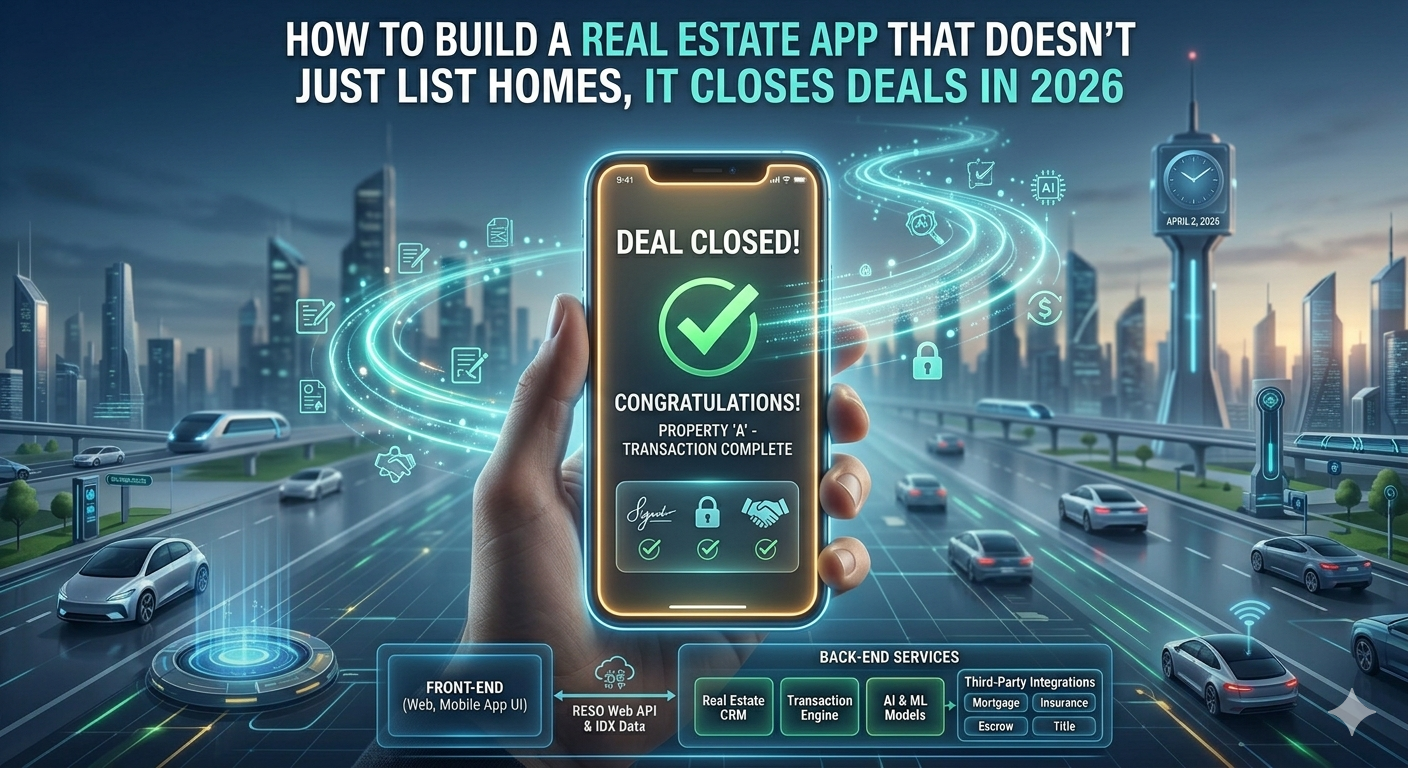
The real estate market in 2026 isn’t just about “location, location, location.” It’s about “information, immersion, and speed.” If you are still building an app that is just a glorified version of a digital bulletin board, you aren’t just behind the curve, you’re off the map.
In your search for the right mobile app development company USA, you’ve likely realized that the stakes have shifted. You’re not just competing with the guy next door; you’re competing with high-velocity, AI-driven ecosystems.
This is where a specialized real estate mobile app development company like Tekrevol steps in. They don’t just build apps; they build digital closing rooms.
To double your ROI in today’s landscape, your app needs to stop being a tool and start being an experience. Let’s look at how you can bridge the gap between a “browser” and a “buyer.”
1. Virtual Reality: The End of “Pointless Viewings.”
Remember the days of driving across town to see six houses, only to realize the first five were deal-breakers? In 2026, that’s a waste of everyone’s time.
A top-tier real estate mobile app development company now prioritizes high-fidelity VR (Virtual Reality) and 360° 3D flyovers. But here’s the kicker: it’s not just about seeing the house. It’s about Virtual Staging.
The Soul-Connection Strategy:
- Interactive Customization: Let the user change the wall colors or swap the kitchen tiles in real-time within the VR tour.
- The “Morning Light” Feature: Use local Houston or NYC weather data to show the user exactly how much natural light hits the master bedroom at 7:00 AM on a Tuesday.
When a user can “feel” themselves living in the space without leaving their couch, the psychological commitment is already halfway there.
2. AI-Powered “Matchmaking” (Not Just Filtering)
Traditional filters (3 beds, 2 baths, under $500k) are dead. In 2026, we will use Predictive Analytics.
When you partner with a leading mobile app development company usa, you should be asking for an app that learns. If a user spends five minutes looking at homes near parks but never clicks on “pool” listings, the app should automatically adjust the home feed to prioritize outdoor green spaces.
Why does this double ROI:
- Hyper-Relevant Leads: You stop sending “okay” listings and start sending “perfect” matches.
- Lead Scoring: Using AI to rank users based on their engagement, so your agents focus their energy on the buyers most likely to close today.
3. Blockchain and “One-Tap” Ownership
The biggest friction in real estate isn’t finding the house—it’s the mountain of paperwork that follows.
In 2026, the best real estate mobile app development company integrations involve Smart Contracts and Blockchain technology. Imagine a world where the title search, escrow, and down payment happen securely through a decentralized ledger.
The Future of Trust: By using Blockchain, you offer radical transparency. No hidden liens, no surprise ownership disputes. It turns a 30-day closing process into a 48-hour sprint. That is how you win in a high-interest, fast-moving market.
4. The “Neighborhood Pulse” via IoT and 5G
People aren’t just buying a house; they are buying a lifestyle. In 2026, 5G connectivity allows your app to pull real-time data from the “Smart City” grid.
A sophisticated mobile app development company, usa like Tekrevol, can integrate IoT (Internet of Things) data directly into your map view.
- Live Commute Data: Show the actual traffic time to the user’s office right now.
- Noise and Air Quality Sensors: Give them a “peace and quiet” score based on real-time acoustic sensors in the neighborhood.
- Smart Home Readiness: Let the user see the energy efficiency of the home’s HVAC system before they even step inside.
5. Designing for the “Concierge” Mindset
Your app should feel like a high-end real estate agent in the user’s pocket. This means your UI/UX needs to be conversational and supportive.
- AI Chatbots with a Pulse: These aren’t the clunky bots of 2021. In 2026, they handle scheduling, mortgage pre-approval questions, and even basic legal FAQ with human-like nuance.
- Biometric Security: Property documents and financial data should be locked behind FaceID, giving the user total peace of mind.
- Skeleton Screens & 5G Speed: In real estate, the first person to see a listing wins. If your app takes 4 seconds to load a high-res photo, that house is already sold to someone else.
6. Hyper-Local AI “Neighborhood Whisperer.”
In 2026, a house isn’t just four walls; it’s a node in a living ecosystem. To truly double your ROI, your app needs to move beyond the property lines. When you work with a top-tier mobile app development company usa, ask them about integrating “Hyper-Local Sentiment Analysis.”
This goes beyond just showing nearby schools or grocery stores. Using AI, a real estate mobile app development company like Tekrevol can pull real-time social and civic data to give buyers a “vibe check” of the block.
- Community Pulse: Is the neighborhood getting quieter or livelier?
- Future Value Predictor: Integration with city planning databases to alert users if a new tech hub or a green park is slated to open two blocks away in 2028.
Why the “USA” Expertise Matters
When looking for a mobile app development company usa, you aren’t just looking for coders. You’re looking for people who understand the American regulatory landscape—from Fair Housing laws to state-specific digital signature requirements.
Teams like Tekrevol have built their reputation by merging this high-level compliance with cutting-edge tech. They understand that a real estate app in 2026 isn’t a standalone product; it’s a node in a massive financial ecosystem.
The 2026 Real Estate ROI Checklist
Before you commit to your build, ask your developers these five questions:
- Does the app include Virtual Staging for empty listings?
- Is there an AI engine that predicts property value trends?
- Can we integrate Smart Contracts for instant deposits?
- Does the UI adapt to the user’s behavioral profile?
- Is the backend optimized for real-time IoT data?
Final Thoughts
Building a real estate app in 2026 is an exercise in empathy. It’s about understanding the stress of the buyer and using technology to dissolve it. When you make the process invisible, the value of your brand becomes undeniable.
You have the portfolio. You have the listings. Now, you just need the digital architecture to support them. Whether you’re a startup or an established firm, choosing the right real estate mobile app development company is the most important investment you’ll make this decade.
