
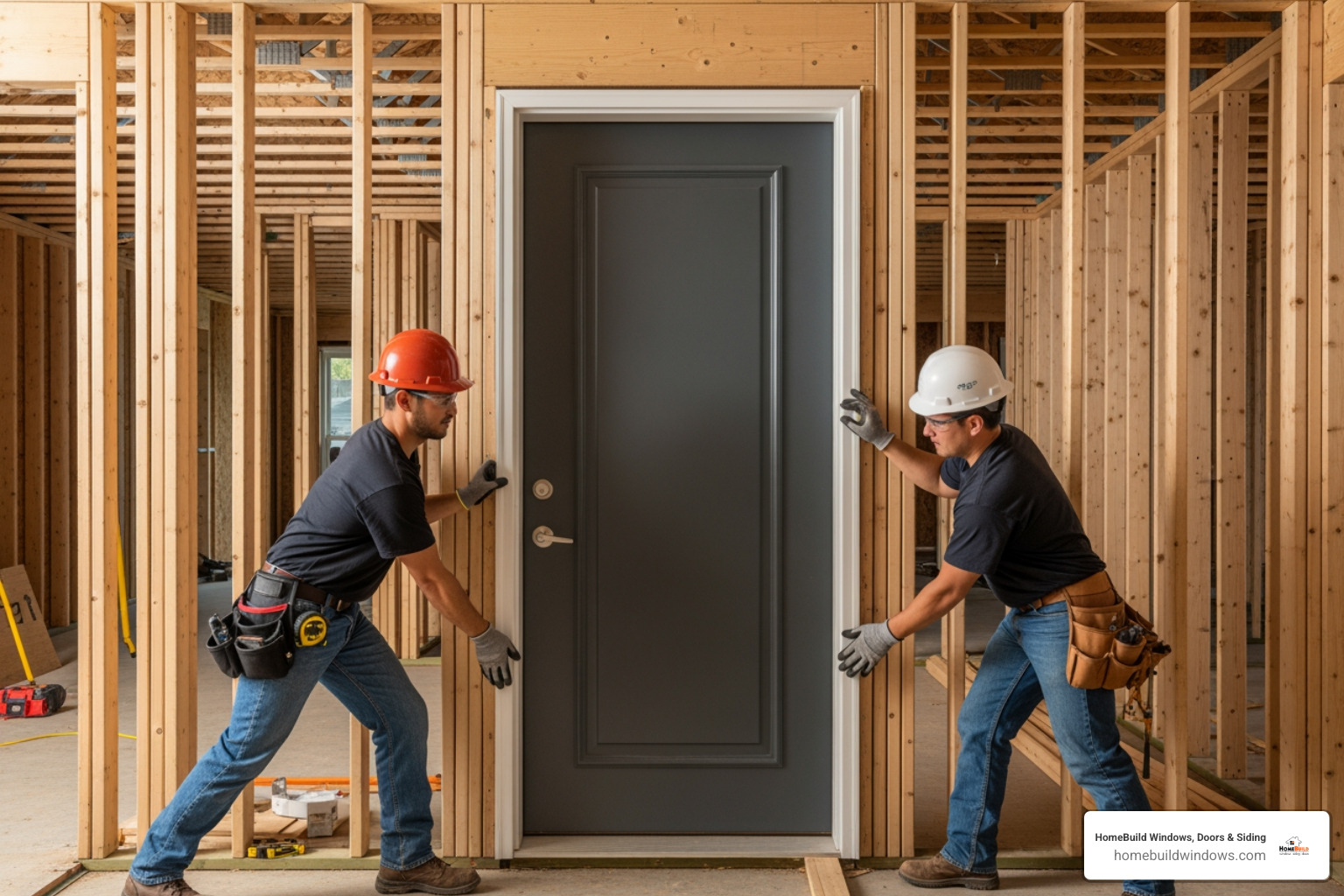
Doors are some of the first finished items installed on a building project and some of the last to be checked off at handover. Between those two moments, they share a corridor with ladders, rolling carts, drywall sheets, pallet jacks and dozens of tradespeople moving at speed. A finished door was never designed to stand up to that kind of traffic.
The result is familiar to most contractors. A dented metal door near a loading area. A scraped stain finish on a wooden door beside a busy hallway. A chipped edge on a painted door where a cart turned too sharply. Each one turns into a repair, a refinish or a full replacement, and each one lands on the punch list just as the schedule is tightest.
Treating door protection as a planned part of the job, not an afterthought, is one of the simplest ways to protect both margins and timelines.
Why Doors Take So Much Damage
Doors sit at the busiest points in a building. Every room, stairwell and service area depends on them, so they see constant traffic from the day they’re hung. Tradespeople carrying long materials pivot through doorways. Carts and lifts brush past frames. Doors get propped open and left in the path of moving equipment.
Different finishes fail in different ways:
Metal doors dent easily, and a dent in a hollow metal door rarely comes out cleanly.
Painted doors chip and scuff, often needing touch-up work that never quite matches.
Stained wood doors scratch and gouge, and repairing a stain finish is slow, skilled work.
Once a door is damaged, the options are limited. Touch-ups can look patchy. Refinishing on site takes time and creates its own mess. Replacement means new orders, lead times and a return visit from the installer.
The Real Cost Of A Damaged Door
The price of a replacement door is only part of the expense. Add the labor to remove and reinstall it, rehang and adjust hardware, and possibly reset frames or seals. Add the time spent arguing over which trade caused the damage, since backcharges rarely settle quickly. Add delays if a specialty door has a long lead time and occupancy depends on it.
There are softer costs too. Owners and architects notice damage during walkthroughs, and a long list of door repairs can make an otherwise well-run project look careless. On commercial jobs with hundreds of openings, even a small damage rate can add up to a significant sum.
Prevention usually costs far less. That simple calculation is why many general contractors now include temporary protection in their bids from the start.
Building Protection Into The Schedule
Effective protection begins before the first door arrives. A few planning steps make a big difference:
Identify which doors will be installed before heavy trades finish.
Flag high-traffic openings near loading areas, stairwells and corridors.
Decide who installs, inspects and removes protection.
Set protection to stay in place until final cleaning.
Include protection costs in the budget rather than treating them as extras.
Assigning responsibility matters most. When protection belongs to everyone, it often belongs to no one. A clear owner, often the general contractor’s site team, keeps covers in place and replaces them if they’re damaged or removed.
Choosing The Right Type Of Protection
Not every door needs the same approach. Options range from simple film to heavy-duty covers, and the right choice depends on where the door sits and what it faces.
For most finished doors, purpose-made door protectors during construction offer the most reliable defense. These are typically padded envelope-style covers that slip over the door slab and fasten in place, absorbing impact and preventing scratches without adhesives touching the finish. Because they cover the whole face and edges, they protect against the knocks that do the most damage.
In tougher locations, such as service corridors where carts and equipment pass all day, rigid protective boards can add an extra layer against heavy impacts on doors, frames and nearby walls.
Entryways deserve attention as well. Dust and grit carried in on boots and wheels spread quickly through a building and settle on every surface, including door finishes. Adhesive tack mats at access points trap much of that debris before it travels further inside.
Before committing to a product, check it against actual site conditions. Temperature, humidity, the type of finish and how long protection must stay in place can all affect which option works best. Product representatives and installers can usually advise on the right fit.
Reusable Protection And Waste Reduction
Temporary protection has traditionally meant layers of cardboard, plastic sheeting and tape that end up in a skip at the end of the job. That approach creates waste, and tape can leave residue or pull at finishes when removed.
Reusable door covers change the equation. Covers that fasten without adhesive go on and come off cleanly, and they can move from one phase or project to the next. Covers made from recyclable materials reduce waste further. For contractors working toward sustainability targets, or simply trying to reduce disposal costs, reusable protection makes practical and financial sense.
Inspection And Removal
Protection only works if it stays in place. Regular walk-throughs should check that covers haven’t been removed, shifted or torn. Doors that need to be operated for testing or inspections should be uncovered briefly and re-covered right away.
Timing removal is just as important. Taking protection off too early, before final trades and cleaning crews finish, exposes doors at a time when the building is still busy. Leaving it until the final clean, then inspecting each door as covers come off, gives the clearest picture of what’s handed over.
Clean Handover, Fewer Callbacks
Doors are among the most visible features in any finished building, and owners notice their condition straight away. Planning protection early, choosing products suited to each location and keeping covers in place until the last trade leaves turns a common source of punch-list items into a non-issue. The result is a cleaner handover, fewer disputes and more time spent finishing the job instead of fixing it.
