
A cell that welds each part quickly can still disappoint on a short production run. The lost time often occurs between jobs: finding the fixture, checking the program revision, changing consumables, and making the first acceptable piece. On a batch of twenty, those activities can matter more than a small improvement in seam time.
For shops using cobot welding, changeover deserves the same attention as the programmed weld. The goal is a dependable return to the approved setup, with enough verification to catch a wrong part or recipe before the batch begins. Short runs become easier to manage when the whole job is repeatable.
The Complete Job Record
A saved robot path is only one part of a production job. The fixture, part revision, welding recipe, head arrangement, shielding, and filler configuration must agree with it. A correct path loaded against the wrong physical setup can produce a consistently wrong result.
A job record should identify these items together. Clear fixture labels and controlled program names make it easier to distinguish similar assemblies. Photographs of the approved loading arrangement can help, especially where two parts look almost identical but have different joint positions.
When a drawing changes, the effect on the fixture, path, and process needs reviewing before the revised part returns to production. Leaving that judgment to the next operator creates avoidable uncertainty.
Fixture Changes
Repeatable locating features can reduce the amount of adjustment needed when a fixture is removed and reinstalled. Their value depends on cleanliness, condition, and a mounting arrangement suited to the required accuracy. A chip or damaged contact surface can shift the part while every program setting remains unchanged.
Clamps also need consistent positions and usable access. An improvised clamp added during one batch may become an obstruction during the next. The approved arrangement should leave room for the welding head and cable throughout the complete motion.
For related parts, a shared fixture base may be practical, with dedicated locating elements for each variant. It still needs validation; a visually similar part is not necessarily interchangeable in the same setup.
Preparation for the Next Job
Some changeover work can be done away from the cell: retrieving the next fixture, checking the drawing revision, preparing consumables, and confirming that the material is available. Separating that preparation from work that requires a stopped cell makes the lost time easier to see.
This does not justify reaching into an active cell or bypassing safeguards. Fixture changes, maintenance, and other access tasks follow the established safe procedure, including hazardous-energy controls where required.
A ready kit is useful when the shop runs the same short jobs regularly. It can contain the fixture identification, setup record, and required consumables without relying on an operator’s memory.
A Practical Changeover Record
The record should be short enough to use and specific enough to identify a mismatch. The following checks cover common sources of lost time without turning every job into a new programming exercise.
| Item | What must match | Typical problem caught |
| Part | Drawing and material revision | Similar-looking component loaded |
| Fixture | Approved location and clamp layout | Movement or obstructed access |
| Program | Job identity and revision | Old or incorrect weld path |
| Process | Recipe, shielding, and filler setup | Settings carried over from another job |
| First piece | Required inspection and acceptance | Mismatch before the batch proceeds |
First Piece Verification
The first part after a changeover tests whether the saved information and physical setup agree. Checks should follow the job’s acceptance requirements, including dimensions and weld quality where applicable. A good-looking bead alone does not confirm that the correct joint or penetration has been achieved.
If adjustment is necessary, it needs recording and review. Unrecorded edits make the next changeover harder and can leave different operators working from different versions of the same job.
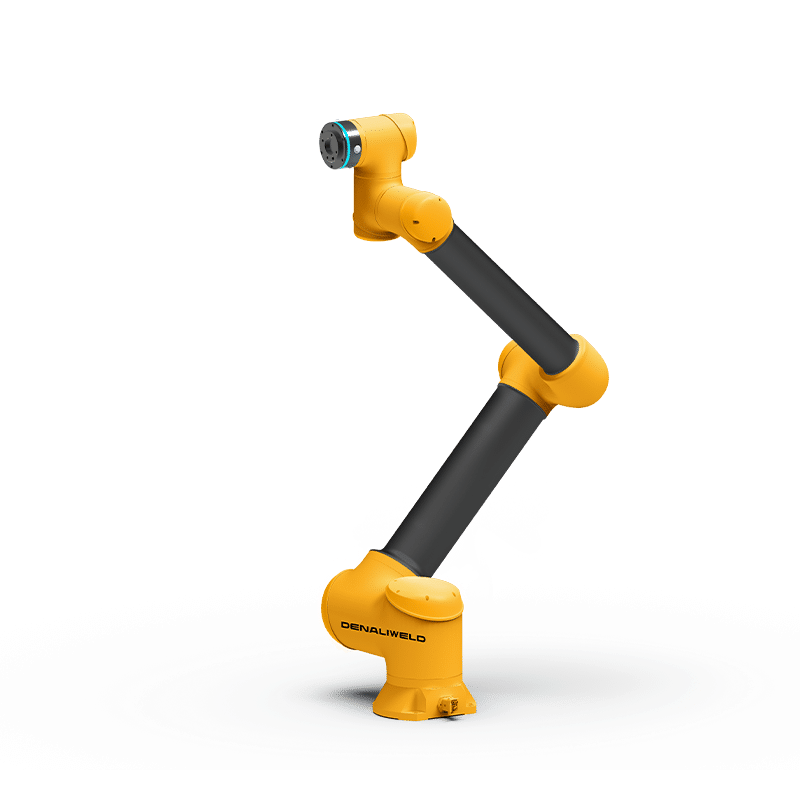
DenaliWeld describes preset controls and welding data acquisition on its cobot platform. These features can support an organized production routine, but they do not replace fixture identification, revision control, or first-piece acceptance. The required job-management arrangements should be confirmed for the supplied configuration.
Time Between Accepted Jobs
For recurring short runs, a useful measure is the interval from the last accepted part of one job to the first accepted part of the next. It captures setup and verification that a welding-cycle measurement leaves out.
Tracking that interval alongside accepted output shows where changeover effort belongs. A quicker fixture exchange is valuable only if the next setup is correct. Consistent preparation and a reliable first-piece check give short-run welding a better foundation than repeatedly chasing a faster robot path.
Conclusion
Short batches depend on reliable changeovers as well as efficient welding. Keeping the part, fixture, program, and process record aligned reduces the chance of carrying a mistake into the next run. Measuring the time to the first accepted piece shows whether those arrangements are improving production without sacrificing the checks the job requires.
