
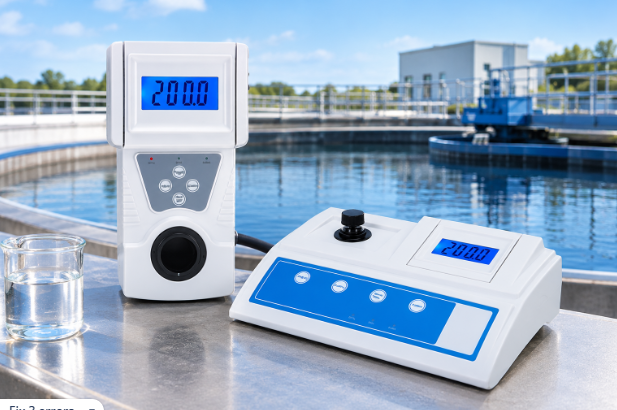
Clear water is never always water. Even if the water looks clean it might not be safe to drink or use. A cloudy or dirty liquid has pieces floating in it. Sometimes the water looks clear. It still has things in it that you cannot see. These tiny pieces can make the water unsafe. Always be careful with water that looks cloudy or not clear. It is better to be safe, than sorry. Always check the water before using it. These particles can change how good the liquid is for drinking, cleaning or using in a process. It’s hard to tell how bad the water is by looking at it. The differences in how the liquid looks are often too small to see with the eye. That’s where a turbidity meter comes in. It quantifies the cloudiness or haziness of a liquid caused by the light being scattered off particles in the liquid. It determines a value that represents how cloudy or hazy a liquid appears. Then it turns that information into a number that can be recorded and compared.
Turbidity meters are used in labs, homes, water treatment plants and factories. They give results every time. Scientists, water experts and people who work in industry depend on They to check water quality. They use these meters to protect the environment, keep processes running smoothly and do research in the lab. Whether on a workbench or out, in the field a turbidity meter helps spot changes that could mean the water or liquid isn’t safe or clean anymore.
What Is a Turbidity Meter?
A turbidity meter is a device that can be used to check how clear a liquid is, in homes and factories. It looks at how much light’s scattered or taken in by tiny bits floating in the water. Then it turns that information into a number that shows how clear the liquid is. This number can be seen, written down and used to compare with results.
A turbidity meter is used to measure water quality. It is also used for protection. It helps in industrial production control. It is used in laboratory research as well. Two types of turbidity meters are available, namely benchtop and portable turbidity meters.
How Does a Turbidity Meter Work?
A turbidity meter measures the clarity or cloudiness of a fluid. It works by observing the amount of particles flowing in the fluid. The meter emits a beam of light, which is then obstructed by the suspended particles. These particles cause the light to scatter, and the scattered light is measured to know the turbidity of the fluid. This helps determine the level of cloudiness in the liquid. The higher the amount of scattering or absorption the higher the turbidity of the liquid.
A principle of 90° scattered light is used in some turbidity meters such as a portable water turbidity meter with a measuring range of 0-20 NTU and an accuracy of 0.01. In addition most portable and benchtop turbidity meters will feature a stable circuit system and long-life light source to ensure stability and reliability of the instrument.
Types of Turbidity Meter
Benchtop Turbidity Meter
A benchtop turbidity meter is designed for laboratory or fixed installation use so that accurate and reliable measurements are obtained consistently. A benchtop turbidity meter is available in a 0-20 NTU, 0-50 NTU, 0-200 NTU and 0-400 NTU measurement range, a 0.01 precision and is equipped with advanced optical technology to provide accurate and reliable test results.
Other features include:
- LCD backlight display: this is available in some models of benchtop turbidity meters such as 0-400 NTU.
- Durability: the benchtop turbidity meters are made of durable plastic and are resistant to harsh environments.
- Ease of use: This feature is simple.The benchtop turbidity meter becomes suitable for users of all experience levels thanks to this feature.The benchtop turbidity meter is easy to use.
- Fast measurement: Fast and accurate measurement keeps the workload moving. You can finish tasks quickly and efficiently.
- Integration: The device can work together with devices and other systems.
A benchtop turbidity meter is good for labs, scientific research and water quality testing departments.
Portable Turbidity Meter
A portable turbidity meter is small in size and is used to measure liquid samples in the field rather than in the laboratory. Handheld digital meters fall into this category of portable turbidity meters. The measuring ranges of portable turbidity meters vary from 0-20 NTU to 0-1000 NTU.
Other features of the portable turbidity meters include:
- High sensitivity: the portable turbidity meter covers a wide measuring range from 0-1000 NTU and provides accurate measurements of low-turbidity liquids.
- Measurement accuracy: The portable turbidity meters provide high accuracy of 0.01 with measurement ranges of 0-20 NTU and 0-200 NTU.
- The high-precision optical system ensures high accuracy of the test results.
- The stable circuit system and long-life light source ensure stable operation of the instrument.
- Compact size: The small size makes the meter portable.
A portable turbidity meter is suitable for measuring the turbidity of drinking water, waste water and environmental water samples such as sewage treatment, pharmaceutical preparations, other liquids and water quality testing.
Turbidity Meters in Daily Life
While large-scale facilities definitely benefit from turbidity testing, find the device also helps workers:
- Drinking water: Use turbidity testing to see how clear potable water is during a water purity test.
- Beverages: Use turbidity testing to check how clear drinks are, in a beverage factory.
- Brewing: Use turbidity testing like for beverages but in the brewing industry.
- Environmental: Use turbidity testing to measure how clear an environmental water sample is.
Turbidity Meters in Industrial Use
Turbidity meters are used in various industries to measure the clarity of liquids on a regular basis. These industries include:
- Water plant: measuring the clarity of water in water plants.
- Power plant: measuring the clarity of water in power plants.
- Sewage and waste water treatment: Measuring clarity of waste water in sewage and waste water treatment works.
- Pharmaceutical industry: Measuring clarity of liquids in pharmaceutical laboratories.
- Industrial production control: Ensuring that liquids are within specified limits of clarity.
- Laboratory and scientific research: conducts scientific research using accurate and reliable results.
- Water quality testing department: conducts routine sampling of water to determine its quality
How to Choose the Right Turbidity Meter?
The following steps can be taken to choose the most suitable turbidity meter:
- Determine the location of use: Based on the location a benchtop or portable turbidity meter can be selected.
- Determine the type of sample: The turbidity meter has different measurement ranges depending on the type of sample. The samples include drinking water. The samples include wastewater. The samples include beverages. The samples include water samples.
- Choose the correct measuring range: Measuring ranges of 0-20 NTU are ideal for measuring clear liquids, 0-200 NTU, 0-400 NTU for cloudier liquids and 0-1000NTU for very turbid liquids.
- User friendly: Choose an instrument that is easy to understand; the interface is intuitive.
- Compatibility: Some benchtop instruments are compatible with other devices and software.
How to Use a Turbidity Meter
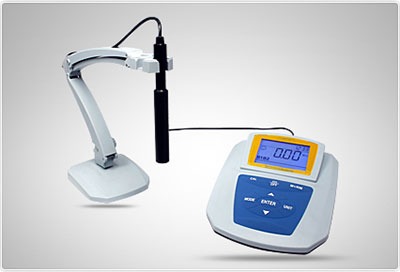
- Prepare the meter. Get the meter ready. Put the meter on a surface and turn the meter on.
- Calibrate if needed. If the meter needs adjustment calibrate the meter.
- Clean the sample vial. Wipe off fingerprints and dust. These can distort the reading. Take care to remove all smudges and particles for results.
- Fill the vial. Add the sample to the marked line and avoid air bubbles.
- Insert the vial. Close the cover to block outside light.
- Take the reading. Wait until the display settles then write down the value, in NTU.
A low NTU value indicates a clear liquid and a high number indicates a liquid with an increased number of particles suspended in it. Choose a range depending upon the kind of samples you are measuring like 0-20 NTU for clear liquids to 0-1000 NTU for extremely turbid liquids.
Turbidity Testing as Part of a Wider Water Quality Routine
Like any other water quality test, turbidity is rarely tested on its own but together with other tests such as pH and conductivity. The presence of suspended particles in water samples increases turbidity values. Through turbidity measurements, researchers are able to comprehend the amount of suspended matter and assess parameters such as pH and conductivity to perform an additional in-depth analysis of the water sample.
This information is essential for water treatment facilities, laboratories, testing departments and other groups that regularly test water quality. If you have accurate turbidity meters whether they are benchtop or portable you can conduct these tests consistently with turbidity meters.
Frequently Asked Questions
What does a turbidity meter measure?
A turbidity meter measures the clarity of a liquid. The instrument measures the amount of light scattered or absorbed by the fluid
What are the types of turbidity meters?
There are two types of turbidity meters which are benchtop and portable turbidity meters.
What is the difference between a benchtop and a portable turbidity meter?
The benchtop turbidity meters are used in a laboratory while portable turbidity meters are used to measure the clarity of liquids away from the laboratory.
Can a turbidity meter be used for drinking water?
Drinking water, wastewater and environmental water samples can be measured using a portable turbidity meter.
Which industries use turbidity meters?
Industries that use turbidity meters include laboratory, power plant, water plant, beverage plant, water quality testing department, scientific research, brewing industry, sewage and waste water treatment and pharmaceutical.
Conclusion
Water that appears clear is not always clean and a turbidity meter is the device that shows the difference. By measuring the amount of light scattered by suspended particles and converting it to an NTU value a turbidity meter gives a reliable indication of the quality of drinking water, beverages, wastewater and process liquids. A turbidity meter is an instrument for homes, laboratories, water treatment plants and industries like pharmaceuticals, brewing and power generation.
Benchtop models are suitable for laboratory and repeated testing while portable models are designed for field use. The appropriate measuring range is based on the degree of clarity or hazy appearance of the sample’s. In combination with tests such as pH and conductivity, turbidity measurements ensure the safety of public health, process reliability and consistently high water quality.
