
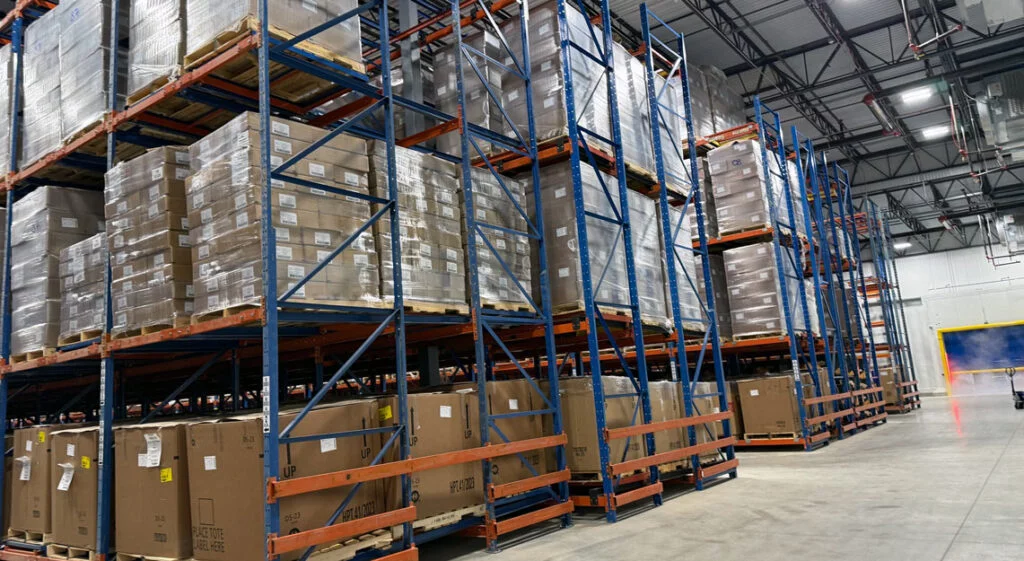
Pallet logistics sits at the center of most physical supply chains, yet it rarely gets the same level of scrutiny as transportation contracts or warehouse staffing decisions. For operations managers overseeing facilities that move significant volumes of goods, the condition, availability, and flow of pallets directly affect production throughput, shipping timelines, and floor safety. When those pallets are mismanaged, the disruptions tend to be quiet at first — a few shortages here, some damage claims there — until they compound into something that stops a line or delays a customer shipment.
Hiring an outside provider to manage pallet hauling and related logistics is a practical solution for many facilities. But not all providers operate the same way, and the difference between a reliable partner and an unreliable one rarely becomes obvious until something goes wrong. These ten questions are designed to help operations managers ask the right things before signing any agreement.
1. What Does the Provider Actually Define as a Pallet Management Service?
The term pallet management service can mean different things depending on who is offering it. Some providers focus exclusively on hauling — picking up spent or empty pallets and transporting them offsite. Others include sorting, inspection, repair coordination, inventory tracking, and return logistics as part of a broader offering. Understanding exactly what is and is not included in the scope of service prevents gaps from forming between what you expect and what actually gets delivered.
Why Scope Clarity Matters Operationally
Operations managers who assume a provider handles end-to-end pallet flow, only to discover they only handle transport, often find themselves managing the gap internally. That gap — sorting damaged units, logging inventory, scheduling pickups — falls to floor staff who already have primary responsibilities. Confirming scope in writing, with specific deliverables, is not a formality. It is the foundation of any workable agreement.
2. How Does the Provider Handle Damaged or Non-Standard Pallets?
Not every pallet that leaves your facility is in the same condition. Some are damaged, some are non-standard sizes, and some are customer-owned or part of a pooling program. A provider that only handles clean, uniform loads under ideal conditions is not suited to most real-world operations. The ability to sort and manage mixed loads without creating a backlog on your dock is a meaningful operational capability.
The Risk of Inconsistent Handling Protocols
When damaged pallets are not sorted at the point of pickup, they often end up mixed into returns or reuse cycles, which then creates downstream problems — product damage, rejected loads, or safety incidents. Asking providers specifically how they handle non-standard and damaged units tells you a great deal about their operational maturity and whether their processes are built for real-world facility conditions.
3. What Are the Provider’s Pickup Scheduling Capabilities?
Pallet accumulation is not always predictable. Receiving volumes fluctuate, production schedules shift, and seasonal demand creates irregular output. A provider that operates on a rigid fixed schedule may not be able to respond when your dock is full on a Tuesday that wasn’t originally in the plan. Scheduling flexibility is one of the most practical — and most frequently overlooked — factors in evaluating a pallet hauling provider.
Fixed Schedules Versus Responsive Dispatch
Some providers operate with structured route schedules, which can work well for facilities with steady, predictable output. Others offer responsive dispatch, meaning they can adjust pickups based on actual volume or requests. Neither model is universally better — what matters is whether the provider’s model fits your facility’s actual operating pattern, not an idealized version of it.
4. How Does the Provider Track Pallet Inventory and Movement?
Accountability in pallet logistics depends on documentation. When pallets move offsite, operations managers need to know how many left, in what condition, and where they went. Without tracking, discrepancies between what was sent and what was credited or returned become difficult to resolve. This is particularly relevant for facilities operating under leased or pooled pallet programs, where each unit carries a financial obligation.
Documentation as an Audit Tool
Providers with clear load manifests, pickup receipts, and inventory records give operations teams something to reference when questions arise. Those without structured documentation practices create ambiguity, and ambiguity in logistics tends to resolve at the expense of the facility, not the provider. Asking to see a sample of the documentation a provider generates on a typical pickup is a reasonable and informative request.
5. What Is the Provider’s Safety Record and Compliance Standing?
Any provider operating commercial vehicles on public roads in the United States is subject to federal regulations administered by the Federal Motor Carrier Safety Administration, which maintains public carrier safety data and compliance records. Verifying that a provider is properly registered, insured, and operating within federal safety standards is not optional due diligence — it is a basic qualification check that protects your facility from liability exposure.
On-Site Safety Behavior During Pickups
Safety compliance is not only a highway concern. The way a provider’s drivers and crew behave on your dock matters as well. Rushing pickups, improper use of loading equipment, or blocking fire lanes and emergency exits are behaviors that reflect on your facility’s safety record, not just the provider’s. Asking about on-site protocols and whether drivers receive any training specific to dock operations is worth including in your evaluation.
6. Does the Provider Have Experience With Your Facility Type or Industry?
A provider experienced in food distribution operates under different pressures than one working primarily with industrial manufacturers. Sanitation requirements, temperature-sensitive handling, USDA or FDA-adjacent compliance considerations, and customer-specific pallet specifications vary across industries. A provider without exposure to your sector may not anticipate those requirements or recognize when they are relevant.
Industry Familiarity Reduces the Learning Curve
When a provider already understands the expectations of your industry, onboarding is faster and the risk of early operational friction is lower. They are less likely to need correction on routine tasks, and more likely to flag a potential issue before it becomes your problem. Experience is not the only qualifying factor, but it is a meaningful one for operations where margin for error is limited.
7. What Happens When There Is a Service Failure?
Missed pickups, damaged loads, incorrect inventory counts, and scheduling breakdowns do occur. What separates a reliable provider from an unreliable one is often not the absence of these events, but how the provider responds when they happen. Asking directly how service failures are reported, escalated, and resolved gives you insight into the provider’s internal accountability structure.
Response Time and Point of Contact
Operations managers dealing with a dock full of pallets on a day when a pickup was missed need a direct point of contact who can make decisions, not a call center that opens a ticket. Knowing in advance who your escalation contact is, and what their typical response time is, shapes how much confidence you can place in the provider’s reliability under pressure.
8. How Is Pricing Structured and What Can Affect It?
Pallet hauling pricing can be based on volume, weight, frequency, distance, or a combination. Flat-rate agreements, per-load pricing, and variable models each carry different risk profiles for the facility. Variable pricing tied to fuel surcharges or seasonal demand, for example, can make budget forecasting difficult if the ranges are wide or the triggers are poorly defined.
Hidden Costs in Pallet Logistics Contracts
Some pallet management service agreements include base rates that look competitive but carry additional charges for after-hours pickups, excess loads, or non-standard pallet types. Reading the rate schedule in full — and asking the provider to walk through scenarios where additional fees would apply — protects your operations budget from surprises that become visible only after several billing cycles.
9. Can the Provider Scale With Changes in Your Operation?
Business volumes shift. A facility adding a production line, onboarding a new customer account, or entering a high-demand season may need significantly more pallet pickup capacity within a short window. A provider with limited fleet capacity or a small service area may not be able to meet that demand without degrading service quality on existing commitments.
Evaluating Capacity Before You Need It
Asking a provider about their current fleet size, geographic coverage, and maximum load capacity during peak periods helps you assess whether their infrastructure is genuinely scalable or whether growth on your end will strain the relationship. Providers who can point to examples of scaling service for existing clients offer more credible reassurance than those who offer general assurances without operational specifics.
10. What Are the Contract Terms and Exit Conditions?
The practical question at the end of any vendor evaluation is: what happens if this does not work out? Long-term contracts with rigid termination clauses can lock a facility into a relationship that is underperforming, without a clear or affordable path to change providers. Understanding the notice period, any associated penalties, and the conditions under which either party can exit is as important as understanding what the provider will do when everything is running smoothly.
Matching Contract Length to Operational Risk
Short-term agreements with renewal options give operations managers more flexibility during an initial evaluation period. Once a provider has demonstrated consistent performance over a meaningful period, longer commitments may make sense. Starting with a shorter agreement, even if the per-unit cost is slightly higher, is often worth the reduced risk during the early phase of a new provider relationship.
Closing Thoughts
Selecting a pallet hauling or pallet management service provider is not a purchasing decision that resolves itself after the first few weeks. The relationship surfaces in daily dock operations, in billing cycles, in safety observations, and in the confidence — or lack of it — that your floor team has in the pickup process showing up as scheduled.
The questions outlined here are not exhaustive, but they address the areas where most operational problems originate: scope misalignment, documentation gaps, safety exposure, pricing ambiguity, and inadequate capacity. Operations managers who take time to work through these questions before committing to a provider tend to experience fewer disruptions after the agreement is signed — and that outcome is worth the time the evaluation requires.
The goal is not to find a perfect provider. It is to find one whose real capabilities match your real needs, and whose operating standards hold up when conditions are less than ideal.
