
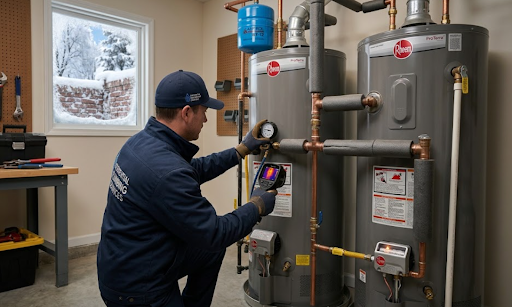
During sharp winter cold snaps across Middle Tennessee, incoming municipal water temperatures drop dramatically, forcing domestic water heaters to work at maximum capacity to bridge the steep temperature differential. Sudden thermal shock accelerates metal fatigue along internal tank welds, heating elements, and plumbing connection unions. Unconditioned garage closets, unheated crawl spaces, and exterior utility rooms—frequently found throughout older Nashville housing stock—expose cold water supply lines and safety valves to freeze-thaw cycles, resulting in sudden pressure spikes or cracked pipe fittings. When a system struggles to maintain set temperatures, energy consumption skyrockets while internal components face heightened mechanical strain. Addressing these seasonal vulnerabilities requires proactive thermal insulation, combustion chamber cleaning, and precise pressure regulation before severe winter weather sets in.
When experiencing irregular hot water recovery times or sudden burner failures during seasonal cold fronts, scheduling professional water heater service ensures that gas burner assemblies, electrical thermostats, and pressure relief valves function safely under high thermal loads. Skilled technicians at The Hot Water Heater Pros evaluate heating element resistance, clear flue vent blockages, and test thermal expansion tanks to prevent sudden winter breakdowns.
Beyond emergency freeze protection, annual seasonal checkups preserve baseline energy efficiency and reduce stress on internal burner coils. Clearing accumulated combustion debris from gas burner orifices or flushing mineral scale prior to winter prevents thermal hot spots that degrade glass-lined steel tanks.
Thermodynamic Demands and Gas Burner or Electrical Element Degradation
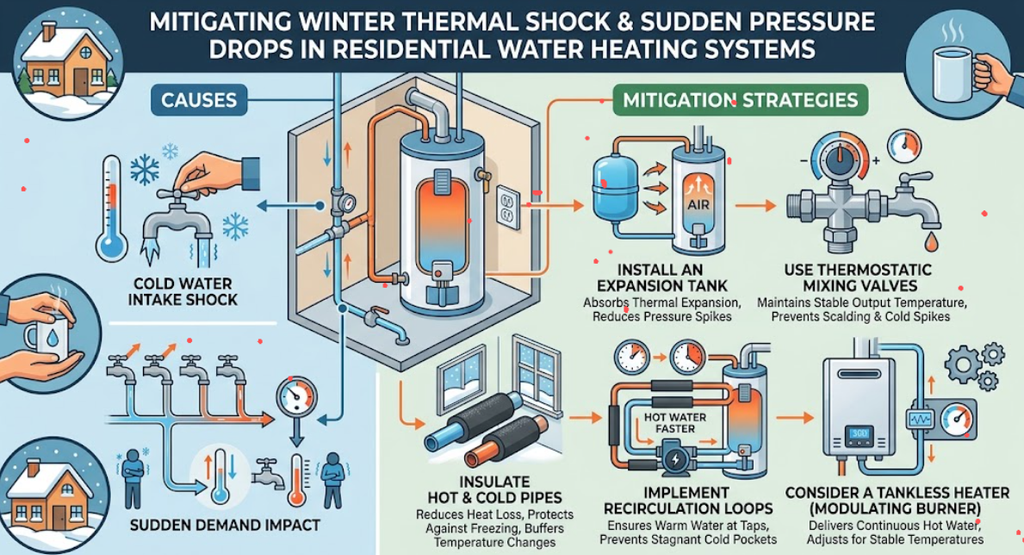
The temperature of groundwater feeding Middle Tennessee homes drops significantly during winter months, forcing water heating systems to raise incoming water by sixty degrees or more. In electric units, this continuous heating demand forces upper and lower heating elements to remain energized for extended periods. Extended run times accelerate lower element burnout, particularly when combined with baseline mineral deposits that trap heat around the copper or stainless steel casing. For gas-fired models, prolonged burner operation increases thermal stress on the main combustion chamber, leading to metal expansion noise and potential hairline fractures along internal flue tubes.
Tankless units installed in unconditioned crawl spaces face unique risks during sub-freezing temperatures. While modern tankless systems feature internal freeze-protection heating cables, severe power outages or extreme wind chills can freeze residual water within the delicate secondary heat exchanger. Freezing water expands within thin copper heat exchanger tubes, causing immediate structural ruptures and severe flooding once temperatures rise above freezing. Routine inspection of heat exchanger coils, intake air filters, and external pipe insulation prevents expensive winter freeze damage and maintains high fuel efficiency.
Furthermore, excessive condensation often accumulates inside high-efficiency gas flues during extreme cold. If flue drains become clogged with debris, acidic condensate backs up into the burner chamber, corroding spark igniters and causing intermittent system lockouts when heat is needed most.
Preventing Freeze-Related Valve Failures and Crawl Space Plumbing Damage
Winter weather also compromises critical safety mechanisms designed to prevent water tank over-pressurization. The Temperature and Pressure Relief (TPR) valve serves as the primary safeguard against dangerous pressure spikes; however, uninsulated discharge lines extending through exterior walls or crawl spaces can freeze shut during sustained sub-zero conditions. If a TPR valve discharge line freezes while the heating system runs continuously, excess pressure cannot vent safely, placing extreme stress on pipe joints, flex connectors, and internal tank linings.
Insulating exposed supply piping, installing freeze-proof discharge drains, and verifying the operation of thermal expansion tanks protect homes across Davidson and Rutherford counties from catastrophic plumbing failures. In homes built over open crawl spaces, damp winter air and fluctuating ground temperatures promote rapid exterior tank shell sweating and surface rust on bottom drain valves. Applying fitted thermal insulation jackets to older storage tanks located in unheated areas retains internal heat, cuts standby heat loss, and protects outer steel jackets from ambient moisture damage.
Ultimately, preparing residential heating infrastructure for harsh seasonal shifts prevents unexpected cold-water emergencies and costly property restoration. Combining timely mechanical inspections with proper environmental insulation safeguards home comfort, maintains consistent hot water delivery, and extends the overall operational life of the entire system.
Visit More : widemagazine.co.uk
