
XRP investors have experienced a significant decline from the cryptocurrency’s previous high. After reaching roughly $3.65 at its peak, XRP has dropped by close to 71%, leaving some investors with sizeable unrealised losses.
For people who bought XRP at higher levels, the current situation creates a difficult choice. Selling could mean accepting a substantial loss, while simply holding the asset does not generate regular cash flow if the market remains weak.
That raises an important question for long-term holders: If selling XRP is not part of the plan, are there other ways to put some cryptocurrency capital to work?
One option attracting attention is SHRMiner, a cloud-based computing-power platform that allows users to rent computing resources without purchasing or maintaining physical mining equipment.
Key Takeaways
- XRP is trading well below its previous peak, putting pressure on investors who bought at higher prices.
- SHRMiner promotes cloud-based computing-power rentals instead of requiring users to own mining hardware.
- Users can select contracts with different durations and stated output levels.
- The platform says it serves more than 5 million users across over 180 countries and regions.
- Any advertised returns should be treated as projections rather than guaranteed income, and investors should conduct independent due diligence.
What Is SHRMiner?
SHRMiner describes itself as a cloud computing-power provider established in 2018 and headquartered in the UK. According to its published platform information, the company has developed a large network of data centres and serves users across more than 180 countries and regions.
Its model is based on renting computing capacity through the cloud. Instead of purchasing specialist equipment, arranging electricity, managing cooling systems and dealing with hardware maintenance, customers can select a computing-power package through the platform.
It is important to make one distinction clear: SHRMiner is not an XRP investment product, and XRP is not mined. The platform’s service is centred on computing-power rental.
For users, the attraction is primarily convenience. The hardware and infrastructure are managed remotely, while users can access information about their contracts and stated output through an online dashboard.
Commonly promoted features include:
- No requirement to purchase mining equipment
- Online access to computing-power contracts
- Different contract periods and package sizes
- Remote monitoring
- Automated infrastructure management
- Support for multiple digital assets, according to platform materials
For an XRP holder, this creates a potentially different way to use a portion of their cryptocurrency capital without necessarily selling their existing XRP position.
The Growing Role of AI in Cloud Computing
Artificial intelligence is increasing demand for computing resources, and SHRMiner positions its service within this wider technological shift.
The company says its infrastructure uses AI-assisted systems for areas such as computing-resource allocation, workload management, infrastructure monitoring and hashrate scheduling. The stated objective is to use available computing resources more efficiently while reducing the complexity involved in operating large-scale infrastructure.
For customers, much of this activity takes place behind the scenes.
Instead of managing physical machines themselves, users can access computing capacity through the platform. The concept is similar to other cloud-based services where complicated infrastructure is managed by a provider rather than by the individual customer.
The broader trend is worth watching. The cryptocurrency industry has traditionally focused heavily on digital-asset ownership, trading and speculation. Meanwhile, the rapid development of AI is placing greater emphasis on computing power, data centres and digital infrastructure.
That means crypto investors may increasingly encounter opportunities connected not only to digital currencies but also to the infrastructure supporting emerging technologies.
How Does SHRMiner’s Cloud Computing Model Work?
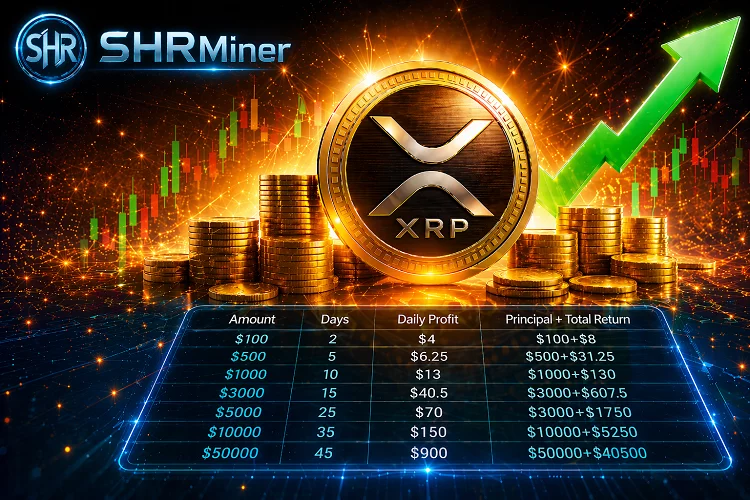
SHRMiner promotes several computing-power packages with different entry amounts and contract periods. Published examples have included packages such as a $3,000 contract for 15 days, a $5,000 contract for 25 days and a $10,000 contract for 35 days.
The stated daily output varies depending on the package selected.
Users should carefully review the terms of any current contract because package availability, pricing, duration and projected returns can change. The figures promoted on a platform should not automatically be interpreted as guaranteed profits.
Typically, the information presented with a contract can include:
- Initial rental amount
- Contract duration
- Stated daily output
- Estimated total output
- Settlement conditions
This structure provides a defined timeframe compared with waiting indefinitely for an asset such as XRP to recover.
However, the fixed duration of a contract does not remove financial risk. Anyone considering a cloud-computing arrangement should understand the terms, fees, withdrawal requirements and risks before committing funds.
What Should XRP Holders Check Before Using SHRMiner?
For cryptocurrency investors, advertised returns are only one part of the decision. Platform reliability, security, withdrawal procedures and the legal status of the service are equally important.
SHRMiner’s published materials reference security technologies and infrastructure providers, including McAfee, Cloudflare and Fireblocks. The company also makes claims concerning institutional custody arrangements and regulatory registrations.
These statements should be independently checked rather than accepted solely because they appear in promotional material.
A sensible approach for anyone considering a new crypto platform is to begin cautiously. Investors can examine the terms, start with an amount they can afford to lose, monitor the service and test the withdrawal process before considering a larger commitment.
A simple process could be:
Start cautiously → review the contract → monitor performance → test withdrawal → reassess before increasing exposure.
This approach is particularly important in cryptocurrency because even apparently attractive opportunities can involve counterparty, market, technology, liquidity and regulatory risks.
A Hypothetical XRP Holder’s Approach
Consider Michael, a hypothetical 47-year-old business owner with a diversified cryptocurrency portfolio. A sizeable portion of his holdings is in XRP, alongside BTC and stablecoins.
After XRP declined substantially from its previous peak, Michael decided he did not want to sell a large XRP position while prices were lower. At the same time, he was uncomfortable with having all of his cryptocurrency capital tied to assets that might take an uncertain amount of time to recover.
Rather than committing a large amount immediately, Michael decided to test a cloud-computing service with a smaller short-term contract.
His main objective was not to chase the highest possible return. Instead, he wanted to understand how the platform worked.
He checked whether the computing-power contract was activated correctly, monitored the stated daily settlement and examined the withdrawal process.
Only after gaining a better understanding of the complete process would he consider whether allocating additional capital made sense for his circumstances.
This hypothetical example highlights an important principle for crypto investors: testing a platform and understanding its risks is more sensible than relying entirely on promotional return figures.
XRP and Cloud Computing Serve Different Purposes
For an XRP holder, the two strategies represent very different types of exposure.
XRP remains a digital asset whose value depends largely on market demand, adoption, sentiment and broader cryptocurrency conditions. A cloud-computing contract, meanwhile, represents exposure to a service and its underlying infrastructure.
Keeping these roles separate can help investors think more clearly about their overall portfolio.
Rather than assuming that one opportunity will replace another, investors can evaluate each on its own merits. XRP may remain a long-term holding, while cloud computing may represent a separate speculative allocation for those comfortable with the associated risks.
Ultimately, there is no guaranteed way to turn idle cryptocurrency into $3,000 of daily passive income. Any platform making high-return claims deserves careful scrutiny, and investors should verify the numbers, terms, security measures and withdrawal conditions independently before committing funds.
Michael was also attracted to the AI side of the model. As a business owner, he had already watched AI transform software, marketing and automation. To him, computing power was increasingly becoming valuable digital infrastructure.
Before using SHRMiner, he mainly opened his crypto portfolio to ask:
“Has XRP recovered?”
After renting computing power, he had another question:
“What did my computing capacity produce today?”
Michael is an illustrative scenario, not a verified customer testimonial or a guarantee of results.
Start Small, Verify the Process, Then Decide
SHRMiner currently promotes a $15 registration bonus for new users, alongside VIP and referral reward programs for users who remain active on the platform. Published materials describe tiered VIP benefits and referral bonuses in addition to standard computing-power contracts.
For new users, the process remains simple:
Register → review contracts → start small → monitor daily settlement → complete one cycle → test withdrawal → decide whether to scale
No hardware setup, mining expertise or local equipment is required, and the process can be monitored entirely through the cloud.
Users can create an SHRMiner account here and review the available computing-power contracts before making a larger decision.
XRP Holders Have Already Spent Enough Time Waiting
For many XRP holders, selling after a major decline is unattractive.
But allowing crypto capital to remain idle for another six or twelve months may be equally frustrating.
SHRMiner offers a third option:
keep the XRP exposure you still want while using part of your available digital assets to rent AI-assisted cloud computing power for a defined period.
No mining hardware.
No technical setup.
Daily settlement and cloud-based monitoring.
And no need for the entire portfolio to depend on XRP returning to its previous highs.
Crypto introduced millions of users to digital assets. The rise of AI is now shifting attention toward computing power, automation and intelligent infrastructure — creating a new question for XRP holders whose capital has spent months waiting for price recovery.
The question may no longer be only:
“When will XRP recover?”
It may also be:
“What is my crypto capital doing while I wait?”
Users can visit the official SHRMiner platform to explore current computing-power contracts.
Cloud computing and cryptocurrency activities involve risk. Mining output, digital-asset prices and platform conditions can change. Platform-reported security, custody and regulatory credentials should be independently verified. Users should review current contract and withdrawal terms and conduct their own due diligence before participating.
