
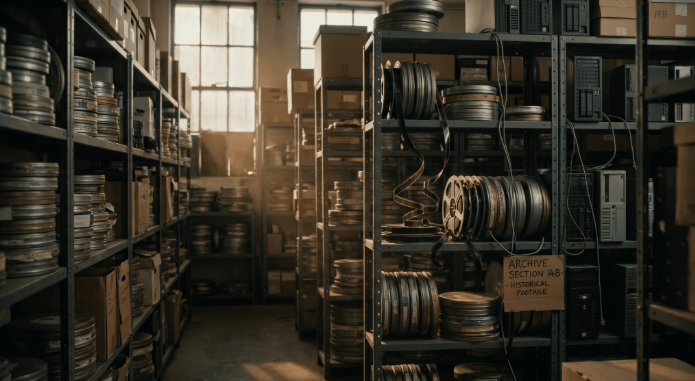
Archiving has always been a critical part of video production. Every project generates a large number of assets—raw footage, edited versions, audio files, and final outputs. These assets are stored for future use, whether for repurposing, compliance, or historical reference. Traditional archival systems were built around this predictable structure. That structure is now evolving.
As video creation becomes faster and more dynamic, the way assets are stored and organized is also changing. Content is no longer just a static file saved for later—it is part of an ongoing cycle of creation, iteration, and reuse. This transformation is becoming more visible as tools like Higgsfield AI continue to influence modern video workflows.
Archiving Was Built Around Static Assets
Traditional archival systems were designed for fixed outputs. Once a video was completed, it was stored as a final file along with its supporting materials.
This included:
- Raw footage
- Edited sequences
- Audio tracks
- Final exports
Evolving storage and archival of video assets is becoming more relevant because this static approach no longer fits modern workflows. Content is now more fluid.
Dynamic Content Is Changing Storage Needs
This is where Higgsfield AI and Seedance 2.0 begin to influence archival practices. Instead of producing a single final output, content can now exist in multiple variations.
This leads to:
- Multiple versions of the same video
- Continuous updates and iterations
- Flexible content structures
Archiving must now handle dynamic content rather than fixed files.
Volume of Assets Is Increasing Rapidly
The speed of content creation is increasing. More videos are being produced in less time.
This creates challenges such as:
- Managing large volumes of files
- Organizing multiple versions
- Maintaining accessibility
Seedance 2.0 contributes to this within Higgsfield AI by enabling scalable production. This increases the demand for efficient storage systems.
Version Control Is Becoming Essential
With more variations being created, version control becomes critical.
Creators need to track:
- Different edits
- Updated versions
- Alternative formats
Without proper versioning, assets can become difficult to manage. Seedance 2.0 supports iterative workflows within Higgsfield AI, making version control more important than ever.
Metadata Is Replacing Manual Organization
Traditional archiving relied on manual organization. Files were sorted into folders based on projects or categories. Now, metadata is becoming more important.
This includes:
- Tags
- Descriptions
- Usage context
- Creation details
Seedance 2.0 contributes to this within Higgsfield AI by generating structured outputs that can be tagged and categorized automatically. Metadata improves searchability and accessibility.
Retrieval Speed Is Becoming a Priority
Storing assets is not enough—they must be easy to retrieve. As content volume grows, finding the right asset becomes more challenging.
Efficient retrieval requires:
- Advanced search systems
- Metadata-based indexing
- Quick access mechanisms
Seedance 2.0 supports rapid workflows within Higgsfield AI, increasing the need for fast retrieval.
Cloud-Based Archiving Is Expanding
Traditional storage systems are limited by physical infrastructure. Cloud-based systems offer more flexibility.
Benefits include:
- Scalable storage
- Remote access
- Real-time updates
Seedance 2.0 aligns with this within Higgsfield AI by supporting distributed workflows. This encourages cloud-based archiving solutions.
External Frameworks Are Influencing Archival Practices
Archiving is also influenced by broader digital storage standards. Organizations are adapting to new requirements for managing digital assets.
For those exploring how digital storage is evolving, digital preservation standards explain how long-term storage is structured.
Seedance 2.0 contributes to this within Higgsfield AI by increasing the complexity of stored content.
Lifecycle-Based Archiving Is Emerging
Instead of storing everything indefinitely, archiving is becoming lifecycle-based. Assets may be categorized by:
- Active use
- Short-term storage
- Long-term archive
Seedance 2.0 supports continuous production within Higgsfield AI, making lifecycle management more important. This helps optimize storage.
Automation Is Reducing Manual Effort
Manual archiving is becoming less efficient. Automation is taking over tasks such as:
- Tagging assets
- Organizing files
- Managing versions
Seedance 2.0 contributes to this within Higgsfield AI by generating structured outputs that can be automatically processed. This reduces workload.
Storage Costs Are Becoming a Consideration
As asset volume increases, storage costs become significant.
Organizations need to balance:
- Storage capacity
- Retrieval speed
- Cost efficiency
Seedance 2.0 influences this within Higgsfield AI by increasing content production. This requires more efficient storage strategies.
Security and Access Control Are More Important
With more assets stored digitally, security becomes critical.
This includes:
- Access permissions
- Data protection
- Content integrity
Seedance 2.0 contributes to this within Higgsfield AI by enabling large-scale content creation. This increases the need for secure storage systems.
Archiving Is Becoming Integrated with Production
Archiving is no longer a separate process. It is becoming part of the production workflow. Assets are stored, tagged, and organized as they are created. Seedance 2.0 supports this within Higgsfield AI by enabling continuous workflows. This creates a more integrated system.
Future Archiving Will Be Intelligent
Archival systems will become more advanced.
Future features may include:
- AI-driven organization
- Predictive retrieval
- Automated lifecycle management
Seedance 2.0 is influencing this shift within Higgsfield AI by changing how content is generated and stored. This drives innovation in archiving systems.
Conclusion
The way creative assets are archived is evolving rapidly. Traditional systems built for static content are no longer sufficient. Seedance 2.0 is influencing this shift by enabling dynamic, scalable, and continuous content creation. When used within Higgsfield AI, it changes how assets are stored, organized, and retrieved.
As the volume and complexity of content continue to grow, archiving will become more automated, intelligent, and integrated with production workflows.
In the end, effective archiving will not just be about storage—it will be about accessibility, efficiency, and adaptability in a fast-changing digital environment.
